What is Five-Card Charlie in Blackjack?


Summarize this post
Key Takeaways
- Five-Card Charlie is not a standard blackjack rule, and it can mean an automatic win, a push, a bonus payout, or even “only counts if you still beat the dealer,” depending on the table.
- The most important fine print to verify is whether Charlie loses to dealer blackjack, since that single exception can wipe out much of the rule’s value.
- Charlie can be player friendly in the right rules package, but casinos often offset it with worse conditions like 6:5 blackjack, restricted doubling, more decks, or dealer hits soft 17.
- Strategy changes are usually small and situational, since Charlie adds upside to safely drawing extra cards, but chasing five cards creates extra busts and costs money long term.
- Always confirm the exact Charlie wording before you play, either by reading the felt and rules placard in a casino or checking the rules screen and provider details online.
You’re sitting at a blackjack table and you’ve just hit your way to five cards totaling 18. The player next to you leans over and says, “Nice. That’s an automatic win.” You look to the dealer, expecting the hand to end right there, and then nothing happens. The game keeps moving like you never said a word.
That moment is how most people meet the Five-Card Charlie, and it is also why so many players misunderstand it. A lot of gamblers talk about Charlie like it is a universal blackjack rule. It is not. It is a rule variation that some casinos and some game titles use, and the details can change from one table to the next.
If you assume Charlie works one way and the table defines it another way, you can end up making the wrong decisions and arguing over payouts. Neither is a good way to spend a session.
Definition: A Five-Card Charlie is a blackjack rule variation where drawing five cards without busting, meaning 21 or less, triggers a special result. Depending on the rules, that result can be an automatic win, a push, or a bonus payout.
If you need a quick refresher on basic terms, start with our how to play blackjack guide and our blackjack strategy guide.
What Is a Five-Card Charlie?
At its simplest, a Charlie rule says this. If you take a certain number of cards without going over 21, something special happens. Most people are talking about the Five-Card Charlie, but you will also see Six-Card and Seven-Card versions.
Here is a clean example.
You start with a 2 and a 3 for 5. You hit and catch a 4 for 9. You hit again and get a 5 for 14. You hit once more and pull a 6 for 20. That’s five cards totaling 20.
Under many Charlie rules, the moment you reach five cards at 21 or less, the hand triggers a special result. Under standard blackjack rules, that same hand is simply a 20 and it can still lose to a dealer 21.
This is where the confusion lives. Players hear the word “automatic” and assume it means the same thing everywhere. Some tables mean automatic win no matter what. Other tables mean something much narrower, and that is where the problems start.
“If the felt says ‘automatic winner,’ don’t assume you know what it means. Read the placard. Charlie is one of those rules where one line of fine print changes the whole deal.”
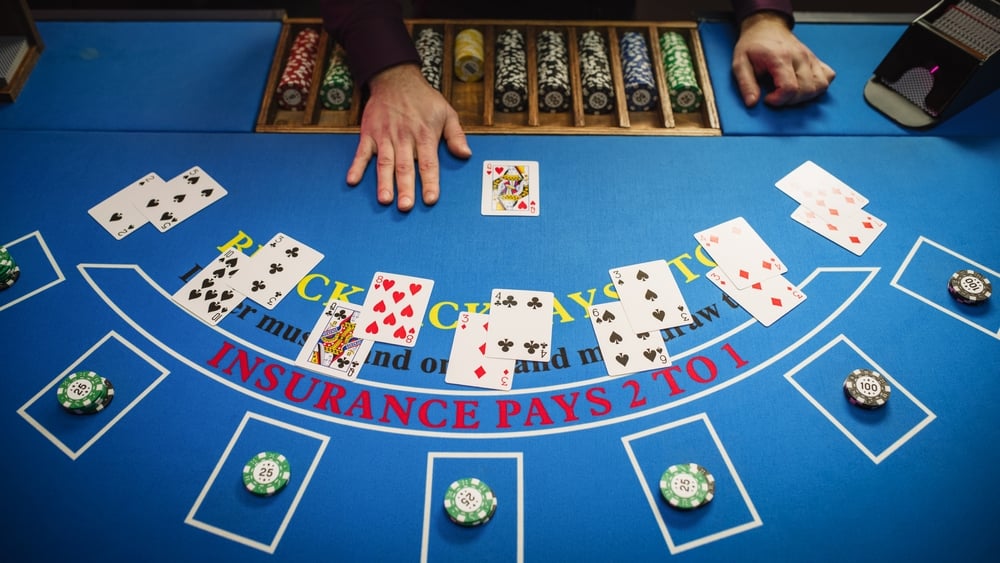
Image Credit: Netfalls Remy Musser/Shutterstock
Five-Card Charlie Rules and the Variations You’ll Actually See
Charlie is not standardized. Two tables in the same property can treat it differently, and online games can vary even more. These are the most common versions.
True automatic win Charlie
You win as soon as you reach five cards at 21 or less, regardless of what the dealer makes.
Charlie wins unless the dealer has blackjack
You win with five cards at 21 or less, but the win is cancelled if the dealer has a natural blackjack.
Charlie results in a push
Five cards at 21 or less returns your bet only, with no profit.
Charlie only counts if you still beat the dealer
You must reach five cards without busting and still finish with a higher total than the dealer, or tie depending on the wording. This is the version that causes the most arguments because many players expect the hand to stop immediately.
Longer Charlies
Some games use Six-Card Charlie or Seven-Card Charlie. The longer the requirement, the less often it triggers.
Bonus feature or side bet style
In some variants, Charlie is treated as a bonus mechanic tied to an additional wager or a separate paytable.
Payouts and Exceptions That Change Everything
Even when a table offers Charlie, its value depends on what it pays and what conditions are attached to it.
Some tables treat a Charlie as a normal win and pay even money. Others attach a bonus payout, like 2:1, or only pay a bonus if the Charlie totals 21 exactly. Promotional pay terms can also change quickly, especially in short run campaigns.
The most important exception to watch for is the dealer blackjack condition. A very common rule is some version of “Charlie wins unless the dealer has blackjack.” That single line can turn a player friendly perk into something far less valuable, especially if you are the type of player who likes to hit light hands early in the shoe.
If you want a deeper breakdown of payout math and why 6:5 blackjack is so costly, see our breakdown of blackjack payouts.
“The rule I look for first is the one nobody wants to read out loud. Does Charlie lose to dealer blackjack. That sentence matters more than the marketing sign.”
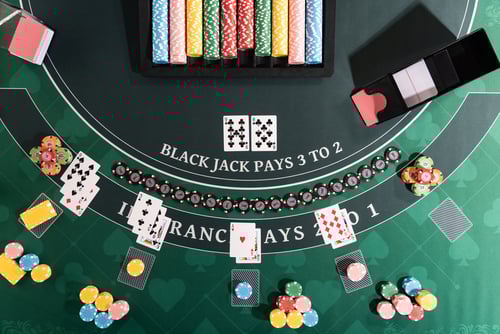
Image Credit: Netfalls Remy Musser/Shutterstock
Where You’ll Find Five-Card Charlie and Why It’s Not Everywhere
Five-Card Charlie is not common in standard casino blackjack because it can improve player outcomes, especially when it is a true automatic win.
When you do see it, it usually shows up in a few places.
Special blackjack variants
Some non standard games build Charlie style mechanics into their structure. Spanish 21 is a common comparison point for players looking at alternate rulesets.
Promotional tables
Casinos sometimes run Charlie rules as a limited time draw, especially on lower limit pits.
Online blackjack titles
Online platforms can implement niche rule sets easily, which increases variety and also increases the need to read the rules screen carefully.
Lower limit games
Some properties use Charlie as a perceived perk to attract recreational players who want a little extra “win condition” excitement.
One warning that matters. Casinos often offset a player friendly rule by tightening other rules. A Charlie table with 6:5 payouts can be a worse game overall than a standard 3:2 table with no Charlie. For more context on how rule changes affect expected value, see our deep dive into blackjack house edge.
Strategy Impact and What Actually Changes
If Five-Card Charlie is active, it can change your blackjack strategy, but usually at the margins. The reason is simple. Charlie adds extra upside to taking another card safely, so some borderline decisions can shift toward hitting.
What it does not mean is that you should chase five cards. If you start overriding obvious stands just to “get to Charlie,” you will create extra busts and give back whatever value the rule provides.
The right mindset is to play solid baseline strategy first, then make small adjustments only when the Charlie rule clearly improves the hit side of a close decision. If you want a foundation to build on, our guide to memorizing basic blackjack strategy is the place to start.
“Charlie is not a license to go fishing for cards. It’s a small incentive that can move a close decision. Chase it and you’ll donate more than you’ll ever collect.”
Odds and House Edge Context
From a math perspective, Charlie can reduce house edge in some rule sets. How much it helps depends on how often it triggers and whether it is a true win, a push, or a bonus condition. It also depends on what other rules changed with it, including deck count, double restrictions, surrender, and whether the dealer hits soft 17.
That is why you evaluate Charlie as part of the full rules package, not as a standalone perk.

Image Credit: Netfalls Remy Musser/Shutterstock
How to Verify the Rule Before You Play
This is the part that saves you money and frustration.
For land based casinos, check the felt and table signage first, then read the rules placard. You are looking for the exact Charlie definition and the rule hooks around it. Does it auto win. Does it lose to dealer blackjack. Is it a push. Does it require you to beat the dealer anyway. Confirm the basics too, like deck count, blackjack payout, whether the dealer hits soft 17, doubling down rules, and surrender.
If anything is unclear, ask direct questions. “Does Charlie auto win here.” “Does it lose to dealer blackjack.” “Does it pay even money or a bonus.” If you cannot get a clean answer, ask the pit boss for the official wording. If you still cannot get clarity, walk.
If the casino allows it, taking a quick photo of the placard can help you later, especially if you are comparing tables.
For online casinos, open the Rules or Info tab before playing. Confirm the game title and provider, then search the rules for keywords like Charlie, 5-card, automatic winner, dealer blackjack wins, pays 2:1, and push. Online blackjack is not a standardized ruleset, so reading the rules screen is part of the game.
Real World Charlie Stories
The Tunica mistake
I played at a casino in Tunica, Mississippi at a table that advertised “5-Card Automatic Winner.” A player drew five cards totaling 19 and started celebrating. The dealer turned over 20 and took the bet. The version of the rule on that table only triggered a favorable result if the five card hand also beat the dealer. The wording was on the placard, but the player never read it.
The downtown Vegas bonus
On the flip side, I saw a player at a Downtown Las Vegas casino hit a Six-Card Charlie totaling 21 and get paid a bonus under a promotional rule card. The floor verified it on the spot. The next day the promotion ended, and the table reverted to normal rules.
Same concept, different wording, different outcome. That is Charlie in a nutshell.
Key Takeaways and Bottom Line
Five-Card Charlie is a rule variation, not standard blackjack, and it can mean automatic win, push, or bonus payout depending on the table. Many versions include a “loses to dealer blackjack” condition, and some versions still require you to beat the dealer, which is why players get surprised.
Charlie can be offset by worse rules like 6:5 payouts, so you evaluate the entire rules package, not just the perk. Strategy adjustments should be small and situational. Charlie can make hitting slightly more attractive in borderline spots, but chasing five cards is a long term bankroll leak.
If you remember one thing, make it this. Verify the rule before you bet, whether you are playing in person or online.
What is your story going to be. Share your Five-Card Charlie experience and the exact table rules you saw in the comments.
Five Card Charlie FAQ
It depends on the posted rules. Some tables treat Charlie as an automatic win against any dealer result. Others make it lose to dealer blackjack. Others treat it as a push or require the Charlie hand to still beat the dealer.
No. It is a rule variation. Most blackjack tables do not offer it.
Often it refers to a similar concept, but the name is not a guarantee. Casinos can use different wording for different outcomes.
Only in borderline situations where hitting is already reasonable under sound strategy. Do not override obvious stands just to reach five cards.
Usually no. Most Charlie rules apply to players only. Rare exceptions exist, so verify.
Yes. Charlie rules typically care about card count and staying at 21 or less, not whether the hand is hard or soft.
Title Image Credit: Netfalls Remy Musser/Shutterstock