 Main menu


Prediction Markets
Election Day 2026: Prediction Markets and Polls Point to Democratic Gains
Posted on: November 3, 2026, 01:13h.
Last updated on: November 4, 2026, 05:33h.


Key Points
- Prediction markets and polls give Democrats a 93% chance of winning the House and a ~74% chance of taking the Senate
- Trading odds favor Democrats capturing 237 House seats and 53 Senate seats, holding edges in key battlegrounds like Ohio, Texas, and Maine
- Voters are deciding major gaming measures, including online sports betting in Nebraska and local casino referendums in Indiana


Driven by low approval ratings for President Donald Trump, persistent economic anxiety, and opposition to the conflict in Iran, the 2026 midterms signal a major political reckoning for Republicans.
Across both prediction markets and traditional polling models, the consensus points squarely toward a Democratic sweep.
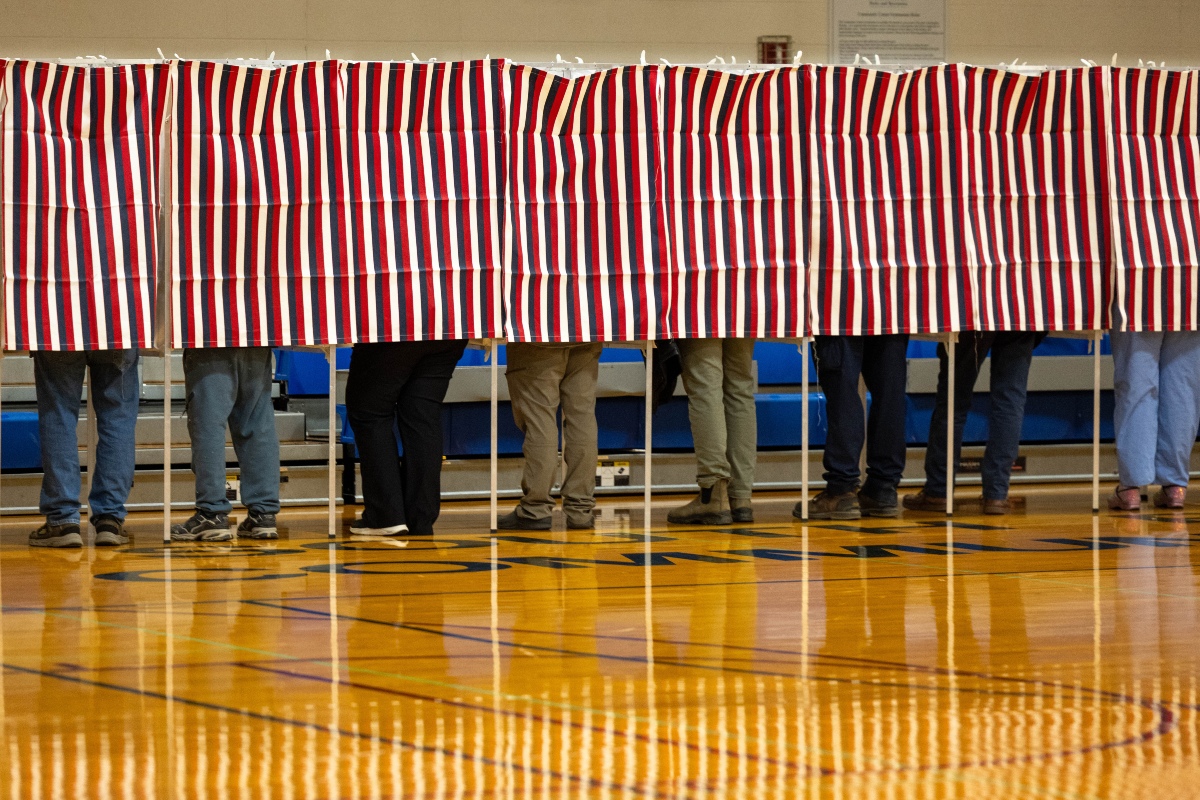
Polling models heading into Election Day projected a high likelihood of the Democratic Party winning control of both chambers of Congress, assigning a 93% chance of taking the House of Representatives and a 74% chance of securing a Senate majority.
Prediction markets reflected a near-identical consensus as trading closed on Nov. 3, with contracts pricing a 93% probability for a House flip and a 73% probability for a Senate majority.
In previous elections, political prediction markets and polling data were not so closely aligned. Most notably, pollsters showed the 2024 presidential election as a dead heat, while prediction markets consistently favored Donald Trump in his successful bid for a second term as the 47th president of the United States.
2026 Key Senate Battles
Pollsters and market traders identified eight core battlegrounds as pivotal in determining the Senate balance of power.
As of midday trading on Election Day (Nov. 3), five of those key races—Alaska, Kansas, Maine, Ohio, and Texas—favored Democratic candidates in contract pricing. Only two leaned Republican—Nebraska and South Carolina—while Iowa remained a dead-heat toss-up.
Prediction markets favor Democrats securing 53 or more Senate seats, with Republicans expected to fill 47 seats. In the House, prediction markets suggest Republicans will hold fewer than 185 seats, down from 219 currently. Democrats are expected to win 237 seats.
Prediction markets define a “blue wave” as Democrats winning 218 or more House seats and 49 or more Senate seats. Trading odds strongly favor the party claiming more than 218 seats.
Meanwhile, traditional pollsters tracked the ‘generic congressional ballot’—which asks voters which party they plan to support without listing individual candidates—at +8.8 in favor of Democrats, reinforcing the high probability of prediction market projections.
According to Pew Research Center data, Democratic voters also reported significantly higher motivation levels, stating in greater numbers that participating in the 2026 midterms ‘really matters’.
Gaming on the Statewide Ballots
Beyond Capitol Hill, voters in two states considered key gaming measures.
In Nebraska, two statewide ballot referendums seek to amend the Nebraska Constitution to permit online sports betting. A simple majority is needed for Initiative Measures 440 and 441 to legalize online sportsbooks.
In Indiana, local referendums across Allen, DeKalb, and Steuben counties asked voters whether to support a new commercial casino development.
Under Indiana House Bill 1038, the Indiana Gaming Commission (IGC) is authorized to issue one unused inland casino license to whichever of the three counties approves the measure and submits the winning proposal.


 Most Read

Another Shooting Near Las Vegas Strip Casino Injures Man
 973,185 views

Vintners Oppose Napa Valley Casino
556,762 views


Conversation (0)
Be the first to comment on this article.