 Main menu

Prediction Markets
BBB National Programs: Kalshi Ignored Advertising Review Inquiry
Posted on: June 9, 2026, 11:59h.
Last updated on: June 10, 2026, 08:08h.


- Kalshi refused to engage with a BBB National Programs inquiry into its advertising claims, according to the organization
- The National Advertising Division has escalated the issue, notifying state attorneys general of Kalshi’s non-participation
BBB National Programs is referring Kalshi to the appropriate regulatory authorities after the company failed to comply with an inquiry from its National Advertising Division (NAD).
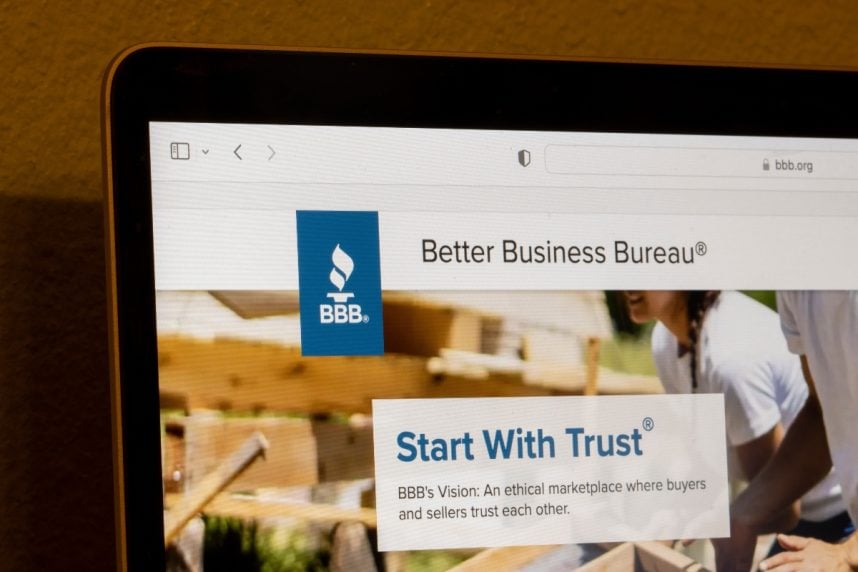
NAD is a component of the BBB National Programs, an independent non-profit organization that monitors industries that largely self-regulate.
While Kalshi is regulated by the United States Commodity Futures Trading Commission (CFTC), the federal agency has been criticized for being ill-equipped to monitor the thousands of event contracts that prediction markets like Kalshi offer on a daily basis.
NAD reports that Kalshi, by far the largest prediction market in the US, failed to participate in an inquiry.
At issue for NAD was whether material connections between Kalshi and influencers or affiliates were clearly and conspicuously disclosed in social media advertising, and whether Kalshi takes adequate steps to ensure compliance with the Federal Trade Commission’s Guides Concerning the Use of Endorsements and Testimonials in Advertising,” NAD explained.
NAD says it’s referring Kalshi to state attorneys general and other relevant regulatory authorities for review and possible enforcement for its failure to participate in the review. BBB National Programs is an independent, nonprofit organization with a shared history, but not affiliated with, the International Association of Better Business Bureaus.
In 2019, the Council of Better Business Bureaus (CBBB) restructured and created two independent non-profit organizations: the International Association of Better Business Bureaus and BBB National Programs.
Prediction Markets Largely Self-Regulate
Under the second Trump administration, the CFTC has allowed prediction markets to venture into what was once off-limits, including event contracts involving sports.
Kalshi and its competitors offer trading on tonight’s Stanley Cup game outcome, with an abundance of in-game props ranging from who will score the first goal to which player will have more assists.
The CFTC is responsible for ensuring that prediction markets are free of insider trading and comply with the Commodity Exchange Act, the 1936 federal law that established the legal trading of financial derivatives tied to certain commodities and underlying assets.
With prediction market activity booming, Kalshi and others are aggressively marketing towards consumers, with the platforms using celebrities and influencers to promote their businesses.
The NAD wants details on Kalshi’s marketing arrangements to determine if the company has abided by FTC rules.
In April, David Miller, the director of enforcement at the CFTC, acknowledged that prediction markets are largely responsible for self-regulating.
Exchanges have important obligations under our core principles,” Miller said, adding that “exchanges doing their job” is an “essential part” of regulation.
Miller’s comments suggest that the CFTC is doing little to monitor how prediction markets are advertising their operations.
Just last week, Polymarket severed ties with disgraced former US Rep. George Santos (R-NY) after the Department of Justice launched an investigation into his alleged insider trading activities on Kalshi.
The 411 on NAD
The BBB National Programs’ NAD reviews national advertising in all forms of media to ensure that industries are compliant with the FTC. The NAD has largely focused on the health marketplace, with dietary supplements coming under much scrutiny by the department.
When an industry or business is found to be engaged in deceptive or untruthful marketing, the NAD refers the matter to the appropriate regulatory and law enforcement agencies.

 Most Read

Another Shooting Near Las Vegas Strip Casino Injures Man
 972,604 views

Vintners Oppose Napa Valley Casino
556,218 views


Conversation (0)
Be the first to comment on this article.