

Top US prediction market apps for October 2026

Looking for the best prediction market apps in 2026? Our in-depth guide compares the top legal options for US users, including fees, trading style, welcome offers, and state availability, so you can see which app fits you best.

Our top prediction market apps for October 2026
#1 Prediction market
 Accepts US players


- Top prediction market by volume
- Get a $50 trading bonus
- Blockchain-powered predictions
Accepts US players
- 2% fees only apply to winnings
- $20 trading bonus with code CORG
- Custom odds available upon request
Accepts US players





- 5-day 100% profit boost up to $100
- Dedicated parlay building feature
- Wide variety of sports contracts
Accepts US players- Up to $50 bonus available
- Crypto or fiat deposits
Accepts US players- 50% first deposit match bonus
- Low $10 minimum deposit
- A wide variety of sports markets
Accepts US playersTop prediction market apps in the US
Our full prediction market app rankings
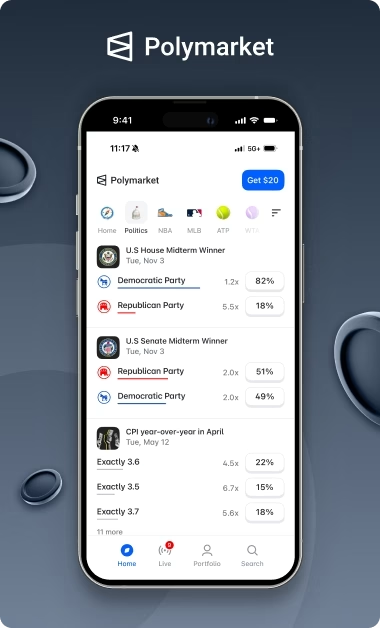
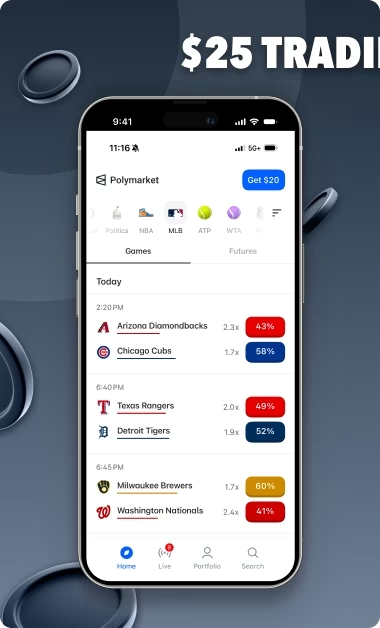
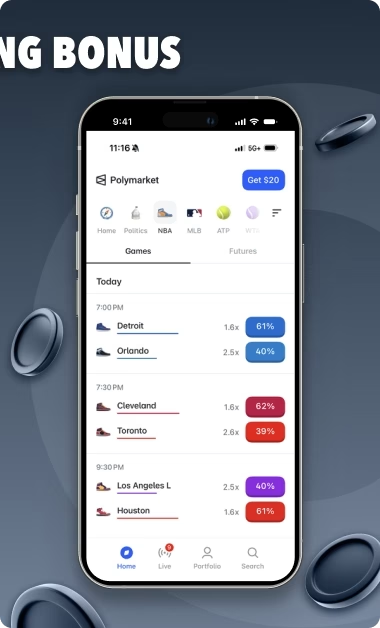
Polymarket - Our top prediction market app with a $25 trading bonus

Pros
Cons
Payout timeInstant | Year established2020 | Banking options |


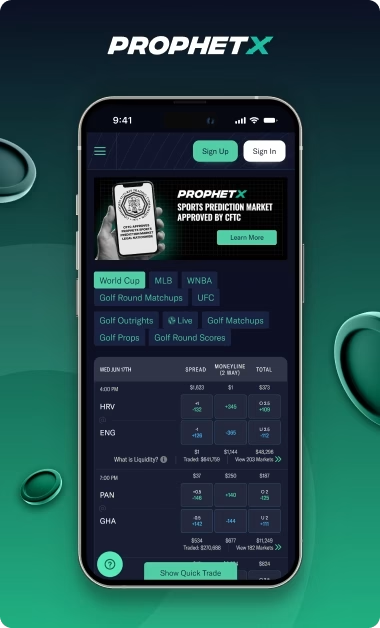
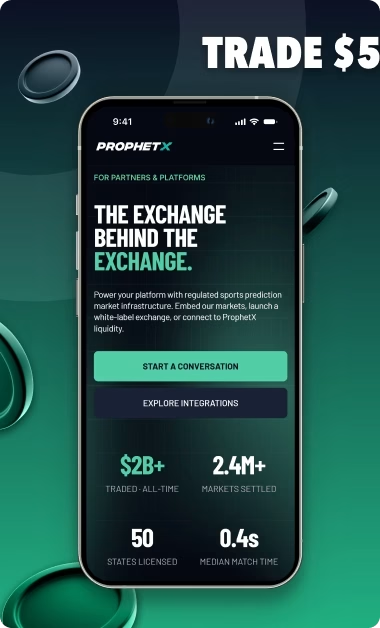
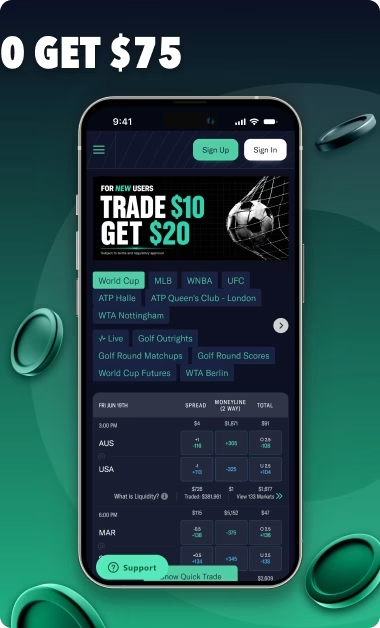
ProphetX - Best for exchange-style sports trading with profit-only fees
Pros
Cons
Payout time1-5 days | Year established2024 | Banking options |
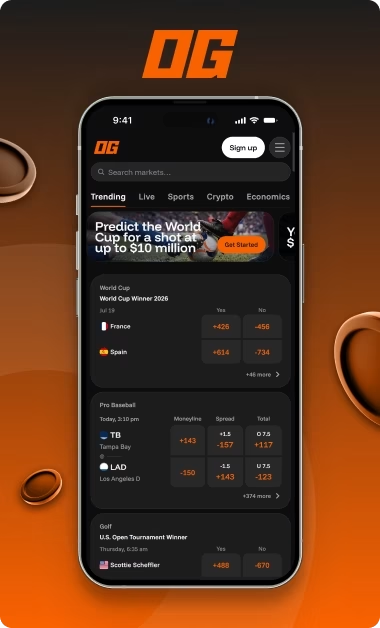
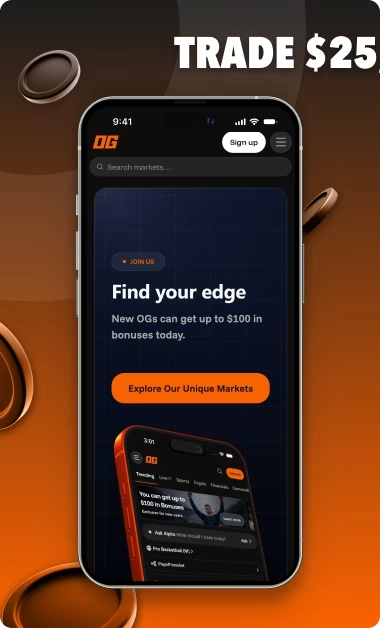
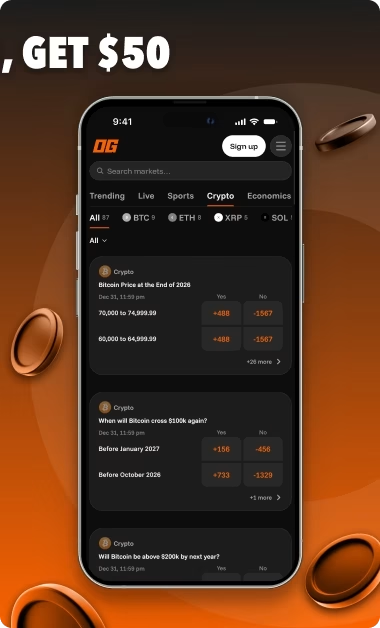
OG.com - Best simple trading bonus
Pros
Cons
Payout timeInstant | Banking options |


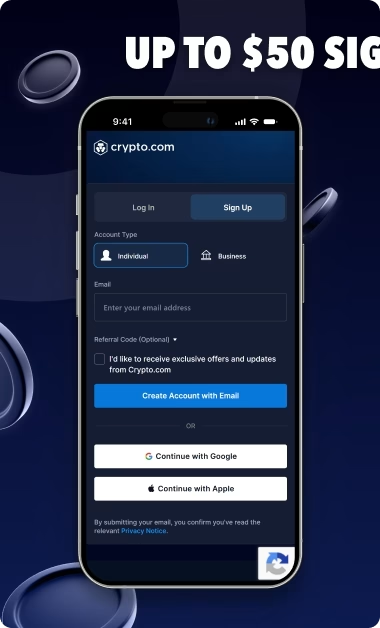
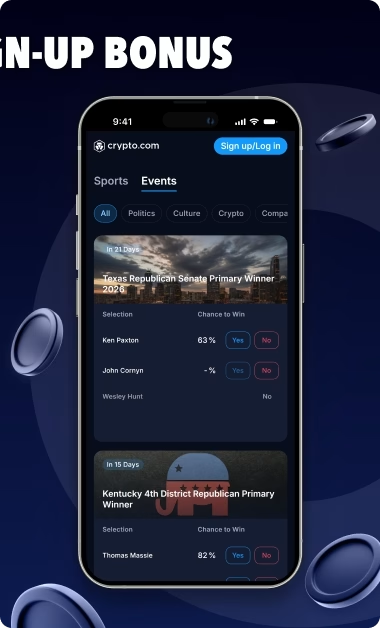
Crypto.com - Our favorite for crypto payments with an up to $50 bonus
Pros
Cons
Payout time24 hours | Year established2024 | Banking options |


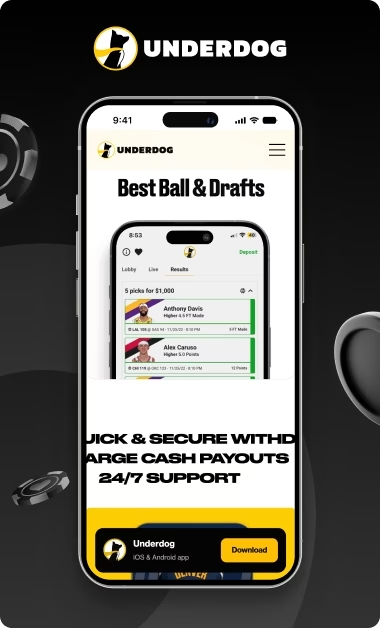
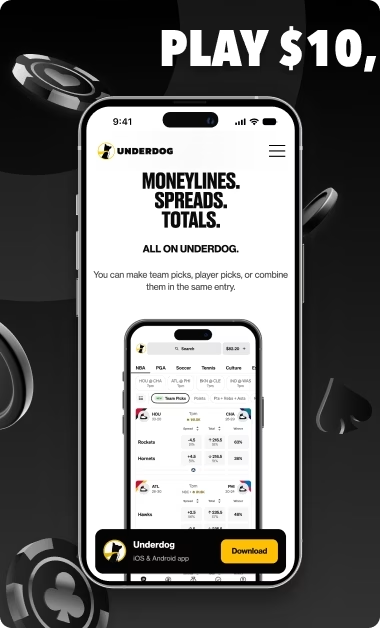
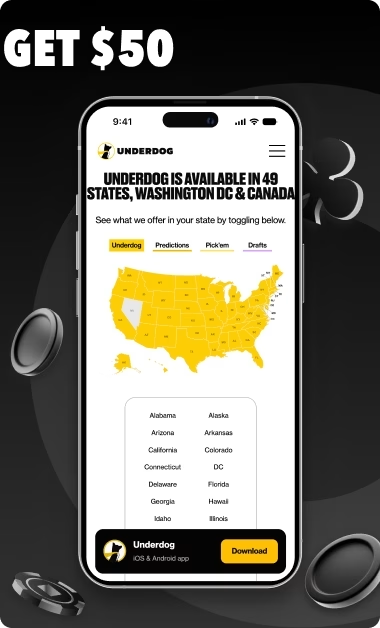
Underdog - A fantasy-first option mixed with event-style markets
Pros
Cons
Payout time1-5 days | Year established2025 | Banking options |


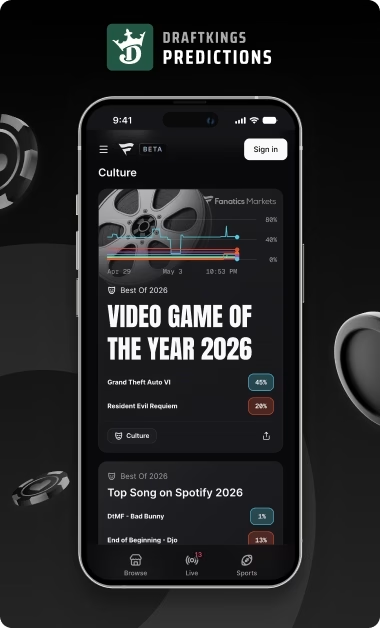
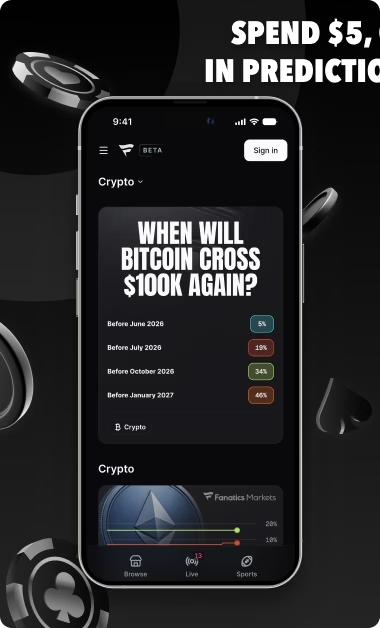
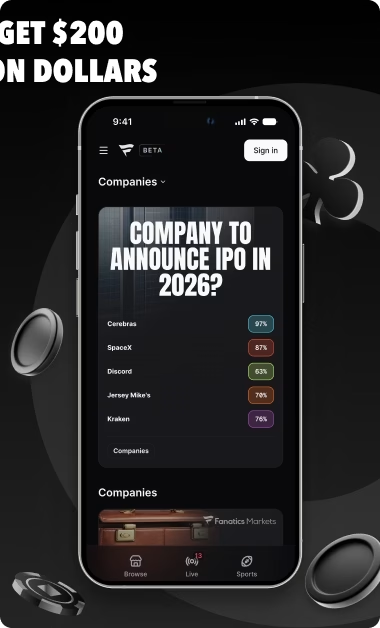
DraftKings Predictions - Best for existing users who want to test prediction markets
Pros
Cons
Payout time0-2 days | Year established2025 |
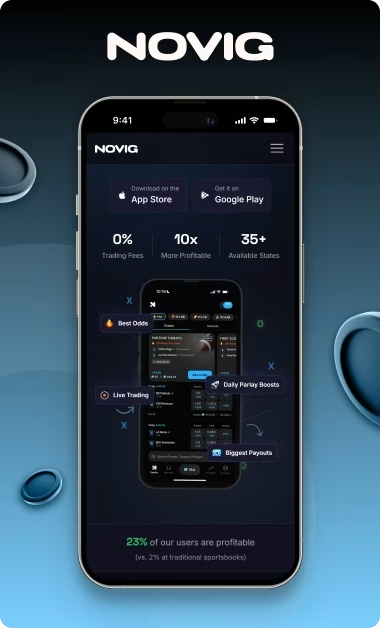
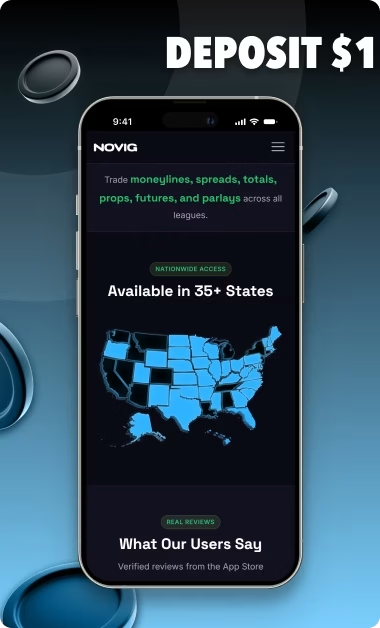
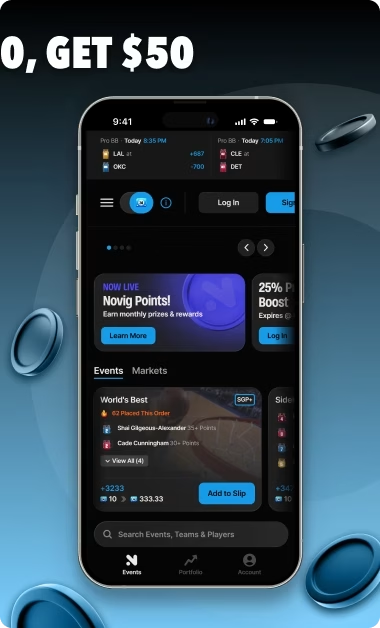
Novig - Best for fee-free, exchange-style sports markets
Pros
Cons
Payout time1-5 days | Year established2024 | Banking options |
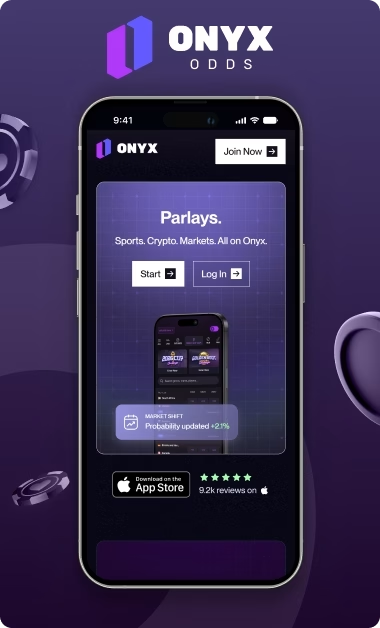
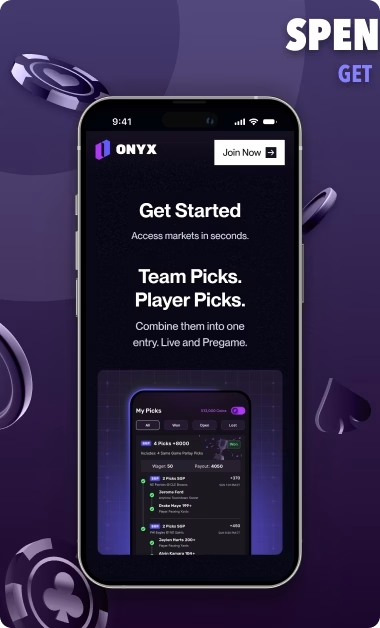
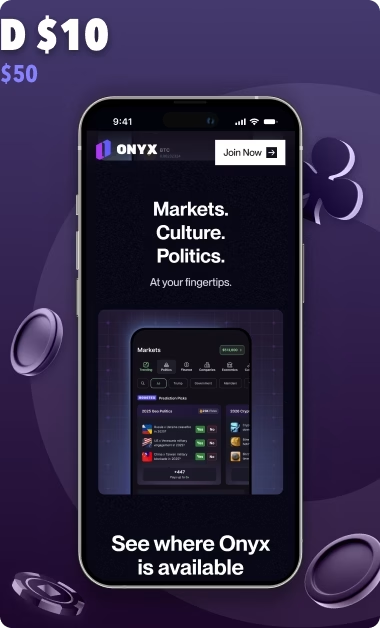
Onyx Odds - Great for a variety of sports prediction markets
Pros
Cons
Win rate96.23% | Payout time0-3 days | Year established2024 | Banking options |


What users are trading on prediction market apps in October

Major sports markets
There are always plenty of sports contracts available throughout the year. During the summer, most major North American sports are in their off-seasons. As a result, users can make trades on futures contracts like, "Who will win the 2027 Super Bowl." You can trade similar contracts for the NHL and NBA. Use our Polymarket bonus to explore similar contracts.

Entertainment and box office contracts
Entertainment markets are also drawing attention beyond the usual sports-first lineup. Trending entertainment contracts include "Who will get mentioned in X's upcoming album?" and "Will Spider-Man: Brand New Day be the highest-grossing movie at the box office in 2026?"

Fed and macro markets
Economics contracts remain one of the clearest examples of how prediction markets extend beyond sports and entertainment. Contracts such as “Fed rate hike in 2026?” and “Fed rate cut by…?” show how these platforms turn interest-rate expectations and major macroeconomic events into tradable opportunities.
What are prediction markets?
How do prediction apps work?
Each contract is priced between $0.00 and $1.00. The price reflects how likely the market believes an outcome is.- A contract priced at $0.70 implies roughly a 70% chance
- A contract priced at $0.25 implies roughly a 25% chance
- $1.00 if your position is correct
- $0.00 if your position is incorrect
“Last season, I bought 10 Yes contracts on an NFL game total going over 47.5 points when the price was $0.42, which implied about a 42% chance. My total cost was $4.20. The game went over, so each contract settled at $1.00 and the 10 contracts returned $10. After subtracting the $4.20 stake, the profit was $5.80. If the game had stayed under, the contracts would have settled at $0.00, and the $4.20 stake would have been lost."
Prediction markets vs. sportsbooks

Market size
Sportsbooks typically have deeper menus and higher volume on major leagues, which can mean smoother pricing and more consistent availability game-to-game. Prediction apps, like OG.com, may have fewer total markets at any one time, but they can be strong on one-off events and non-traditional categories such as economics or politics, depending on the platform.

Odds value
With a sportsbook, value comes from comparing the book’s odds to your own projection. With prediction markets, value can show up when the crowd pushes a price too far in one direction. Since prices are market-driven, you’re looking for mispriced contracts, meaning situations where you think the implied chance is too high or too low.

Regulation
Sportsbooks are licensed state-by-state under gambling laws. Prediction markets may operate under different regulatory frameworks, and access can still vary by state and by market type even when an app is available. Always confirm eligibility and local availability before you deposit.

Transparency
Sportsbooks do not show you how odds are built, you just see the price you’re offered. Prediction markets can be more transparent because pricing is driven by users trading with each other. Some apps show an order book and market depth, while others keep it simple with a buy/sell interface, so transparency will vary by platform.
Why prediction apps are legal in the US
Why they’re taking off in 2026
Prediction markets have gone mainstream. The Polymarket prediction market is one of the leading operators and is a big part of the industry's growth. South Park even built an episode around a prediction markets app.For US users, they offer:- A legal alternative to sportsbooks
- Transparent, market-driven pricing
- Fast payouts once markets resolve (timelines vary by platform)
- Broader event coverage beyond traditional sports betting
How to sign up for a prediction market app

Compare the prediction market apps on this page and choose the one that best fits what you want to trade.

Click the sign-up or register button to get started. You will need to provide personal details to verify your identity. Enter a promo code if the offer requires one.

Once your identity is verified, fund your account if needed, claim the welcome offer if one is available, and start buying contracts.
Comparing different types of prediction market apps
Order book apps
Order book apps work more like trading exchanges. You can see bids and ask prices, place limit orders, and get a clearer view of liquidity before you enter.⚖️ What to know: Order book apps give you more control over pricing and better visibility into liquidity, but they come with a steeper learning curve and can feel thin when market activity is low.🏆 Our recommended order book app: Polymarket and NovigThe best fit is Polymarket if you want a true order book experience with more control over entries and exits, plus transparent pricing. If low fees matter more than market breadth, you can use our Novig promo code to explore another strong exchange-style option.Buy-and-sell interface apps
These apps simplify the experience into a straightforward yes-or-no trade flow. You pick an outcome, review the price and any fees, and place the trade without needing to read an order book.⚖️ What to know: Buy-and-sell apps are easier to use and usually faster on mobile, but they offer less visibility into liquidity and fewer advanced order options than order book platforms.🏆 Our recommended buy-and-sell apps: ProphetX and Crypto.comYou can use the ProphetX bonus code if you want quick, sports-first yes-or-no trading. Crypto.com still makes sense if you want that same simplicity inside a broader crypto account flow.Free vs. paid prediction market sites
“Free” usually refers to free access to tools like market browsing, charts, or research, not free real-money trading. If a platform supports real-money trading, you will usually pay through fees, spreads, or both when buying and selling contracts.Some sites are free because they use play money, which can be useful for practice but does not support real cashouts. The quickest check is simple: if you can withdraw real funds, expect fees or spreads. If you cannot, it is probably a practice-only experience. The Novig prediction market is an interesting exception because its whole model is based around not having fees on trades. However, there are still sometimes fees associated with some payment methods.Understanding different prediction contract types

Index contracts
Index contracts are used for outcomes that can vary across a range of values. For example, these contracts can be traded when speculating on the percentage of a vote a political candidate will receive or a company’s sales figures.

Spread betting contracts
With these event contracts, users can invest in the direction of a certain outcome. For example, your return could be tied to a certain amount for every dollar a stock index goes up (or down).

Winner-take-all contracts
Winner-take-all contracts are the most common event contracts on prediction sites. You pay a fixed amount to predict whether or not a specific event occurs. The price depends on supply and demand and reflects the market's implied collective opinion of the likeliest outcome. These contracts can be explored after claiming our Crypto.com sign up bonus.
Ladder and escalator markets
Most player markets on prediction apps are all-or-nothing. A contract like “Player X 60+ receiving yards” pays $1 if he gets there and $0 if he doesn’t. Some prediction markets now offer ladder and escalator markets instead. These pay out on a sliding scale based on the player’s final stat line.A Yes contract still pays somewhere between $0 and $1. The difference is that you’re paid for every catch or yard the player records, up to a set maximum. It’s closer to owning a slice of a player’s performance than to backing a single line.- Ladder markets pay the same amount for every unit of the stat. For example, a receptions ladder might pay $0.05 per catch up to $1 at 20 catches. A player who finishes with 6 catches pays $0.30 per contract.
- Escalator markets pay more for each step than the one before, so most of the value sits near the top. On a receptions escalator capped at 10 catches, 5 catches might pay only about $0.13, while 8 catches pays about $0.51. Escalators reward you most when a player has a big game.
- Your payout isn’t locked in during the game: Any “earned” figure can drop, because negative yards count, and anything below zero pays Yes $0.
- Payout figures in the app are illustrative: Multipliers such as “up to 13x” are usually based on a sample stake at the current price. They change as prices move.
- A player who doesn’t play isn’t a refund: If he doesn’t take part in a single snap, the market typically settles at a “fair price” set by the platform, which can differ from what you paid. Fantasy-point versions may treat him as scoring zero.
- You may not be able to use them in combos: Some platforms don’t allow ladder or escalator markets in combos (parlay-style multi-pick trades).
Protected player markets
The biggest frustration with player props is an early injury. Your receiver goes down in the second quarter, and your “1+ touchdowns” pick is dead. Protected player markets are a new format some prediction apps are adding to address this.A protected market is a separate version of a standard NFL player market with an early-exit rule built in. If the player meets any of these conditions, then the contract doesn’t settle at $0. It settles at the fair price as it stood before kickoff. If that pre-game price was $0.40, Yes holders get $0.40 per contract, and No holders get $0.60.- Plays at least one snap in the first half
- Doesn’t play a single snap in the second half or overtime
- Hasn’t already hit the target
What to know about protected markets
- Protection costs extra: Protected markets trade separately and are usually priced higher than the standard version, so turning protection on reduces your potential payout.
- It only covers Yes picks with a minimum target: Such as “1+ touchdowns” or “50+ rushing yards.” Availability varies by game.
- You have to add it before kickoff: Typically in a combo builder. You can’t add it to a position you already hold.
- No injury designation is needed: The rule is based on whether the player plays snaps, not on why he left.
- In a combo, it protects only that one pick: If a protected pick settles at its fair price, the combo isn’t wiped out by that pick alone. If any other pick loses, though, the combo still pays $0.
- The pre-game fair price isn’t your purchase price: You can still lose money if you bought in above it.
- Standard player markets carry no protection: If the player plays even one snap, they settle on his actual stats, even if he’s injured on that snap and never returns.
Popular markets on prediction apps
🏀 Sports
New users are usually most familiar with sports prediction markets, making it a strong starting point. Depending on the app, they can include single-game outcomes, championship futures, player awards, tournament markets, and other event-driven contracts tied to major leagues and headline events such as the NFL, NBA, college basketball, soccer, golf, tennis, and international competitions.
🗳️ Politics and elections
Some prediction market apps also offer contracts tied to elections, political races, and other policy-driven outcomes. These markets can cover candidate contests, party nominations, control of legislative bodies, ballot measures, and other public events with a clearly defined resolution.
Our political prediction markets page can help you get a better understanding of how these contracts work.
📈 Economics and macro events
Economic markets tend to focus on measurable real-world data and policy decisions such as Federal Reserve moves, inflation reports, jobs data, GDP releases, and other major macro events. This is one of the clearest examples of how prediction markets can extend beyond sports and into finance and public data.
🎭 Entertainment and culture
Entertainment markets revolve around major cultural moments such as awards shows, film and television results, music events, and other headline-driven topics. They are often easy to understand and help show how prediction markets can appeal to readers who want familiar subjects outside sports and finance.
Readers who want more examples in this category can also explore our top entertainment prediction markets page.
🪙 Crypto
Broader prediction apps may also include contracts tied to various forms of crypto prediction markets, including Bitcoin and Ethereum. Users can trade contracts on daily crypto prices, when crypto will reach a certain price, and what the maximum price will be in a month.
⛅ Weather and other event markets
Users can also trade weather contracts, as well as contracts related to technology, business developments, and other data-driven events. Depending on the platform, these markets can add a wider layer of variety beyond the more standard sports and political categories.
💬 Mentions
Users can also trade mention markets across several platforms. These contracts allow users to trade based on what someone says at events. For example, contracts are offered on what award winners will say at acceptance speeches.
How to choose the best prediction market app in the US
Market category availability
Knowing which market categories a platform offers is one of the first things to check before you register. Some apps are sports-first, while others cover a wider range of real-world outcomes.
Polymarket goes beyond sports with markets tied to politics, economics, culture, and other real-world outcomes. Coinbase is also worth watching if you prefer prediction markets inside a mainstream finance account.
ProphetX and Novig are apps like Polymarket with a strong sports focus. Both offer a wide array of options in North American and international sports.
Bonus offers
Welcome offers can be a useful tie-breaker, but they should come after legality, market fit, and state availability. Polymarket’s $25 trading bonus after a $10 deposit and the Novig bonus are more relevant starting points for most readers right now.
In general, we prefer straightforward bonus funds you can put toward a trade over offers with more complicated requirements. Always check the terms and your state eligibility before you claim an offer.
If you want to compare current promos in one place, see our prediction market promo codes page.
Geographic restrictions
Not every app is available in every state, and some platforms also limit specific market categories based on your location. In some cases, a site may be accessible where you live while a particular sports market, politics market, or welcome offer is not. Before you sign up, check your state, the market type you want to trade, and the terms attached to any promotion.
Overall
The right platform usually comes down to what you want to trade, how easy the app is to use, and whether it is available where you live. Once you narrow your options, compare pricing, payment methods, bonus terms, and any state-specific restrictions before signing up.
"Start small until you understand how prices move. Stick to markets you can research, and avoid chasing late swings just because the price is moving. Set a budget, and consider taking profits by selling before settlement instead of letting every position ride to the end. ProphetX is a great platform to explore if you're looking to figure out how prediction market apps work."
Legal & regulatory landscape for the US prediction market
Federal oversight (CFTC)
Prediction apps in the US are regulated on both a federal and state level. At the federal level, prediction markets fall under the jurisdiction of the Commodity Futures Trading Commission (CFTC). The CFTC oversees derivatives markets in the US with a focus on market integrity, fraud prevention, and whether certain types of contracts are permissible under the Commodity Exchange Act.State-level differences
While the CFTC oversees prediction markets federally, states retain significant authority through their gambling regulators. Even if a platform operates federally, states can scrutinize how products are promoted and offered to residents, particularly when contracts resemble traditional sports wagers. In some cases, states have issued public statements and taken other enforcement actions which led to restrictions on operators.US availability + regulatory status at a glance
Because federal and state rules overlap, the same app can look different depending on where you live. This table is a quick snapshot of how the major platforms are structured right now, and what that means for access.| Prediction market | US availability | Regulatory status |
|---|---|---|
| Polymarket | US access returned in late 2025 with a waitlist and slow rollout. The waitlist has since been removed in favor of full access for US users in 43 states + DC; AZ, MA, MD, MI, MT, NV, OH excluded | Offered by Crypto.com | Derivatives North America (CDNA), a CFTC-regulated exchange |
| ProphetX | Available in 49 states + DC; not available in NV | CFTC-licensed prediction market exchange |
| OG.com | 49 states + Washington DC can use the OG promo code, with NY excluded | Operates on infrastructure provided by Crypto.com, which is a CFTC-regulated exchange |
| Crypto.com | Available across most of the US; confirm access in-app because market availability can vary | Offered by Crypto.com | Derivatives North America (CDNA), a CFTC-regulated exchange |
| Underdog | Prediction Picks are currently available in 32 states + DC; product access still varies by format and location | Underdog Predict (UDM, LLC) is a CFTC-registered futures commission merchant (FCM) and NFA member; markets may be powered by CDNA |
| DraftKings Predictions | Live in 48 states (ME and NH excluded) for at least some event contracts; sports contracts are only available in select states | Federally regulated event contracts under CFTC oversight |
| Novig | Available in 36 states + DC; availability is based on your current location | Sweepstakes model; not a CFTC event-contract exchange |
| Onyx Odds | 34 states + DC; NY, NV, NJ, and 13 others excluded | Onyx Predictions LLC is a guaranteed introducing broker and NFA member, cleared through NinjaTrader Clearing LLC |
| Fanatics Markets | Live in 24 states: AL, AK, CA, DE, FL, GA, HI, ID, ME, MN, MS, NE, NH, NM, ND, OK, OR, RI, SC, SD, TX, UT, WA, WI | Built on Fanatics’ Paragon regulatory path, with markets powered by Crypto.com | Derivatives North America |
| Robinhood | Availability varies by state and market type; Maryland residents do not have access, and Nevada residents cannot trade new sports event contracts | Event contracts are offered by Robinhood Derivatives, LLC through CFTC-regulated exchanges |
| PrizePicks | Prediction markets launched in 38 states + DC for at least some Team Picks and Culture Picks | Offered through Performance Predictions II, LLC, a federally approved futures commission merchant |
| Coinbase | Available to US residents only, excluding Nevada | Prediction markets are offered through Coinbase Financial Markets (CFM), regulated by the CFTC and NFA |
| FanDuel Predicts | Non-sports event contracts are intended for all 50 states; sports contracts are only offered in states where online sports betting is not legal | Offered under CME Group’s CFTC-regulated framework |
"While federal and state authority overlap, they are not identical. As a result, availability can vary significantly depending on location. I recommend staying up to date with federal regulations and those in your home state, since rules can change quickly and affect what markets a platform can list. Or alternatively, just keep an eye on the offer in your specific state. If something unexpected changes, it may be in response to regulatory changes. For a detailed comparison on how regulatory differences can affect various platforms, explore our Polymarket vs PredictIt page."
How payment methods work on prediction market apps
Different prediction market apps support different funding methods. Here’s how each method works and where you’ll typically see it:

Cash-based systems

Cryptocurrency

Credits or coins
Playing responsibly on prediction market apps
Responsible gaming
All prediction market websites have responsible gambling resources available to use. For example, most sites have a trading break tool which allows the platform to temporarily restrict your account for a day or more. A personalized funding cap is another feature that helps prevent users from spending beyond their budget.Latest developments & coming soon
Prediction markets change fast, with new products launching regularly and regulators frequently weighing in. We track the most relevant operator and legal updates below so readers can spot what may affect availability, market access, and platform choice.
Sep 9, 2026
- Novig and Sydney Sweeney stirred up some controversy with the release of a new ad in early September. In the ad, Sweeney appears mostly nude, with only various sports items covering her.
Aug 28, 2026
- Following an attempt from the Minnesota government to ban prediction markets, a federal judge temporarily blocked the ban. The CFTC will maintain regulatory control until the lawsuit to classify prediction markets as illegal gambling is resolved.
Jul 29, 2026
- After a White House teleprompter operator was accused of making bets on Trump, he reportedly no longer has his job. However, officials declines to say whether Gabriel Perez, who allegedly bet on prediction markets, resigned or was fired.
Jul 17, 2026
- France's main gambling regulator instructed the country's internet service providers to block access to Polymarket, and aims to enforce an existing ban on financial trading sites.
Jun 23, 2026
- Meta CEO Mark Zuckerberg reportedly directed his staff to create a prediction market platform. The app is expected to rely on a video game-style point system, but money could be used in the future.
Jun 11, 2026
- ProphetX officially obtained CFTC approval to operate a federally regulated sports-native exchange in the US. This follows ProphetX's application to become a Designated Contract Market in November.
May 28, 2026
- The White House is looking at a proposal by the CFTC that would help streamline the regulation process. Proposal details are kept mum as the current administration reviews the filings and associated documents.
May 13, 2026
- Minnesota lawmakers passed a bill to ban prediction markets in the state, setting up a likely court fight over whether states or the CFTC should control these event-contract platforms.
May 12, 2026
- CFTC chair Michael Selig told Axios prediction markets and sportsbooks are not the same product. He said the agency will keep regulating them as financial markets rather than entertainment.
Apr 30, 2026
- The Senate unanimously barred senators, staff, and officers from trading on prediction markets, adding momentum to wider federal efforts to tighten ethics and insider-trading rules around event contracts.
Apr 27, 2026
- After the Maduro case, ceasefire wagers, and campaign bets, pressure is rising on exchanges to prove they can spot bad actors, police insider trading, and tighten rules before regulators do it for them.
Apr 23, 2026
- Wisconsin sued major prediction-market platforms, arguing sports event contracts function like illegal betting and should be blocked, widening the state-by-state legal fight over federal versus local oversight.
Apr 23, 2026
- The CFTC sued a US Army service member, alleging he used classified information to buy 436,000+ Yes shares on a Polymarket Maduro contract and made over $404,000, raising pressure on market-integrity controls.
Apr 21, 2026
- NY Attorney General Letitia James said the companies’ prediction products amount to illegal gambling under state law and is seeking fines, forfeiture, and restitution, escalating the clash between federal and state oversight.
Apr 20, 2026
- The Guardian reported Polymarket is in talks to raise $400 million at a valuation of up to $15 billion after weekly trading topped $1 billion. The report shows how fast the category is scaling even as scrutiny over market integrity keeps rising.
Apr 16, 2026
- NPR reported a Polymarket trader made about $300,000 betting on Biden’s last-minute pardons, citing blockchain analysis. The story revived insider-trading concerns and added pressure on platforms already facing scrutiny over market integrity.
Apr 16, 2026
- At Ninth Circuit arguments, judges pressed Robinhood and Crypto.com on whether sports event contracts preempt state gambling law, suggesting the federal preemption case may face a tougher path in Nevada than it did in New Jersey.
Apr 10, 2026
- The CFTC named the first staff for its Innovation Task Force, which will help shape policy on crypto, AI, and prediction markets. The move suggests event contracts remain a priority as the agency develops its long-term framework.
Apr 10, 2026
- At the CFTC’s request, a federal court temporarily barred Arizona from filing criminal charges against CFTC-regulated prediction markets, preserving the status quo and escalating the broader state-versus-federal clash over event contracts.
Apr 9, 2026
- The CFTC asked a federal court to block Arizona’s criminal and civil action against CFTC-regulated prediction markets, escalating the fight over whether states can police event contracts.
Apr 9, 2026
- Congressional pressure rose after new Polymarket accounts placed well-timed ceasefire bets before the US-Iran announcement, intensifying insider-trading concerns around major geopolitical markets.
Apr 6, 2026
- Polymarket announced a rebuilt trading engine, upgraded smart contracts, and a new collateral token called Polymarket USD, marking a major infrastructure update for the platform.
Apr 2, 2026
- The CFTC sued Arizona, Connecticut, and Illinois, arguing federal law gives it exclusive authority over regulated prediction markets and blocks states from imposing their own rules.
Mar 31, 2026
- Prediction-market insider trading was elevated as a core CFTC enforcement priority, adding more pressure around market conduct, misuse of information, and policing suspicious trades.
Mar 30, 2026
- More than 40 lawmakers pressed regulators to issue guidance and explain how they are detecting and policing insider trading by federal employees in prediction markets.
Mar 25, 2026
- The PREDICT Act was introduced in Congress, seeking to bar members of Congress and their staff from trading prediction-market contracts tied to politics and government action.
Mar 23, 2026
- A bipartisan Senate bill would bar federally regulated prediction markets from listing sports bets and casino-style games, escalating the fight over whether these contracts belong under CFTC or state oversight.
Mar 23, 2026
- Analysts said unusual Polymarket bets on a possible US-Iran ceasefire showed signs consistent with insider knowledge, adding more pressure on platforms to police sensitive geopolitical markets.
Mar 20, 2026
- Five-minute and fifteen-minute crypto contracts drew roughly $70 million in daily volume, highlighting how fast high-frequency event trading is moving deeper into mainstream prediction-market behavior.
Mar 19, 2026
- MLB named Polymarket its official prediction-market partner and signed an integrity MOU with the CFTC, adding official data access and new information-sharing guardrails around baseball-related event contracts.
Mar 17, 2026
- Democratic lawmakers introduced the BETS OFF Act to ban prediction-market bets on military operations and other sensitive government actions after controversy over well-timed geopolitical wagers.
Mar 16, 2026
- The CFTC opened public comments on its proposed prediction-markets rule, giving industry participants until April 30 to weigh in on public interest, inside information, and event-contract standards.
Mar 12, 2026
- The CFTC formally published its prediction-markets proposal in the Federal Register, outlining questions on public interest, inside information, and which event contracts should be allowed under federal rules.
Mar 12, 2026
- CFTC staff issued a new advisory to designated contract markets, signaling closer scrutiny as event-contract trading grows and regulators push for stronger integrity controls.
Mar 9, 2026
- Cboe introduced a new framework that moves beyond yes-or-no contracts, starting with a Mini-SPX product that can pay out across a range of outcomes instead of one binary result.
Mar 5, 2026
- Democratic lawmakers began drafting a bill after Iran-related wagers intensified concerns about insider trading, war markets, and the public-interest limits of event contracts.
Mar 3, 2026
- The CFTC sent an advance notice of proposed rulemaking to the White House budget office, formally starting the process for new federal prediction-market rules.
Mar 2, 2026
- The CFTC named David I. Miller as director of enforcement, signaling a tougher posture on fraud, manipulation, and misconduct across regulated markets, including event contracts.
Feb 27, 2026
- WIRED reports OpenAI fired an employee after an internal probe found they used confidential company information to trade on prediction markets, including Polymarket, pushing insider-trading concerns into corporate compliance.
Feb 24, 2026
- Axios reported the CFTC is mounting a legal defense of prediction markets while states including Arizona maintain they must enforce state gambling/wagering laws when products function as gambling.
Feb 20, 2026
- Connecticut advanced a proposal with under-21 restrictions, youth advertising limits, self-exclusion tools, and a study of broader prediction market regulation.
Feb 17, 2026
- In a published statement, Chair Michael Selig said states are overreaching into federally regulated event contracts and said the agency will defend its authority in court.
Feb 17, 2026
- The CFTC said it filed an amicus brief asserting exclusive federal authority over commodity derivatives markets, including event contracts commonly called prediction markets.
Feb 13, 2026
- A Feb. 13 SEC filing proposed party-outcome ETFs for presidential, Senate, and House results, extending prediction-style exposure into public markets.
Feb 13, 2026
- A group of US senators urged the CFTC not to intervene in state lawsuits and asked it to bar markets tied to war, terrorism and gaming, escalating the political fight over prediction markets’ expansion.
Feb 12, 2026
- CFTC named Innovation Advisory Committee members including leaders from Polymarket, Coinbase and major derivatives and crypto firms, signaling the agency will lean on industry input as it rewrites event contract policy.
Feb 12, 2026
- MLB owners were briefed on a possible partnership with Polymarket; Commissioner Rob Manfred said federal CFTC regulation could offer uniform integrity tools compared with patchwork state sports betting rules.
Feb 11, 2026
- Rep. Dina Titus introduced the Fair Markets and Sports Integrity Act to bar registered CFTC entities from listing sports or casino style event contracts, aiming to close what states call a sports betting loophole.
Feb 10, 2026
- A Nevada court order stopped Coinbase’s event contracts for state users; Coinbase sought federal relief on preemption grounds, but the dispute underscores state regulators’ push to treat sports contracts as wagering.
Feb 9, 2026
- Polymarket sued the state attorney general and gaming regulator in federal court, arguing federal law preempts state enforcement against its sports event contracts.
Feb 5, 2026
- A state court temporarily barred the company from offering sports event contracts in Nevada after regulators sought an injunction, per Reuters.
Feb 4, 2026
- Bloomberg Law reports a proposed class action in SDNY alleging Polymarket enables illegal sports gambling and runs an unlicensed sports-betting enterprise under multiple state laws.
Feb 4, 2026
- CFTC withdrew its 2024 “Event Contracts” proposed rule and says it won’t issue final rules. It also pulled sports-event Staff Advisory 25-36 via Staff Letter 26-04, calling it moot given market developments.
Feb 3, 2026
- NV regulator filed a civil enforcement action seeking a declaration and injunction to stop Coinbase offering “event contracts” to Nevada users, arguing sports (and some other) event contracts are wagering requiring state licensing.
Feb 2, 2026
- Letitia James warned New Yorkers that prediction markets lack consumer protections or NYS Gaming Commission oversight, and said promoting unlicensed sports betting may bring civil or criminal liability under New York law.
Feb 2, 2026
- The Commodity Futures Trading Commission issued an order designating Xchange Alpha as a designated contract market under the Commodity Exchange Act, citing its ability to comply with applicable CFTC regulations.
Jan 31, 2026
- A Nevada court issued a temporary restraining order blocking Polymarket from offering event contracts in the state for 14 days, after regulators argued the contracts operate as wagers under Nevada law.
Jan 27, 2026
- At a public roundtable, CFTC officials said they are reviewing guidance on sports event contracts amid growing participation and legal uncertainty, signaling potential new guardrails later in 2026.
Jan 24, 2026
- Nevada regulators launched a formal review of sports prediction markets operating without state gaming licenses, examining whether federally regulated event contracts conflict with state sports wagering laws and increasing pressure on sports expansion.
Jan 22, 2026
- Regulators will hold a joint public event Jan 27 on SEC-CFTC “harmonization” and crypto-era oversight. Any alignment could shape how new products, including event contracts, are supervised across US markets.
Jan 20, 2026
- An MA judge said they plan to issue a preliminary injunction limiting an operator's sports event contracts for MA residents unless it meets state sports-wagering licensure, adding to the record on state rules vs federally regulated event contracts.
Jan 14, 2026
- NCAA asked the CFTC to halt college-sports prediction market contracts until federal safeguards exist, citing integrity and student-athlete protections. Stakeholder pressure could speed federal guardrails for college sports markets.
Jan 10, 2026
- Tennessee regulators order certain platforms to stop offering sports related event contracts to state residents and warn of penalties for non compliance.
Jan 9, 2026
- Federal legislation is introduced targeting insider trading and misuse of nonpublic information in prediction markets, particularly by government officials.
Jan 7, 2026
- The ORACLE Act is formally re referred in the New York Assembly, continuing state level legislative efforts to regulate or restrict prediction markets.
Jan 6, 2026
- Google announced that its Ads policies will start permitting prediction-market advertising in the U.S. on Jan. 21, 2026, limited to federally regulated entities and subject to certification/compliance requirements.
Jan 5, 2026
- Following controversy around trades tied to Venezuela’s Maduro news, Rep. Ritchie Torres said he plans legislation aimed at prohibiting federal officials/staff from trading on prediction markets using nonpublic information.
Dec 22, 2025
- FanDuel rolls out FanDuel Predicts in five states (Alabama, Alaska, South Carolina, North Dakota, and South Dakota), with a phased expansion expected in early 2026.
Dec 22, 2025
- Coinbase says it will acquire prediction markets startup The Clearing Company as it pushes further into event-driven trading products, with the deal expected to close in January 2026.
Dec 19, 2025
- Coinbase files suits in Michigan, Illinois, and Connecticut arguing prediction markets should be overseen by the CFTC under federal law, not treated as gambling under state rules.
Dec 19, 2025
- DraftKings debuts a standalone predictions app under CFTC oversight, making event contracts available across 38 states with sports and finance live first (and more categories expected as it expands).
A history of prediction markets
- 2024: A court ruling allows prediction markets to operate as federally regulated event contract exchanges.
- 2022: CFTC ordered Polymarket to pay a $1.4 million penalty after determining the site was offering unregistered event contracts in the US.
- 2020: Polymarket launches its prediction market.
- 2010s: Several companies try to launch prediction markets.
- 2010: Hubdub morphs into FanDuel and shuts down its prediction market.
- 2008: Hubdub launches virtual money-based prediction market focused on technology and entertainment.
- 2003: The Pentagon scraps government-led prediction markets after senators raised concerns about citizens betting on events like war and assassination.
- Early 2000s: The Pentagon begins to set up prediction markets that would allow users to buy and sell contracts based on political outcomes in the Middle East.
FAQs
Are prediction markets legal in the US?
Why are some prediction market apps or contracts not available in my state?
How are prediction markets different from sportsbooks?
Which prediction market app is best for US users?
How do prediction market apps make money?
Do prediction markets refund player props if a player gets injured?
What’s the difference between a ladder and an escalator market?
Chris has been working in iGaming for 15 years. He has previously worked on online casinos, sportsbooks, iPoker, and the crypto industry, all of which help inform his expert coverage of the emerging prediction markets scene. We may earn a small commission from some links, but Chris's trustworthy insights are always impartial, helping you make the best decision.

As a fact-checker, and our Chief Gaming Officer, Alex Korsager verifies all prediction market details on this page. He manually compares our pages with the prediction app, and if anything is unclear, he contacts the operator. In short, Alex ensures you can make an informed and accurate decision.
