 Main menu

Las Vegas
LOST VEGAS: Vegas Vic’s Forgotten Little Brother
Posted on: February 7, 2025, 09:00h.
Last updated on: February 7, 2025, 01:16h.


Everyone’s heard of Vegas Vic, the cowboy second in Las Vegas neon signage fame only to “Welcome to Fabulous…” Most people also know that Vic has a cowgirl counterpart, Vegas Vickie. But everyone seems to have forgotten Las Vegas’ other neon cowboy — the one who steadfastly beckoned motorists into the Las Vegas Strip’s Hacienda Hotel and Casino from his 1967 installation through the hotel’s 1996 closure.
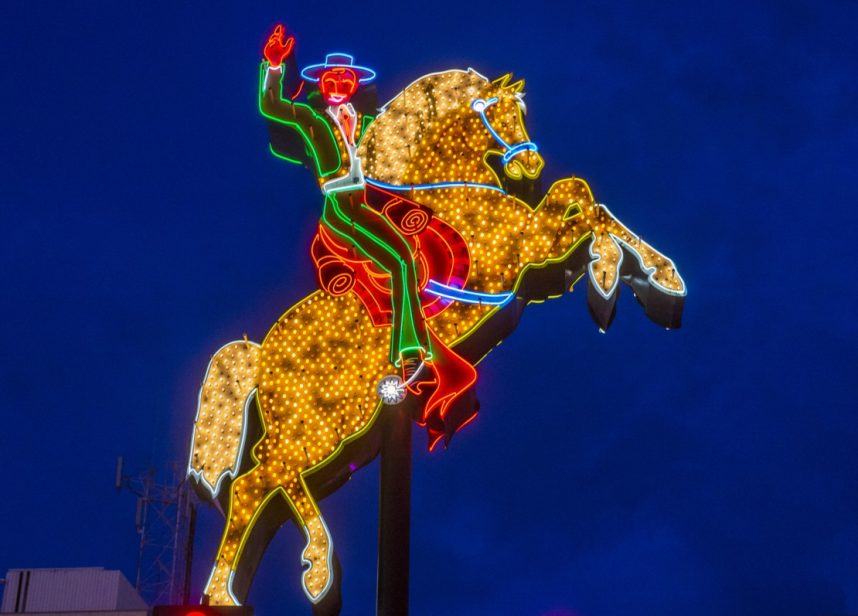
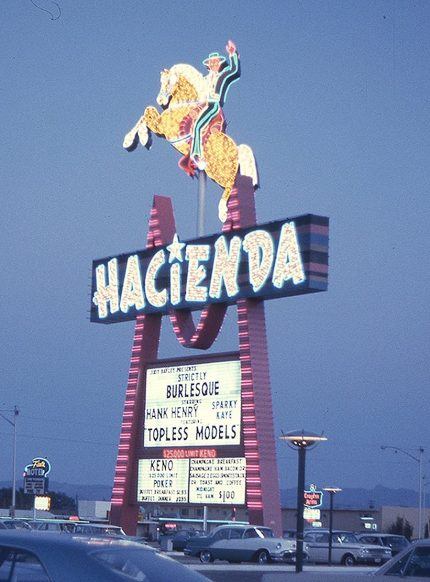
Like all little brothers, he came into the world later (16 years) and smaller (a full 10 feet short of 40-foot Vic).
He had animation, too, but it wasn’t nearly as cool as Vegas Vic’s waving arm. (The neon lining his horse’s legs only simulated motion.)
But he came up the shortest in this contest because no one ever considered him important enough to name. He has always gone just by Horse and Rider, like some abstract museum piece. With a handle like, say, Hacienda Hoss, he could easily have been a familiar friend.
Frankly, Hacienda owner Judy Bayley cared more about the horse than the rider. According to the detailed instructions she provided to designer Brian “Buzz” Leming, of the Younge Electric Sign Company (YESCO), the stallion was to resemble her pet thoroughbred J.B., with whom she shared initials.
Sideline Saddle
Horse and Rider starred in movies just like his big brother did — but far fewer of them. As far as the classics, he made cameos in 1988’s “Rain Man,” and in 1995’s “Casino” and “Leaving Las Vegas,” via establishing shots.
Of course, Vegas Vic also appeared in all of those movies and many more — including 1964’s “Viva Las Vegas,” 1971’s “Diamonds Are Forever” and 2000’s “The Hangover.”
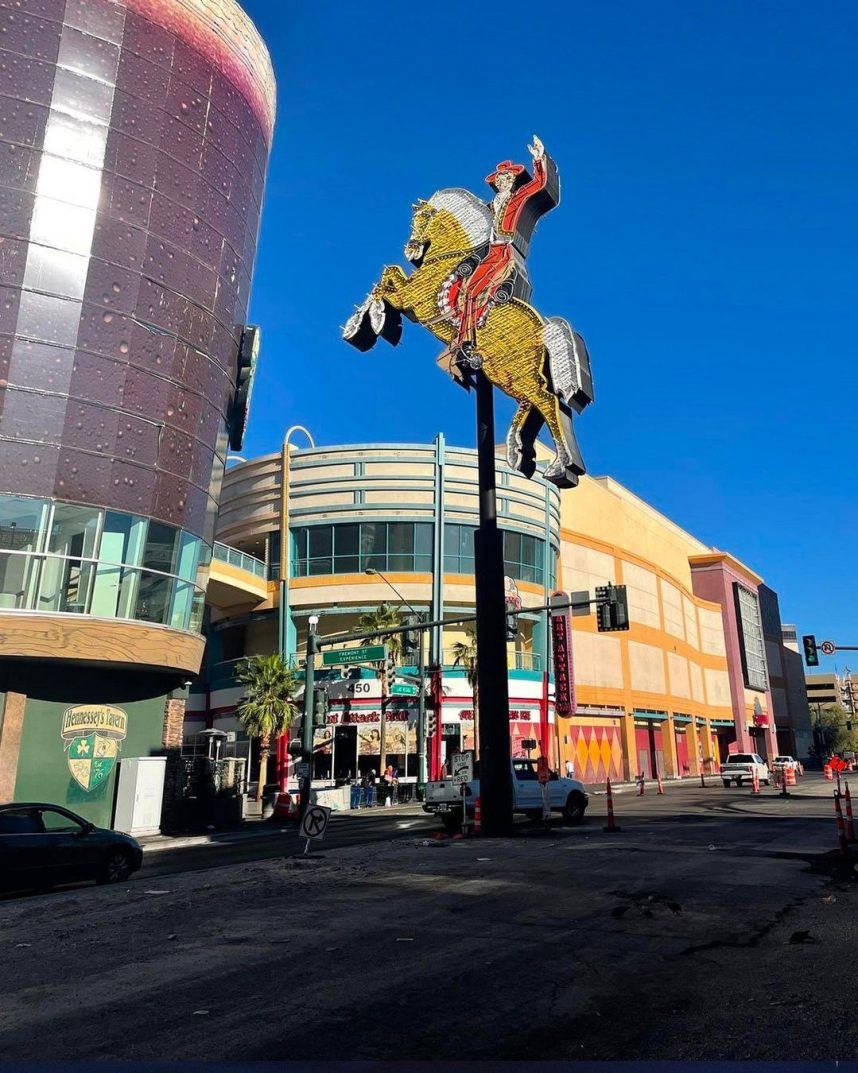
In fact, the only time Horse and Rider was ever thought of before Vegas Vic is when the Neon Museum installed a series of classic early Vegas signs as part of its Neon Sign Project at Las Vegas Boulevard and Fremont Street.
It was 1996, the same year the Hacienda was demolished to make way for Mandalay Bay. And Horse and Rider was the very first retired sign to be installed.
Of course, that’s only because his more famous big brother was still gainfully employed around the corner.
“Lost Vegas” is an occasional Casino.org series spotlighting Las Vegas’ forgotten history. Click here to read other entries in the series. Think you know a good Vegas story lost to history? Email corey@casino.org.

 Most Read
Another Shooting Near Las Vegas Strip Casino Injures Man
 972,740 views
Vintners Oppose Napa Valley Casino
556,343 views


Conversation (1 comment)