 Main menu

Las Vegas
LOST VEGAS: Forgotten WWII Relics Hiding in Plain Sight
Posted on: February 28, 2025, 07:36h.
Last updated on: March 2, 2025, 05:38h.


- Eight giant triangles are carved into the desert north of Las Vegas
- They represent one of the only permanent marks left on Las Vegas by WWII
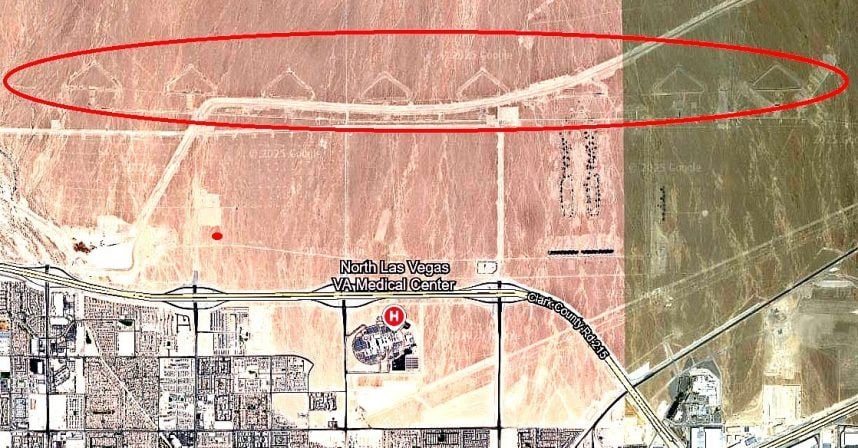
You have to know where to look using Google Earth. And even when you find them, you have to crank the contrast really high to make them out through the decades of erosion. But there they are: eight giant earthen triangles — big enough to fit one Fashion Show mall each — stretching five miles from end to end.
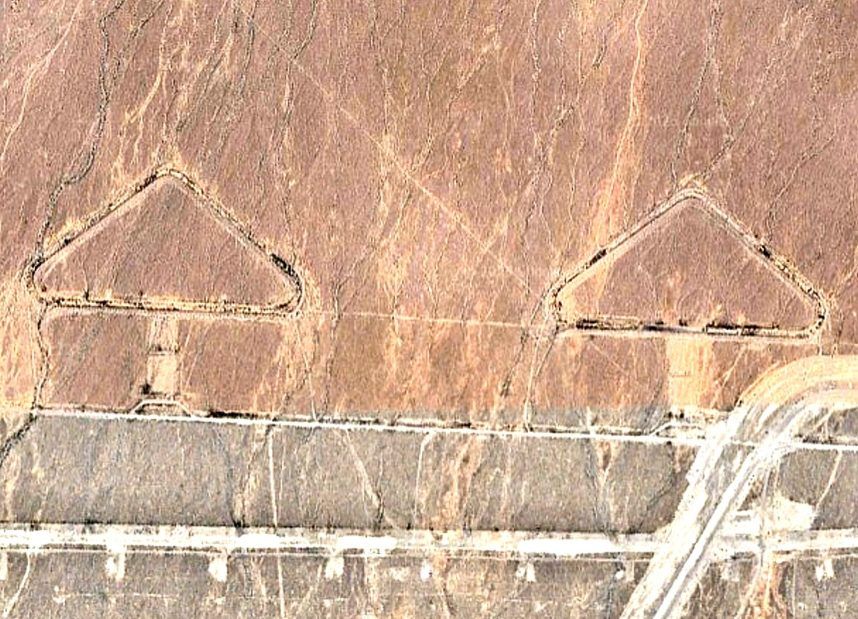
Civilians can’t view them up close, since the formations are part of a small-arms shooting range for Nellis Air Force Base today. But they are the relics of the Las Vegas Army Air Corp Gunnery School, a precursor to Nellis that trained soldiers to fight in WWII.
Ironically, they are just 20 minutes north of the Las Vegas Strip, where no history gets preserved.
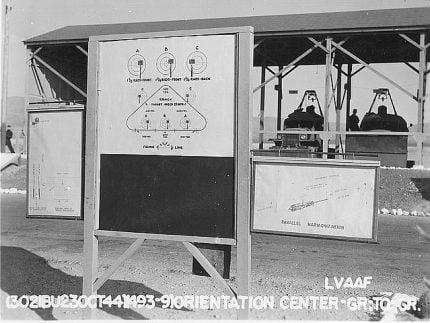
The school, which operated from 1941 to 1945, took advantage of the region’s year-round good flying weather, as well as its ample supply of mountains to shoot into and dry lakebeds to land on.
It trained about 45K gunners and 9K pilots in all, using the actual aircraft they would fly into combat — B-17 Flying Fortress bombers.
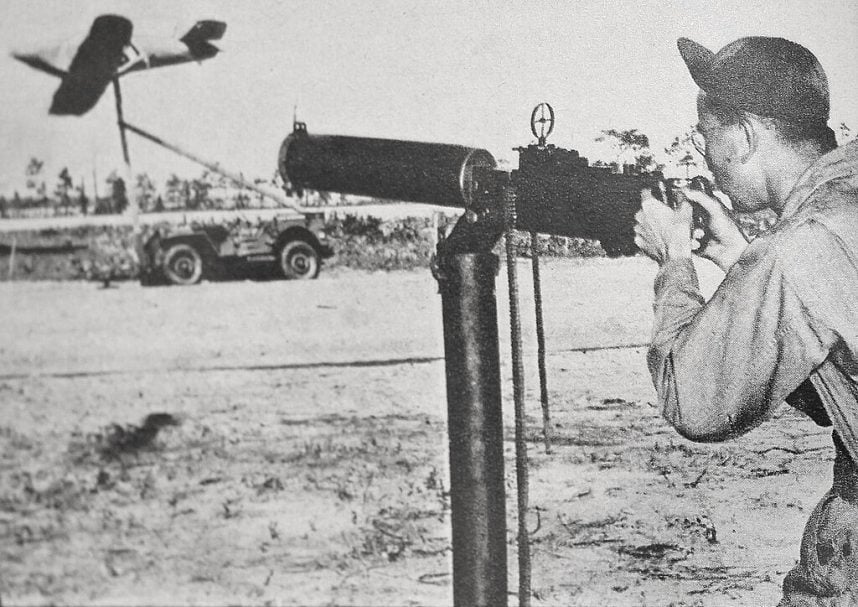
But first, the gunners had to train on the ground. The triangles were actually dirt tracks where scale-model airplanes mounted on unmanned Jeeps would circle (or whatever you call moving along a triangle) at 25 mph.
Gunnery students aimed at the planes from turrets suspended on truck beds on the firing line, simulating the cramped conditions inside the B-17.
In March 1945, the school converted to B-29 bombers, and its enrollment peaked at nearly 5,000 students.
After the atomic bombings of Hiroshima and Nagasaki ended “the war to end all wars,” the gunnery school served a new role — processing servicemen returning to civilian life. In early 1947, it was decommissioned along with the army base. Three years later, it came back on line as Nellis under the brand new US Air Force, though the tracks were abanodoned.
Little remains of that massive wartime effort, beyond the forgotten triangles in the desert. One is partially erased by what looks to be a flood control project.
Appropriately, the only way to see these giant relics of Las Vegas’ wartime past is from the sky.
“Lost Vegas” is an occasional Casino.org series spotlighting Las Vegas’ forgotten history. Click here to read other entries in the series. Think you know a good Vegas story lost to history? Email corey@casino.org.

 Most Read
Another Shooting Near Las Vegas Strip Casino Injures Man
 972,745 views

Vintners Oppose Napa Valley Casino
556,350 views


Conversation (0)
Be the first to comment on this article.