 Main menu

Las Vegas
How the Las Vegas Strip Responded to its Own Vehicle-Ramming Attack
Posted on: January 2, 2025, 11:32h.
Last updated on: January 2, 2025, 02:56h.


A day after the deadliest vehicle-ramming attack in the US occurred in New Orleans, it’s worth revisiting how Las Vegas responded to its own vehicle-ramming attack nine years ago.
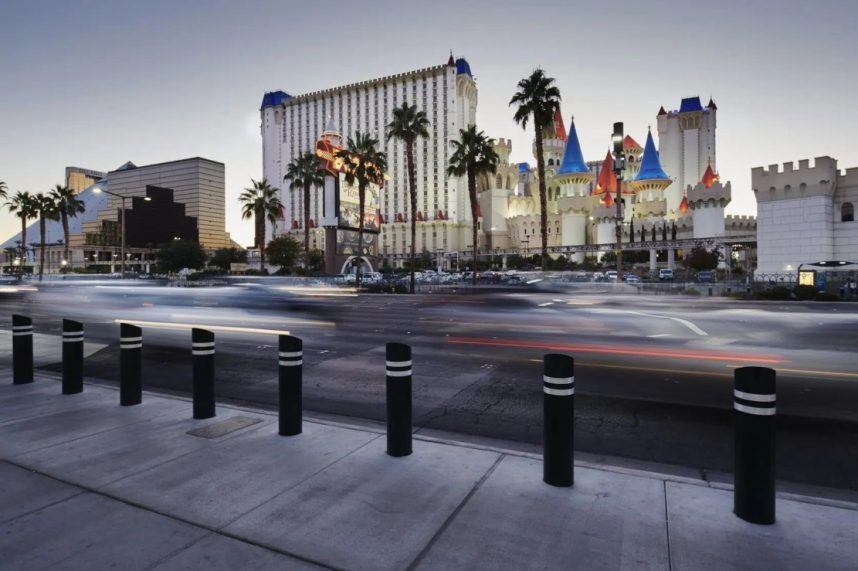
On Dec. 20, 2015, a woman drove her 1996 Oldsmobile sedan onto the sidewalk near Paris Las Vegas, killing 32-year-old Arizona tourist Jessica Valenzuela and injuring 37 others.
In response, Clark County installed cement bollards along the length of the Las Vegas Strip, from the Welcome to Las Vegas Sign north to Sahara Avenue.
The 5,600 crash-rated bollards, in addition to 640 linear feet of crash-rated post and cable protection and 1,635 linear feet of concrete crash wall, were installed between 2017 and 2019, at a cost to taxpayers of more than $22 million.
According to Kimley-Horn, the North Carolina engineering consulting firm that designed the bollards, they provide “over eight total miles of pedestrian protection on this corridor.”
The bollards were strategically placed to protect the Strip’s busiest intersections. However, they do not eliminate every conceivable point where a vehicle might access the sidewalk — especially in areas where driveways or other access points exist.
The Suspect
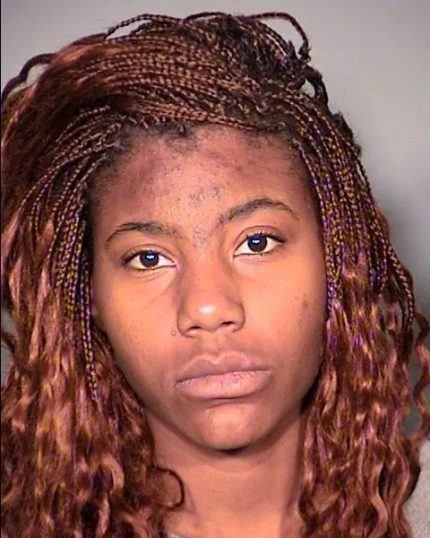
The alleged driver was Lakeisha Holloway, a 24-year-old Portland, Ore. resident who had been living out of her car in Las Vegas for about a week before the incident.
She told police at the time that she was “hurting and wanted others to feel pain.” Holloway’s 3-year-old daughter was in the car during the incident but was not injured.
Prosecutors have described Holloway as above Nevada’s legal limit for marijuana at the time (2 nanograms per milliliter of blood for THC or 5 nanograms per milliliter of THC metabolite).
She was charged with 71 counts, including murder with use of a deadly weapon, child abuse, attempted murder, and leaving the scene of an accident. However, her case was complicated by mental health issues that kept her confined to a state psychiatric hospital.
In March 2021, she was deemed competent to stand trial. In May 2023, Holloway, representing herself and requesting a different public defender, rejected a plea bargain that would have avoided trial.
Her trial is currently scheduled to begin in March, nearly 10 years after her alleged crime.

 Most Read
Another Shooting Near Las Vegas Strip Casino Injures Man
 972,624 views

Vintners Oppose Napa Valley Casino
556,232 views


Conversation (0)
Be the first to comment on this article.