How to Play Jacks or Better Video Poker

Summarize this post
Key Takeaways
- Jacks or Better is the classic video poker game, and full-pay 9/6 machines offer a strong 99.54% theoretical return with perfect play.
- The name comes from the minimum paying hand, a pair of jacks or higher.
- Your two biggest edges are simple, play max coins and find the right paytable.
- Most mistakes happen on borderline hands, like choosing between a pair, a flush draw, or a straight draw.
- A solid strategy chart gets you close, but knowing the most common trouble spots is what really sharpens your play.
Jacks or Better is the video poker game most players start with, and for good reason. It is easy to learn, fast to play, and on the right machine it offers one of the best returns in the casino. It is a draw poker game where the lowest paying hand is a pair of jacks, and the best strategy is built around smart hold-and-draw decisions on a full-pay 9/6 machine.
That sounds simple enough, but a lot of players still give away value. They chase weak draws, ignore the paytable, or bet too little to get the full royal flush payout.
This guide cuts through that noise and focuses on what matters. How Jacks or Better works, what to hold, what to throw away, and where the biggest mistakes show up.
What Is Jacks or Better?
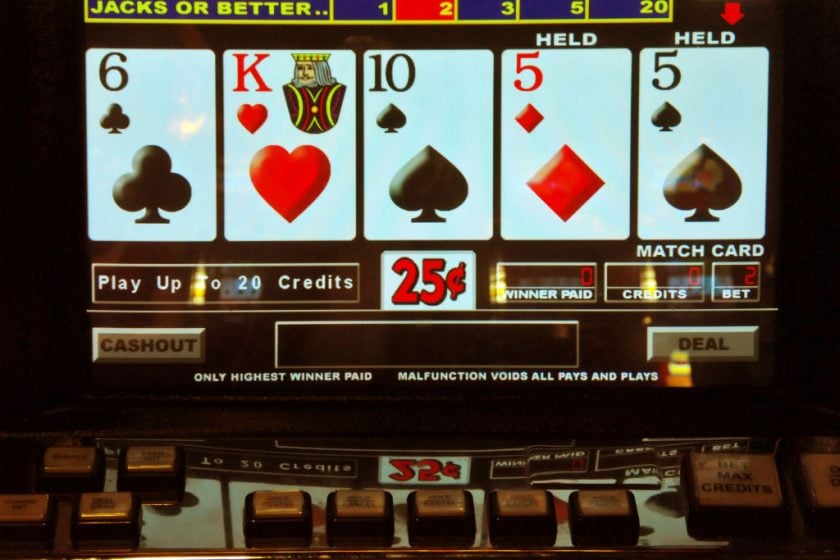
Jacks or Better is a standard five-card draw video poker game played against a paytable, not against other players. You get five cards, choose which ones to hold, discard the rest, and draw replacements. The final hand is paid according to the machine’s paytable.
The twist is in the minimum winner. In Jacks or Better, low pairs do not pay. A pair of 2s through 10s is worthless at showdown. The first paying hand is a pair of jacks, queens, kings, or aces. That is why strategy matters so much. You are not just trying to make any pair. You are trying to keep the cards that give you the strongest expected return over time.
How to Play Jacks or Better
The basic flow is straightforward:
- Choose your bet size.
- Hit Deal to receive five cards.
- Hold the cards you want to keep.
- Draw replacement cards for the rest.
- Get paid if your final hand qualifies.
The standard winning poker hands, from highest to lowest, are:
- Royal Flush
- Straight Flush
- Four of a Kind
- Full House
- Flush
- Straight
- Three of a Kind
- Two Pair
- Jacks or Better
That is the easy part. The harder part is knowing what to keep when your opening hand offers more than one possible route.
Why the Paytable Matters So Much
Not all Jacks or Better machines are created equal. The version serious players look for is full-pay 9/6 Jacks or Better. The “9/6” refers to the full house and flush payouts on a one-credit basis, 9 for a full house and 6 for a flush.
On a full-pay 9/6 machine, perfect play returns 99.54%. That is elite territory for a casino floor game.
Here is how common paytables compare:
- 9/6 Jacks or Better: 99.54%
- 8/5 Jacks or Better: 97.30%
- 7/5 Jacks or Better: 96.15%
- 6/5 Jacks or Better: 95.00%
That gap is not cosmetic. It is the difference between a very strong game and a mediocre one. If you are going to spend time learning strategy, start by making sure the machine is worth playing.
Always Bet Max Coins
This is one of the few rules in video poker that should be treated as absolute. In Jacks or Better, the royal flush payout jumps when you bet five coins. Instead of paying in a normal linear way, the machine gives a bonus for max-coin play.
That bonus is a major part of the game’s overall return. If you bet fewer than five coins, you slash the value of the royal flush and make the game much worse. If your bankroll cannot support max credits at your current denomination, step down in denomination instead of playing short.
Basic Jacks or Better Strategy
At its core, Jacks or Better strategy is about expected value. You hold the cards that give you the best long-term return, not the cards that simply “look promising” in the moment. A full strategy chart can get technical, but most hands can be played correctly by following a practical priority order.
What to Hold First
In general, keep made hands and premium draws ahead of weaker speculative hands. A solid simplified order looks like this:
- Royal flush, straight flush, four of a kind
- Four to a royal flush
- Full house, flush, straight, three of a kind
- Four to a straight flush
- Two pair
- High pair (jacks, queens, kings, aces)
- Three to a royal flush
- Four to a flush
- Low pair
- Four to an open-ended straight
- Two suited high cards
- Three to a straight flush
- Two unsuited high cards
- One high card
- Draw five new cards
This is not a complete expert chart, but it covers the vast majority of real-world decisions well enough for recreational players.
The Most Important Jacks or Better Decisions
Where players lose ground is not on obvious hands. Nobody needs help holding a full house. The trouble starts when a hand gives you competing options.
High Pair vs. Flush Draw
If you are dealt a high pair and four cards to a flush, hold the high pair.
Example: J♥ J♠ 8♥ 6♥ 3♥
A pair of jacks already pays, and it has strong improvement potential to two pair, trips, full house, or quads. Breaking it to chase a flush looks tempting, but it is the wrong long-run play.
Low Pair vs. Four to a Flush
This one goes the other way. A four-card flush draw usually beats a low pair.
Example: 7♣ 7♠ Q♣ 6♣ 4♣
Here, the draw to the flush is stronger than sitting on a pair of sevens. This is one of the spots where many beginners freeze up because they hate throwing away a pair.
Four to an Open Straight vs. One High Card
Hold the open-ended straight draw.
Example: 9♠ 8♣ 7♥ 6♦ K♠
An open straight draw has eight outs and usually beats the value of holding a single king, queen, jack, or ace.
Inside Straight vs. High Card
Usually, skip the inside straight and keep the high card instead.
Example: 9♦ 8♣ 7♥ 6♠ A♥
You need one specific rank to complete the straight, which makes an inside draw much weaker than it looks. Players burn a lot of value chasing these hands.
Two Pair
Always hold both pairs.
Example: K♦ K♥ 8♣ 8♠ 3♦
Discard the fifth card and draw one. Do not break two pair trying to force a full house or four of a kind. This is one of the classic beginner mistakes in Jacks or Better.
Three of a Kind
Hold the trips and draw two. Do not get cute.
Three of a kind already guarantees a payout and gives you a shot at full house or quads. The same logic applies to made straights and made flushes in almost every case: take the made hand.
Four to a Royal Flush
This is the premium draw in Jacks or Better. If you have four cards to a royal flush, you hold them even if that means breaking a made straight or flush.
Example: 10♥ J♥ Q♥ K♥ A♣
You should keep the four hearts and draw one, even though you already have a straight. It feels wrong the first few times you see it, but it is correct because of the royal flush payoff.
A Cleaner Way to Think About Strategy
Instead of trying to memorize every possible hand at once, focus on a few broad rules:
1. Respect made hands
If you already have a strong paying hand, keep it. Do not break flushes, straights, trips, or two pair unless the hand falls into a very specific premium-draw exception, like four to a royal.
2. High pairs are strong
A pair of jacks or better is already a winner. Do not casually break it for lower-value draws.
3. Low pairs are more fragile
Small pairs can be correct holds, but they lose out to stronger draw situations, especially four-card flushes and better premium draws.
4. Open draws beat weak hopes
Four to an open straight is a real draw. Four to an inside straight usually is not.
5. High cards still matter
When a hand is mostly junk, suited and connected high cards carry more value than random low cards. That framework will clean up a lot of bad decisions before you ever look at a full chart.
Common Jacks or Better Mistakes
Even decent players slip into habits that hurt their results.
Ignoring the paytable
A bad Jacks or Better machine is still a bad machine, no matter how good your strategy is.
Betting fewer than five coins
This kills the value of the royal flush and drags down the game’s return.
Chasing every flush or straight draw
Not all draws are created equal. Some are profitable. Some only look exciting.
Holding kickers with pairs
If you have a pair, the side cards usually go. Keeping an extra ace or king along with your pair often reduces your chance to improve.
Playing too fast without a system
Jacks or Better rewards discipline. If you are guessing on every close hand, you are probably making the game more expensive than it needs to be.
Is Jacks or Better a Good Casino Game?
Yes, at least compared with most slot-style options on a casino floor. On a good paytable, Jacks or Better offers a low house edge, clear strategy, and real player control over the outcome of each hand.
That does not mean it is beatable for most players. Even on full-pay 9/6, the house still has the edge unless you combine perfect play with additional value like comps, cashback, or promotions. For most people, Jacks or Better is best viewed as a smart gambling option, not a source of income.
It is also worth remembering that variance still matters. You can play well and lose in the short term. Quads and royals do not arrive on schedule. Good strategy improves your long-run expectation, but it does not smooth out the ride.
Jacks or Better FAQs
Jacks or Better is a video poker game where the lowest paying hand is a pair of jacks. Low pairs do not pay, which makes hold strategy more important than in some other poker variants.
It refers to the payouts for a full house and a flush on the paytable, 9 for 1 on a full house and 6 for 1 on a flush. 9/6 Jacks or Better is the full-pay version most players want.
The best strategy is to use a correct hold chart for the paytable you are playing, usually 9/6. In general, you keep made hands, premium draws like four to a royal, and strong pairs ahead of weaker draws.
Yes. Max-coin play gives you the full royal flush bonus, which is a big part of the game’s return. Playing fewer than five coins makes the paytable worse.
From a return standpoint, it often is. Full-pay Jacks or Better has a much better theoretical return than many slot machines, especially if you use proper strategy. That said, it still involves risk, variance, and a built-in house edge.
Most players should expect a small long-term loss, even with strong strategy. On full-pay machines, the edge is slim enough that comps and promotions can matter, but it is still gambling and should be treated that way.
Should You Play Jacks or Better?
If you want a video poker game worth learning, Jacks or Better is still the starting point. It is easy to understand, tough to master, and rewarding for players who pay attention to details.
The formula is simple: find a full-pay 9/6 machine, bet max coins, and use a strategy chart until the right holds become second nature. Most of your edge comes from avoiding the same basic errors over and over again.
That is what makes Jacks or Better appealing. It is not just about pressing buttons and hoping. It is a casino game where better decisions actually matter.