 Main menu

Las Vegas
LOST VEGAS: Casino Shills
Posted on: May 7, 2026, 07:46h.
Last updated on: May 12, 2026, 06:58h.


- Las Vegas casinos historically employed shills to manufacture the illusion of gambling activity
- Shills played with house money under strict betting rules to keep tables moving
- Modern player tracking and higher tourism volume eventually rendered the shill role obsolete
Before loyalty programs, digital analytics, and marketing departments, a different kind of engine kept casino games in Las Vegas moving. Shills (aka game-starters, plants, and decoys) were paid players whose job was to make a cold table look hot. Casinos needed bodies in seats, especially during the slow early-morning hours, and shills supplied the illusion of action.
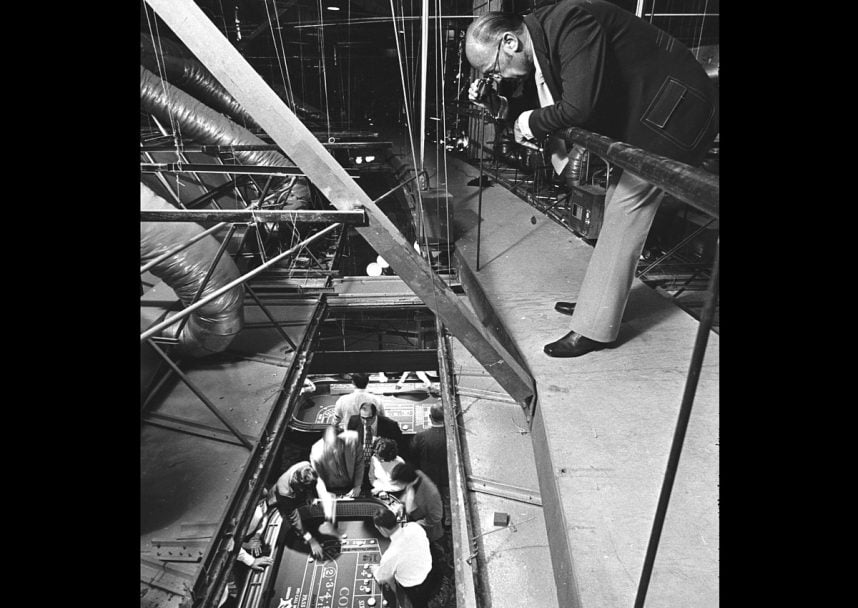
While the term “shill” carries a predatory connotation today, in Nevada, it was a regulated profession since the 1940s. Shills were just like any other casino employee. They clocked in, worked assigned shifts, and dined in the employee lunchroom.
Unlike average gamblers, shills had no skin in the game. They played with “dead money” — chips that belonged to the casino and were returned to its cage at the end of the night.
Shill Game
The job was one of rigid monotony disguised as leisure. At blackjack or craps, shills were bound by strict protocols. The ultimate basic-strategy bots, a shill at a blackjack table could never double down on a whim or split pairs.
At the craps table, they were restricted to the pass line, making the simplest bets to ensure the game moved at a steady clip without complicating the dealer’s math.
In the slot pits, the work was more theatrical and performed almost exclusively by attractive women. Supervisors would “clear” a machine of its actual coin inventory and hand the shill a rack of house silver.
She was paid to celebrate small wins, clink coins into trays, and draw the eyes of tourists toward a machine that appeared “hot.” (A digital echo of this practice is the “attract mode” found on modern slot machines — flashing lights and sound bytes designed to lure players — though regulations strictly prohibit slots from mimicking actual jackpot sounds while idle.)
Because shills handled house funds, security measures were intense. Female shills, a staple by the 1960s at properties like the Desert Inn and the Pioneer, were strictly forbidden from carrying purses or wearing pockets. Every movement — from scratching a nose to adjusting a chair — required a “clear hands” gesture to the pit boss to prove no chips were being palmed.
Pay was modest. Former shills recall earning minimum wage plus tips. Tips came from players who treated shills as friendly table companions — people who played alongside them to keep the energy high and the conversation flowing throughout the shift.
A Vanishing Breed
Shills were once ubiquitous, found in every corner of the city from the high-stakes baccarat pits of Bally’s to the quirky, long-gone Boardwalk and Nob Hill on the Strip. However, by the early 1990s, the “human decoy” became a corporate inefficiency.
The rise of player tracking systems allowed casinos to understand exactly who was at a table and why, replacing the “gut feeling” of a pit boss with cold data.
Simultaneously, the mega-resort era brought a surge in tourism that made empty tables a rarity. The improvisational, “Wild West” management style of the mob-linked era was replaced by corporate oversight that viewed the potential for shill-dealer collusion as a liability not worth the risk.
Prop ‘Til You Drop
While the shill vanished by the ‘90s, a related job called the prop (proposition) player continues in some Las Vegas poker rooms — in particular, the ones displaying the sign: “Nevada gaming regulations allow the use of shills and proposition players” who “shall be identified by management upon request.”

Unlike shills, props play with their own money and keep their winnings, receiving an hourly rate simply for keeping a table from breaking. They usually play very straightforward poker and are supposed to leave once the game fills with real players.
This was the training ground for Jennifer Harman, a future Poker Hall of Famer, who spent the 1980s as a prop in Los Angeles cardrooms.
The steady hourly wage provided the life insurance her bankroll needed while she mastered the high-stakes limit games that eventually made her a millionaire at the Bellagio.
Props are becoming less commonplace in Las Vegas casinos — especially since poker rooms themselves are!
Today, shills and props are largely ghosts of a bygone Vegas. They serve as a reminder of a time when the house didn’t just win, it performed, ensuring that every guest who walked through the doors saw exactly what they came for: a table where the action never stopped.
“Lost Vegas” is an occasional Casino.org series spotlighting Las Vegas’ forgotten history. Click here to read other entries in the series. Think you know a good Vegas story lost to history? Email corey@casino.org.

 Most Read
Another Shooting Near Las Vegas Strip Casino Injures Man
 972,524 views
Vintners Oppose Napa Valley Casino
556,149 views


Conversation (2 comments)