 Main menu

Research
Defense Health Agency Flags Gambling As Security Clearance Risk
Posted on: April 20, 2026, 04:38h.
Last updated on: April 20, 2026, 08:27h.


- The Defense Health Agency is worried that more online gambling outlets are hurting military service members
- A comprehensive study on gambling problems in the military hasn’t been conducted since 2018
The US Defense Health Agency (DHA) is warning service members that online gambling and unregulated “prediction markets” pose a direct threat to military readiness and can lead to the permanent loss of security clearances.
In an article titled, “Betting Your Future: More Than Money on the Line,” the publication on Army.mil and other Department of Defense websites relays the many hidden dangers of online gambling that many officials and military members within the federal government are participating.
Experts at the DHA suspect a growing number of service members are gambling on online sportsbooks and casino websites, as well as prediction markets, which allow anyone aged 18+ to make trades on sports and other events.
Technology has allowed almost instantaneous access, leading to potentially significant swings (loss versus gains) of finances,” said Lt. Col. Isaac Lopez, a clinical psychologist with the Defense Health Agency in Aberdeen, MD. “This could be detrimental for service members, primarily younger enlisted with lower income.”
Studies regarding problem gambling in the military remain under-documented. The most recent comprehensive review came in 2018, when the American Journal on Addictions concluded that 1.6% of active-duty service members were problem gamblers
Military Gambling Risks
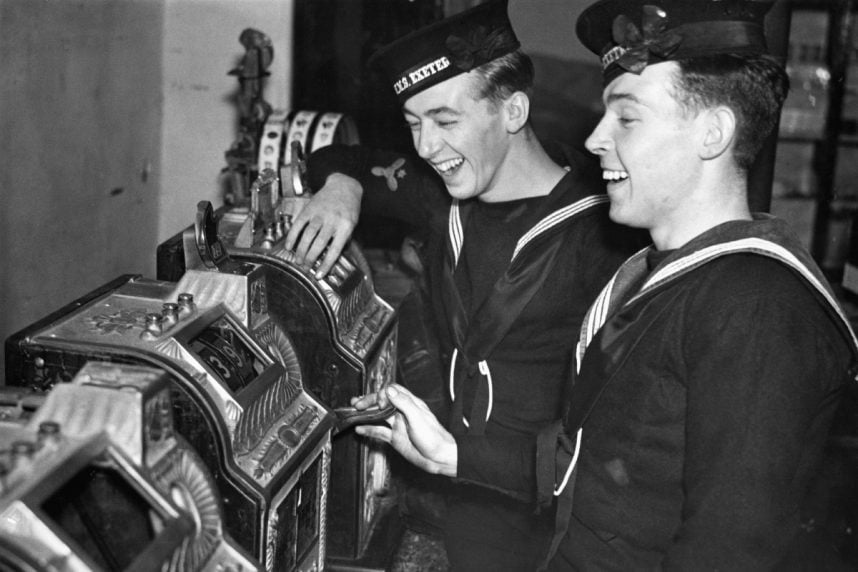
Slot machines on overseas military installations remain common, with the games perceived as a form of entertainment.
The slots generate over $100 million a year, with the DOD claiming the money is reinvested into programs to raise “morale, welfare, and recreation.” The DOD operates more than 3,000 0slots across 12 counties where troops are stationed.
The rise of online gaming in recent years has reportedly elevated problem gambling since the 2018 report. Since 2018, sports betting has expanded across the US, bringing gambling more mainstream. Offshore casino websites and online prediction markets are now accessible around most of the world.
“The rapid expansion of online gambling since 2018 is unprecedented, and care needs to be given to not stigmatize service members experiencing gambling problems,” said Matthew Beyer of the Defense Health Agency.
Along with financial problems, excessive gambling can jeopardize a military member’s security clearance.
Financial strain is a major problem, and if it leads to debt, it can absolutely become a threat to a service member’s security clearance,” Lopez explained.
Defense health officials say those experiencing gambling harms can seek help at Military OneSource, a confidential counseling resource. The Department of Veterans Affairs also offers problem gambling services, including screening and treatment options.
Military Gambling Research
For the first time in US history, Congress last year recognized gambling addiction as an eligible research topic for the Department of Defense’s Peer-Reviewed Medical Research Program. The designation will allow for the funding of research into how gambling is impacting service members and how to better help those experiencing distress.
Servicemembers and Veterans facing gambling addiction deserve the same level of support and understanding we’ve worked to build around PTSD, depression, and other behavioral health challenges,” said Sen. Ben Ray Luján (D-New Mexico).
“This provision is a critical step toward recognizing the realities our military community faces and ensuring the federal government invests in the basic, foundational research needed to support recovery,” Luján added.

 Most Read
Another Shooting Near Las Vegas Strip Casino Injures Man
 972,714 views

Vintners Oppose Napa Valley Casino
556,319 views


Conversation (0)
Be the first to comment on this article.