 Main menu

Legislation
Should Sportsbooks Be Allowed to Incentivize Bettors Using Responsible Gaming Tools?
Posted on: May 12, 2026, 01:09h.
Last updated on: May 13, 2026, 09:24h.


- Legislation in NJ would restrict certain bettors from being incentivized by their sportsbook
- All bettors using responsible gaming tools would become ineligible for sportsbook promotions
New Jersey lawmakers are moving to ban sportsbooks from ‘tempting’ vulnerable bettors with bonus offers once they’ve already tried to pump the brakes with responsible gaming tools.
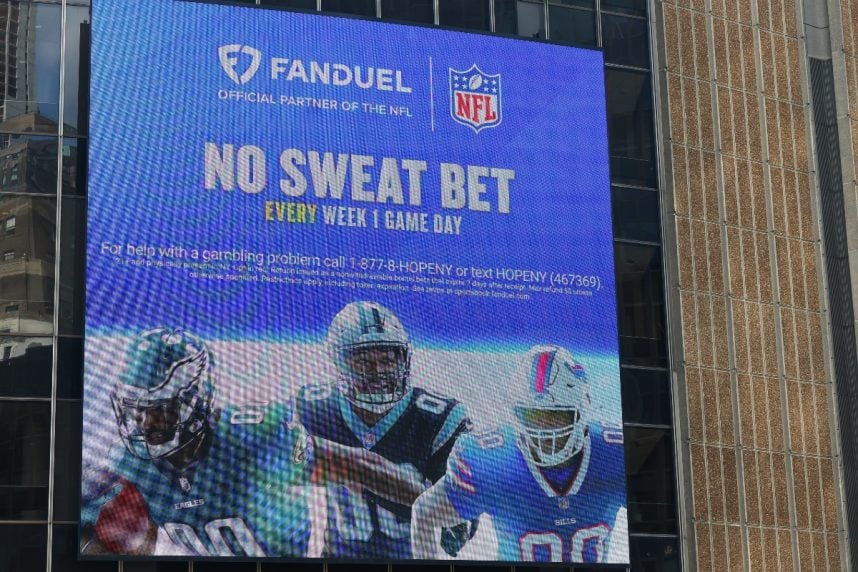
New Jersey is one of the richest sports gambling states in the country. Last year, New Jersey sportsbooks took more than $12.23 billion in bets and kept $1.17 billion of the wagers.
Assembly Bill 4003 (AB4003), introduced in February by Assemblymembers Dan Hutchison (D-Atlantic), Cody Miller (D-Atlantic), and Michael Venezia (D-Essex), would prohibit online sportsbooks from marketing to customers with active responsible gaming safeguards. Such tools include self-exclusion programs, time or wager limits, and deposit caps.
Sportsbooks deemed noncompliant with AB4003’s rules would face a penalty of “not less than $500 per offense.” The responsible gaming components could be offered by the customer’s sportsbook or the state’s programs.
Bill Clears First Hurdle
New Jersey’s sports betting industry primarily lives online. While retail sportsbooks are located at the nine casinos in Atlantic City and at the Monmouth Park and Meadowlands racetracks, online oddsmakers accounted for almost 96% of the 2025 action.
Online sportsbooks in New Jersey can deduct promotional play issued to bettors to reduce their taxable sports wagering revenue, but only on credits issued in excess of $12 million annually.
The regulation is to ensure that sports bettors, and not sportsbooks, are the immediate beneficiary of promotional play. If a sportsbook seeks to use the promotional credit deduction, it’ll first need to dole out $12 million to its customers.
AB4003, however, would restrict the pool of sports bettors eligible for promotional programs. Last week, the legislation was reported favorably out of the Assembly Tourism, Gaming and the Arts Committee with a unanimous 5-0 vote.
The measure is awaiting full consideration on the Assembly floor. The New Jersey Legislature’s 2026 session runs through December.
Not the first amendment
New Jersey last amended its sports betting market in 2025. At the request of then-Gov. Phil Murphy (D), lawmakers agreed to increase the state’s take on online sports betting revenue from 13% to 19.75%.
Truist Securities gaming analyst Barry Jonas said at the time that operators would eat the higher tax.
“We had expected an operator-friendly compromise and think ~20% is manageable. We also think mitigation can be done via promo reductions alone, with a 50% mitigation in 2026 very reasonable and potentially higher afterwards,” Jonas wrote.
Promo Bet Fine Print
Promotional credits issued by sportsbooks are designed to keep bettors engaged with the online platform.
Promotional bets are often “winnings-only” wagers, meaning the bettor doesn’t get the original bet back but only the net win. Credits won from promotional bets are also typically not immediately redeemable for cash withdrawals but instead must be wagered again or a certain number of times.
Credits from promotional and bonus bets, as well as deposit matches, additionally have expiration dates.
Promotional bets are a key element of a sportsbook’s business, as such marketing is critical to customer acquisition and retention, as well as bettor loyalty.

 Most Read

Another Shooting Near Las Vegas Strip Casino Injures Man
 972,584 views

Vintners Oppose Napa Valley Casino
556,205 views


Conversation (0)
Be the first to comment on this article.