 Main menu

Financial
Robinhood Imposes Restrictions on Prediction Markets
Posted on: April 13, 2026, 03:04h.
Last updated on: April 14, 2026, 01:38h.


- Robinhood wants to clampdown on potential insider trading
- It won’t offer certain event contracts that are vulnerable to manipulation
- Event contracts are big business for the online broker
Robinhood Markets (NASDAQ: HOOD) will keep with its policy of not offering certain event contracts amid rising concern about and scrutiny applied to insider trading on prediction markets.
Jordan Sinclair, president of Robinhood UK, told The Financial Times the brokerage firm is intent on weeding out on insider trading and market manipulators and as a result, it’s menu of yes/no contracts will be smaller than those of some competitors in the space.
His comments arrive as Congress is pushing the White House for more details on suspicious trading on Polymarket relating to the war in Iran.
As Casino.org reported earlier this month, some newly formed Polymarket accounts profited mightily on event contracts tied to ceasefire talks, drawing suspicion in the media and on Capitol Hill.
Unlike traditional financial markets, prediction markets currently aren’t subject to federal and state insider trading rules and laws, though some politicians are hoping to change that at the federal level.
Robinhood Doing the Smart Thing
Robinhood has good reasons to prevent bad actors from exploiting its prediction market platform, including the point that the business is the fastest-growing in the company’s history, according to CEO Vlad Tenev.
The financial services firm has also endured trading-related reputational damage in the past.
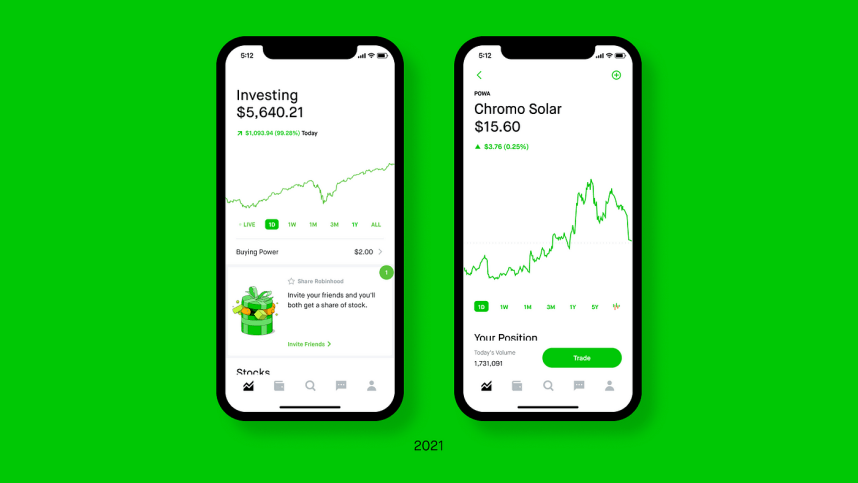
At the height of the meme stock rally in 2021, the brokerage firm was vilified by retail traders for temporarily limiting trading in AMC Entertainment (NYSE: AMC) and GameStop (NYSE: GME) — the stocks widely credited with leading that year’s meme stock rally.
In January 2021, Robinhood expanded its list of restricted stocks to 50 stocks with the bulk of those names being popular among retail traders. In some cases, Robinhood clients could trade just a single share of the restricted stocks and no options contracts tied to those names.
According to data from Business of Apps, the average account size on Robinhood over the past two years was $4,000 to $5,000, confirming it’s a largely retail client base and one that’s apt to make their voices heard when they believe they’re on the wrong end of market chicanery.
Mention Markets Out
In The Financial Times interview, Sinclair didn’t go into deep detail about which yes/no derivatives Robinhood is passing on, but he noted mention markets are part of that group.
Mention markets are exactly what the term implies – bets on what someone will say during an event such as an earnings call or political address. Those contracts are highly vulnerable to manipulation and insider trading.
Earlier this year, Kalshi suspended and penalized a former staffer of YouTube personality MrBeast for trading mention markets with insider knowledge.
Last October, Coinbase (NASDAQ: COIN) CEO Brian Armstrong, who runs a company now involved in prediction markets, drew criticism for jokingly rattling off a bunch phrases tied to mention markets during a company earnings call.

 Most Read

Another Shooting Near Las Vegas Strip Casino Injures Man
 972,666 views

Vintners Oppose Napa Valley Casino
556,271 views


Conversation (0)
Be the first to comment on this article.