 Main menu

Financial
Analyst: Prediction Markets Pacing to $1 Trillion in Volume by 2030
Posted on: April 15, 2026, 11:03h.
Last updated on: April 16, 2026, 04:57h.


- Bernstein sees prediction markets turnover reaching $1 trillion by 2030
- Volume on Kalshi, Polymarket this year already topped the 2025 tally
- Research firm says state legal challenges won’t harm industry growth
Prediction market volume is exploding this year and the industry’s rapid expansion puts it on pace to reach $1 trillion in annual turnover by 2030, according to Bernstein Research.
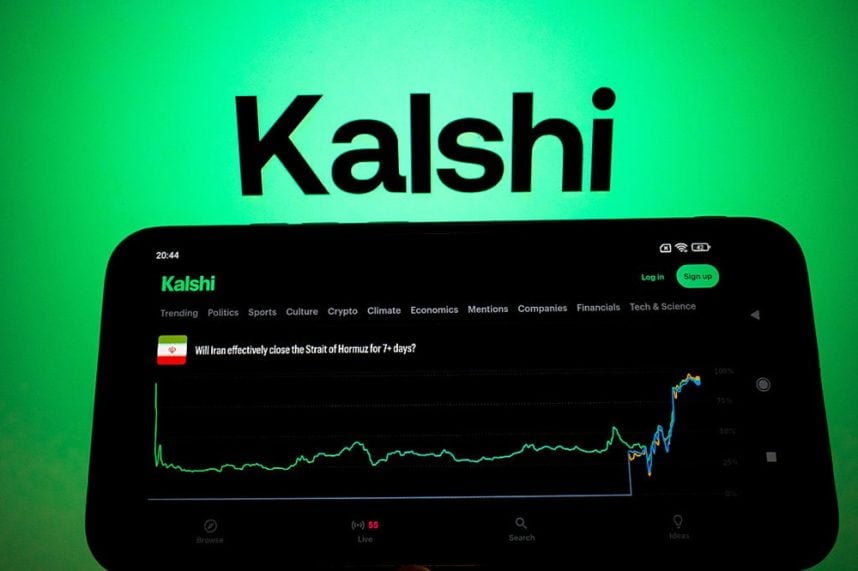
That’s the take of Bernstein analyst Gautam Chhugani who in a new report says yes/no exchanges are on pace for 2026 volume of $240 billion.
The Bernstein report emerged just days after Bank of America said prediction markets will eventually grow to $1.1 trillion in yearly activity. Chhugani sees increased usage by professional traders stoking upticks in prediction markets volume.
We expect [the] institutional market to develop around economics, business and political contracts, as investors seek more direct and discrete exposure to events,” observes the analyst. “We also expect hedging demand from corporates, [and] insurance firms exposed to specific event risks.”
The analyst estimates that sports event contracts represent more than 60% of industry turnover today — low compared to other forecasts — but in good news for platforms such as Kalshi and Polymarket, he sees that percentage being cut in half by 2030.
Usual Suspects Among Prediction Market Winners
Year-to-date, volume on Kalshi and Polymarket already exceeded the 2025 tally, prompting Bernstein to forecast $2.5 billion in prediction markets revenue, or a more than six-fold increase from the $400 million notched last year.
The research firm estimates that revenue figure will swell to $10.8 billion by 2030 based on current industry take rates.
As some of his counterparts have done, Chhugani highlights Coinbase Global (NASDAQ: COIN) and Robinhood Markets (NASDAQ: HOOD) as among the primary publicly traded beneficiaries of the prediction markets boom.
The Bernstein analyst says Robinhood, which says prediction markets are its fastest-growing business ever, is generating $350 million in recurring annual revenue through event contracts with the popular brokerage firm accounting for 30% of Kalshi’s turnover.
Coinbase entered the prediction markets space through a partnership with Kalshi last year.
Both Coinbase and Robinhood are seen as winners in a prediction markets expansion scenario because they have millions of customers — many of whom are active traders — as well as the technology and compliance knowhow to be successful with event contracts.
Regulatory Clarity Will Help Prediction Markets
It’s widely known that prediction market operators are contending with a spate of state-level legal challenges with some analysts seeing final resolution coming by way of the Supreme Court, but it’s not yet clear when the high court will take up prediction market cases.
In the meantime, the Commodities Futures Trading Commission (CFTC) is fighting regulatory turf battles with states, but Chhugani doesn’t see states’ legal efforts damping prediction markets long-term growth.
“Despite ongoing state-level legal challenges, we expect platforms like Kalshi, Polymarket, and public proxies (HOOD, COIN) to benefit from increasing regulatory clarity and growing alignment with federal regulators (SEC, CFTC) — a key driver of market legitimacy and mainstream adoption,” notes the Bernstein analyst.

 Most Read

Another Shooting Near Las Vegas Strip Casino Injures Man
 972,690 views

Vintners Oppose Napa Valley Casino
556,298 views


Conversation (0)
Be the first to comment on this article.