 Main menu

Sports Betting
Online Gambling Blamed for Sharp Rise in Personal Bankruptcy Filings
Posted on: April 27, 2026, 05:14h.
Last updated on: April 27, 2026, 05:24h.


- Online gambling could be playing a role in rising personal bankruptcy filings
- Bankruptcies rose almost 12% in the most recent fiscal year
- Many sports bettors report problems with their personal finances
Is online gambling fueling a rise in personal bankruptcy filings? Attorneys and financial advisors say they’re seeing a drastic increase in debt.
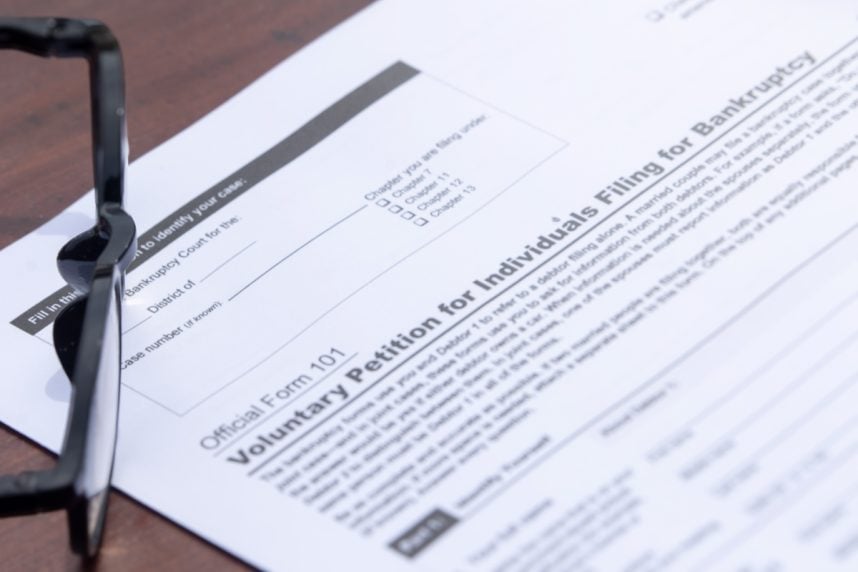
The United States government reported last week that non-business bankruptcy filings in the 2026 fiscal year, which ended March 31, 2026, soared 11.9% year-over-year to 565,890 filings. It’s the highest number of personal bankruptcy filings since 2019.
Some say the proliferation of online sports betting, along with the more recent emergence of controversial prediction markets taking bets on sports, is fueling the financial doomsday outcomes.
Numerous studies have shown that young men are most susceptible to developing gambling problems, and that’s costing them dearly.
“The debt builds incredibly fast because people aren’t gambling with cash; they’re gambling with borrowed money,” Chad Van Horn, a bankruptcy attorney in Florida, told Business Insider.
Van Horn said he’s seen credit card statements go from zero to $25,000 in “a matter of months.”

“The gambling is really the one that has really taken off,” added Ed Boltz, a bankruptcy attorney in North Carolina. “We’ve started to see people with $20,000, $30,000, $40,000 of fairly rapid credit card debt that they’ve incurred.”
Are Gambling Debts Forgiven in Bankruptcy?
Personal bankruptcy filings primarily consist of Chapter 7 and Chapter 13. A personal bankruptcy filing is the federal legal process for an individual to receive a fresh start by discharging, restructuring (Chapter 13), or eliminating debts through court supervision.
It serves as a final stop against creditors and collection efforts, with Chapter 7 liquidating one’s remaining assets.
In a personal bankruptcy, gambling debts are generally forgiven, treating them similarly to credit card and other personal debt.
In a Chapter 7 case, the debt would be dischargeable. In a Chapter 13 case, gambling debts would be included in the payment plan with any remaining balance discharged at the end of the plan,” explained David Stevens, a New Jersey bankruptcy attorney with Scura, Wigfield, Heyer, Stevens & Cammarota, LLP.
“Gambling activity can raise red flags for the trustee, however. Recent or excessive gambling is especially a cause for concern to the trustee. This can lead to additional scrutiny from the trustee and objections from the creditors,” Stevens added.
Gambling Study
US News & World Report published a survey last year that concluded that one in four sports bettors has missed a bill payment due to their betting. The poll found that almost a third (30%) of sports bettors admitted to having debts attributed to gambling.
More than half (52%) of the sports bettors polled said they carry a credit card balance from month to month. And 25% conceded that they worry they can’t control their wagering.
Commercial sportsbooks took nearly $17 billion from bettors last year on total wagers of $167 billion.

 Most Read

Another Shooting Near Las Vegas Strip Casino Injures Man
 972,740 views

Vintners Oppose Napa Valley Casino
556,343 views


Conversation (1 comment)