 Main menu

Las Vegas
Circus Circus Food Court Bankruptcy is Latest Sign of Vegas’ Vanishing Value Tier
Posted on: April 30, 2026, 12:40h.
Last updated on: May 1, 2026, 08:09h.


- The private owner of the Circus Circus food court filed for Chapter 11 bankruptcy on April 16, following significant revenue losses
- The food court reopened after a one-day closure triggered by a dispute over past-due rent
- The filing is only the latest reflection of the increasing financial pressure faced by the Strip’s value-oriented operators
Feel Good Brands, the operator of three value tier food courts on the Las Vegas Strip, filed for Chapter 11 bankruptcy for its Circus Circus food court on April 16.
The filing by FGB Big Top LLC — first reported by Vital Vegas — followed a significant slowdown in foot traffic and revenue at the family-themed budget property.
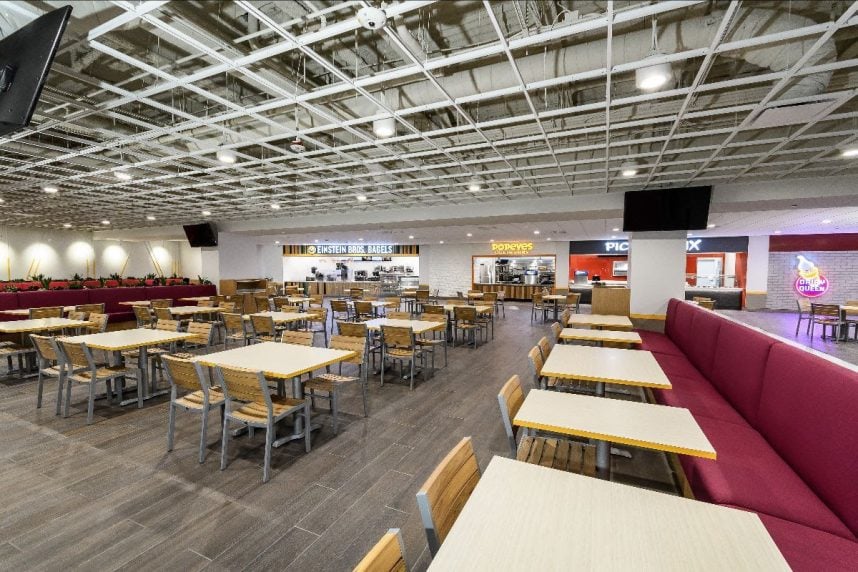
Court documents show the company reported between $1 million and $10 million in assets, with liabilities in the same range, and between one and 49 creditors.
Earlier this month, Circus Circus shuttered the food court — which features a Burger King, Popeye’s, Einstein Bros. Bagels, and a Pick Up Stix — for 24 hours over unpaid rent.
However, the bankruptcy filing provided a temporary lifeline via an “automatic stay,” a legal provision that prevents creditors from collecting debts or seizing property while a company reorganizes.
The food court reopened the following day, but its long-term future is uncertain, according to Vital Vegas, since Circus Circus has expressed interest in seizing control of the space once the legal stay is lifted.
Despite several published reports to the contrary, the TI Food Court at Treasure Island and Castle Walk Food Court at Excalibur are not affected by the bankruptcy since they are operated through separate entities.
Viva Less Value
The filing reflects the increasing pressure on the Strip’s value-tier operators as lower-income visitors pull back and the Strip markets toward higher‑spending individuals.
Though the drop in total 2025 visitation reported by the Las Vegas Convention and Visitors Authority was 7.5%, the steepest non‑pandemic decline since 1970, that drop was even steeper for the Strip’s two most price-sensitive demographics:
- Visitors aged 21–29 fell from 17% of the market in 2019 to 13% in 2025 — a 23.5% decline.
- Visitors aged 65+ dropped from 18% to 14% over the same period — a 22.2% decline.
These groups are the most affected by rising room rates, dining costs, and add‑on fees.
Buffets Pinched, Too
The pressure on low‑margin food operations is not isolated to Circus Circus. Earlier this month, MGM Resorts announced that its long-standing MGM Grand Buffet — which charges a reasonable $28-$42 per person, depending on the time — will close on May 31, 2026.
The resort company cited unsustainable operating costs and shifting guest demand. The move leaves only seven buffets — including the Circus Buffet at Circus Circus — remaining on the Strip, down from roughly 35 in 2000.
Together, these developments paint a clear picture: Las Vegas is becoming less hospitable to low‑cost operators and the visitors who rely on them.

 Most Read
Another Shooting Near Las Vegas Strip Casino Injures Man
 972,599 views

Vintners Oppose Napa Valley Casino
556,215 views


Conversation (1 comment)