
RGC Targets Young Adult Males With Gambling Harm PSA Initiative
Posted on: April 2, 2026, 04:21h.
Last updated on: April 2, 2026, 04:33h.

- Responsible Gambling Council holds Toronto event unveiling new gambling harm PSA targeting young adult males
- The Randoms 2025 PSA secured approximately $100 million in broadcaster investment or donated time
- Ontario regulated igaming market celebrates fourth anniversary
The challenge that government policy makers constantly struggle with over igaming in the province is this: Where is the correct balance, between bringing more operators into the regulated tent, so government can enjoy the benefits of a 20% tax rate on what has become a billion dollar industry, igaming broadcasting and online advertising volume, especially during big emotional events that drive betting interest, like the World Series last fall, and rapid advancements in technology.
Rapid Industry Growth
All that, while mitigating potential harm, ensuring player education and safety around responsible gaming messaging and execution, especially around young, impressionable men. It’s a tap dance, and as Stan Cho, Ontario’s Minister of Tourism, Culture and Gaming, said this morning, you are never going to get it 100 per cent right. There is never going to be an idealistic Shangri-La moment when everything comes together perfectly. The industry is only going to grow, and these challenges will grow with it. It’s like trying to get your arms around a dancing bear.
Still, as Cho said today, the reality is igaming is here. It’s not going anywhere. Channelization numbers from grey market operators moving over to the regulated arena have been impressive since the Ontario regulated market went four years ago, around 85%. So, the real game now is how to get into the deep grass and make it as safe and long-term sustainable as possible while the industry grows.
As Cho said, in the old days, when there was only the grey market, people who were in over their head with gambling had no place to turn for help. Cho referenced someone he met who lost his home due to gambling, after he couldn’t get the help he needed. He also said he had a family issue around gambling. So this is personal for him, and was a big reason why he pushed for igaming regulation in the province.
Market Impact Report
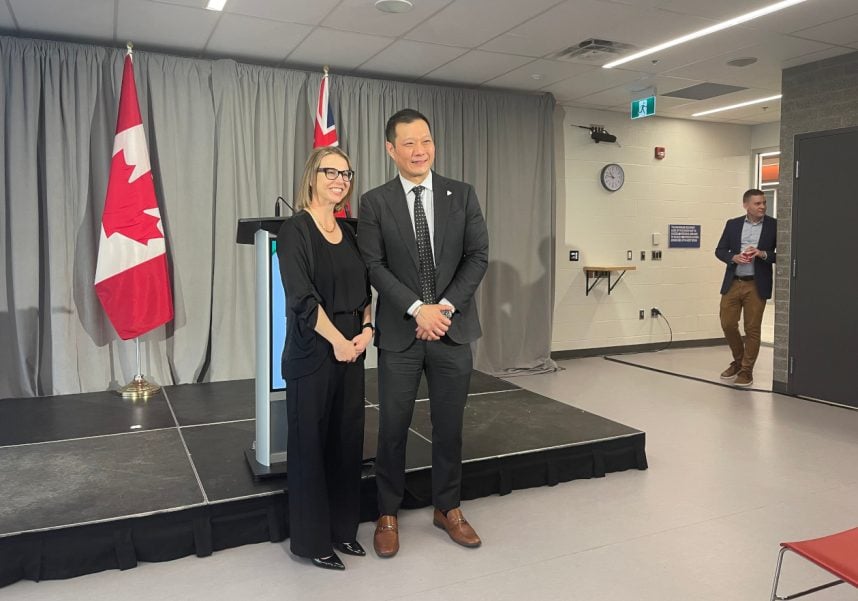
That was the purpose of a news conference in Toronto this morning hosted by the Responsible Gambling Council, and its CEO Sarah McCarthy, there to launch a new gambling harm public service announcement targeting males aged 19-24, developed by the province’s Responsible Internet Gambling Fund (RIGF). The message for youth there: Building a bridge between the initial emotional urge to wager online, when the heart starts pumping, over to making an informed choice, while giving them practical tools and guidance to help them do that.
McCarthy also talked about a new RIGF Impact Report, with some metrics her organization is using to build a gambling education and prevention program focusing on young people, where they can be reached more effectively. Safeguards are evolving as the industry in Ontario evolves. Young adult males represent one of the highest-risk populations for gambling related harm.
Safety Net
RIGF has $3 million in government funding to work with. The PSA will be distributed nationally across Canadian broadcasters and digital platforms, including Netflix, Spotify and Meta.
Highlights from the Impact Report:
- 6 million people reached through a responsible gaming 2025 PSA called The Randoms via the MLSE Partnership and paid ads on digital platforms.
- The Randoms PSA secured approximately $100 million in broadcaster investment or donated time (since the launch of the regulated market).
- 65% of respondents reported a significant increase in their knowledge of gambling, harm, risks.
- 601 million impressions were generated during MLSE home (316 million) and away (285 million) game broadcasts.
- Pro sports leagues and arena partners committed to safer gambling messaging, generating $4.15 million in media value through partnerships and arena activations.
- 49 million people reached through TV, media, activations via ethnocultural outreach partnerships.
Prevention Efforts
“We didn’t just spend the money, we amplified it and unlocked value,” said McCarthy. “This ensures a visible counterbalance to gambling marketing that is happening today. The second part of that, the really impactful part, 12% of viewers also confirmed that they made a concrete plan for safer gambling after seeing our messaging. This is truly evidence of prevention in action.
“We know that sports betting surges, of course, during major events. Our big game strategy met players in those high intensity moments. During the Super Bowl we reached an estimated 121 million people with messages designed to interrupt the urge to play, the impulse. Prevention only works if it’s actually relatable and culturally grounded.”
McCarthy said the objective is to build an environment that not only increases awareness but also a greater openness to discuss treatment, reducing the stigma that surrounds it.
Unchartered Waters
“This is how we ensure that our safety net is both inclusive and built to last,” she said. McCarthy also highlighted RGC’s online impact – 5,773 click throughs on their website support tools in the last year, an engagement rate 10 times higher than the industry average. Users stayed on the page 2.5 times longer than the average, she said. Also student athlete training program across Ontario schools has had measurable impacts on young people.
“Sustained investment is what allows us to stay ahead of the curve,” she said. “It ensures that gambling innovation never outpaces the safety of the people of Ontario.”
As Cho added: “(Government spending on responsible gambling initiatives) doesn’t mean anything when you put these numbers into something, and you don’t have the results to show for it. Like Sarah said, 12% made a plan to prevent problem gambling habits. That is meaningful action. You had 28 schools participate in the pilot program. Every single one of them said that they would do it again. You know, 62% of student athletes now know how to access help. I think these are very meaningful results.”
No comments yet