 Main menu

Sports Betting
Who Was William Hill, the Man Behind the Betting Brand?
Posted on: April 16, 2026, 05:07h.
Last updated on: April 17, 2026, 04:40h.


- William Hill built a betting empire through mail and telephone credit in the 1930s while boycotting physical betting shops, which he considered low-class
- After Hill’s death in 1971, his company transitioned from a boutique credit-betting house to a massive retail chain, eventually becoming the first British bookmaker to enter the Nevada market in 2012
- Following its 2021 acquisition by Caesars, the William Hill brand survives today as a legacy name in over 120 Nevada locations, maintaining roughly 10–15% of the state’s betting handle
William Hill built one of Britain’s most successful betting-shop chains — and then refused to set foot inside any of them.
The man whose name now fronts a global sportsbook empire believed walk‑in betting shops were shabby, low‑class, and corrosive to the industry’s reputation. His boycott was total: there is no documented instance of him ever entering one.
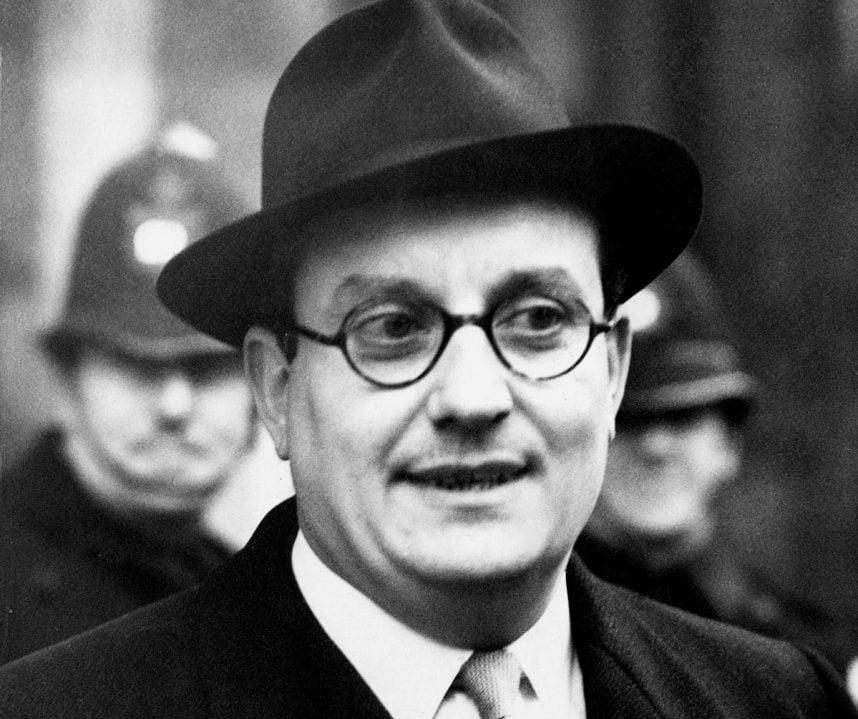
Before his name became one of the world’s most recognizable sports-betting brands, William Hill was a self-made British entrepreneur who turned risky and often illegal ideas into major profits.
William the Conqueror
Born in 1903 in Birmingham, England, Hill left school at age 12 to work on his uncle’s farm and, later, in a factory. He began taking illicit off-track bets as a teenager, riding his motorcycle to collect wagers from local workers.
By his early twenties, he had moved to London and built a reputation for honesty and sharp odds-making, initially focusing on greyhound racing before shifting to horse racing.
In 1934, Hill launched his betting business as a credit-based operation that accepted bets by mail and telephone — a clever skirt around the era’s strict laws against cash betting away from racecourses.
Customers mailed or phoned in their bets with checks to his small office on Jermyn Street in London’s St. James’s neighborhood, and Hill paid out winnings by mail. Later, he moved to a more prestigious address in London’s West End.
In 1939, he formally incorporated his company as William Hill (Park Lane) Ltd.
By skillfully exploiting legal loopholes, Hill built a large credit-betting empire that served serious bettors who preferred to settle their accounts later.
He strongly opposed the idea of walk-in betting shops, even after cash betting shops became legal in 1961. He famously called them “a cancer on society,” believing they would attract the wrong kind of customers and hurt the industry’s reputation.
Retail Wags the Dog
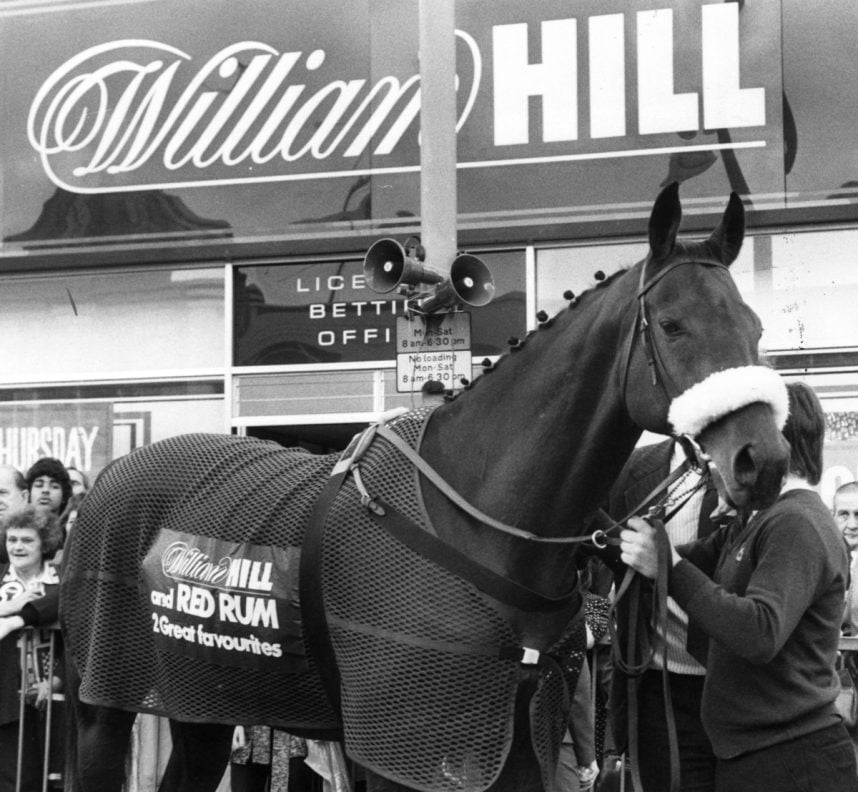
It wasn’t until December 1966 that Hill finally entered the retail side of the business. He reluctantly bought 18 existing betting shops — most in the West End — from another operator for £825,000 (about $2.31 million in 1966 dollars). These became the first shops to carry the William Hill name.
Hill, an intensely private man, married Ivy Burley, a ladies’ hairdresser from Birmingham, in late 1923. The couple had one daughter, Kathleen. Later in life, while still married to Ivy, Hill had a long-term relationship with Sheila Baker. In 1961, he had a second daughter, Miranda Baker.
Hill retired in 1970 and died of a heart attack on October 15, 1971, at the age of 68. He remained married to Burley until his death.
It was only after Hill’s death, when Sears Holdings acquired the business, that William Hill began the massive expansion that made it the first British bookmaker to establish itself in Las Vegas in 2012. (The company acquired three existing sportsbook chains — Lucky’s, Leroy’s, and the satellite operations of Club Cal Neva — for about $53 million.)
Until 2018, William Hill controlled around 50–55% of Nevada’s sportsbooks.
After Caesars acquired the company in 2021, many larger properties were gradually rebranded as Caesars Sportsbook, while the William Hill name continues on more than 120 smaller and legacy locations, accounting for roughly 10–15% of the state’s total sports betting handle.
Uncertain Future
While its Nevada operations look certain to continue, William Hill’s UK retail empire has struggled over recent years, largely due to a wider downturn in retail betting, along with the rise of online sportsbooks like SkyBet and Paddy Power Betfair.
In July 2022, Caesars sold William Hill’s European business to Evoke (formerly 888) for £2.2 billion, ostensibly with the aim of creating a global betting and gaming leader.
However, the company’s growth plans have faltered under the weight of mounting debt and a challenging UK tax environment, prompting owner Evoke to initiate a strategic review. The review has already claimed casualties, with 200 UK betting shops set to close this year.
Evoke is now exploring a sale of the business or its key assets to stay afloat.

 Most Read
Another Shooting Near Las Vegas Strip Casino Injures Man
 972,736 views

Vintners Oppose Napa Valley Casino
556,338 views


Conversation (0)
Be the first to comment on this article.