 Main menu

Prediction Markets
Prediction Platforms Ask Federal Regulators to Redefine ‘Gaming’
Posted on: May 1, 2026, 07:21h.
Last updated on: May 1, 2026, 07:21h.


- Prediction markets urge narrow gambling definition to avoid industry shutdown
- Sports event contracts at center of state vs federal regulatory battle
- Leagues push stricter safeguards over integrity risks in sports markets
A coalition representing prediction market platforms is urging U.S. regulators to narrow how federal rules define “gaming” in relation to its event contracts.
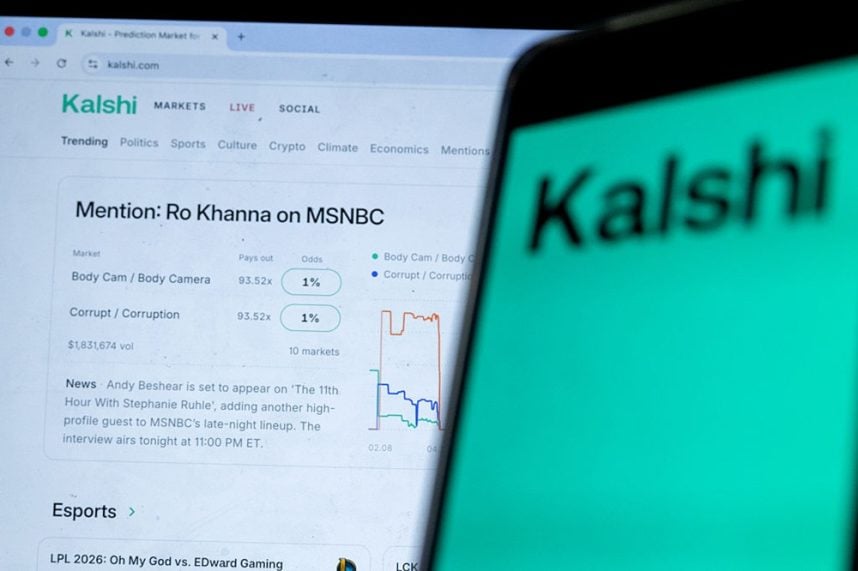
In a letter to Christopher Kirkpatrick, Secretary of the Commodity Futures Trading Commission (CFTC), the Coalition for Prediction Markets (CPM) argues that an overly broad interpretation could effectively shut down much of the industry.
The CFTC regulates prediction markets because the contracts they offer are structured as “swaps,” a type of financial derivative. But the source of the CPM’s unease is a CFTC rule that prohibits contracts related to “terrorism, assassination, war, gaming, or an activity that is unlawful under any State or Federal law,” as well as “similar” activities that the CFTC determined to be contrary to public interest.
Judicial Scrutiny
The intended meaning of “gaming” in this context has recently come under judicial scrutiny, as legal battles rage between state and federal regulators over who should oversee event contracts related to sporting outcomes.
The CPM wants the CFTC to tweak its rulebook to define “gaming” as casino-style games only (and definitely not sports betting). The CFTC has recently said it also prefers this definition.
The Coalition supports a formal rule defining “gaming” to cover the casino-style games traditionally regulated by states. This will make clear the difference between event contracts traded on designated contract markets,” it suggests in the letter.
A panel of Ninth Circuit judges recently questioned why “casino gaming” would not include sports betting, since you “go to a casino to make a bet.” The CPM outlined the distinction in its letter.
“Event contracts on DCMs are tied to real-world events associated with a potential financial, economic, or commercial consequence. Wagers on casino games have no economic significance apart from the wager itself.”
Meanwhile, states continue to argue that contracts on sports events qualify as sports betting, which falls under state jurisdiction and requires a license.
Leagues Want More Influence
The CPM’s input is part of the CFTC’s public comment period on prediction market regulation, which ends today. It also brought a wave of comments from pro sports leagues, who argued there should be stricter controls on sports contracts, which face the same integrity risks as sports betting but without comparable safeguards.
Among the proposals were raising the minimum participation age to 21, requiring real-time reporting of suspicious or prohibited trades, mandating data-sharing between platforms, and limiting higher-risk contract types, particularly those tied to injuries, officiating decisions, or in-game events.

 Most Read

Another Shooting Near Las Vegas Strip Casino Injures Man
 972,539 views

Vintners Oppose Napa Valley Casino
556,158 views



Conversation (0)
Be the first to comment on this article.