 Main menu

Legal
Ninth Circuit Probes Prediction Market Legality Under Federal Law
Posted on: April 20, 2026, 02:08h.
Last updated on: April 21, 2026, 07:44h.


- Ninth Circuit weighs whether prediction markets are finance or gambling
- Nevada argues sports-event contracts violate state gambling laws
- Judges question if federal rules already ban “gaming” contracts
Are prediction markets a type of financial product – or just gambling? That’s the question a three-judge panel of the Ninth Circuit Court grappled with on Thursday as they weighed a case that pits the state of Nevada against the federally regulated prediction-market industry.
This case will not settle the question once and for all. With conflicting rulings in states across the US, it’s likely one that will ultimately be answered by the US Supreme Court.
Instead, the panel must determine whether to grant Kalshi, Robinhood, and Crypto.com a preliminary injunction preventing Nevada from enforcing its state gambling laws against their sports-event contracts.
Because the contracts offered by prediction platforms are structured as “swaps,” or financial derivatives, they fall under federal oversight by the Commodity Futures Trading Commission (CFTC).
Who Regulates What?
The state of Nevada says that contracts on sports events qualify as sports betting, which falls under state jurisdiction and requires a license, or else it is illegal.
Lawyers for the prediction platforms counter that state gambling laws are preempted by the federal Commodity Exchange Act (CEA), which grants the CFTC authority over event contracts traded on registered exchanges.
Much of Thursday’s hearing focused on Rule 40.11 of the Code of Federal Regulations, which prohibits certain types of event-based contracts, including those involving “gaming.”
The rule provides that a registered entity may not list or clear any contract that “involves, relates to, or references” activities such as terrorism, war, or gaming, if deemed contrary to the public interest.
Thus, Nevada’s lawyers argue the CTFC’s own regulations appear to support the state’s position that contracts tied to sports are prohibited.
Lawyers for the platforms countered that the phrase “contrary to the public interest” indicates the CFTC has discretion to determine whether to prohibit certain event contracts, rather than imposing an automatic ban.
Judges Skeptical
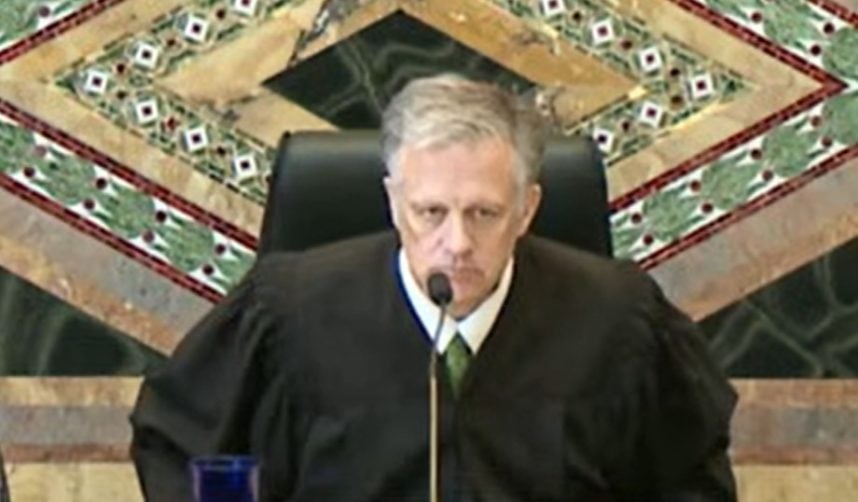
Judge Ryan D. Nelson wasn’t biting: “40.11 says any regulated entity ‘shall not list for trading’ gaming contracts,” he said. “It prohibits it from going on. The only way to get around it is if you get permission first,” as reported by InGame.
No one has come up with a coherent, English reason why that shouldn’t be the rule. It says you cannot self-certify and post it,” he added.
Jordan Minot, an attorney for the CFTC, said the regulator did not define a sports contract as “involving gaming.”
“We take ‘gaming’ to mean casino gaming and that type of activity,” Minot said.
Again, Nelson was unmoved: “I don’t understand what you mean, ‘casino gaming’,” he said. “You go to a casino to make sports bets.”
The panel’s ruling is expected in the coming days.

 Most Read

Another Shooting Near Las Vegas Strip Casino Injures Man
 972,780 views

Vintners Oppose Napa Valley Casino
556,383 views


Conversation (1 comment)