 Main menu

Canadian Gaming
CGA President & CEO Questions Former MP’s Comments On iGaming Rollout
Posted on: April 14, 2026, 09:12h.
Last updated on: April 14, 2026, 10:43h.


- In a CBC interview, former MP Brian Masse criticized the “full throttle” launch of igaming in Canada
- Canadian Gaming Association President & CEO Paul Burns responds in an interview with Casino.org
- Number of licensed igaming operators in Ontario hits 48
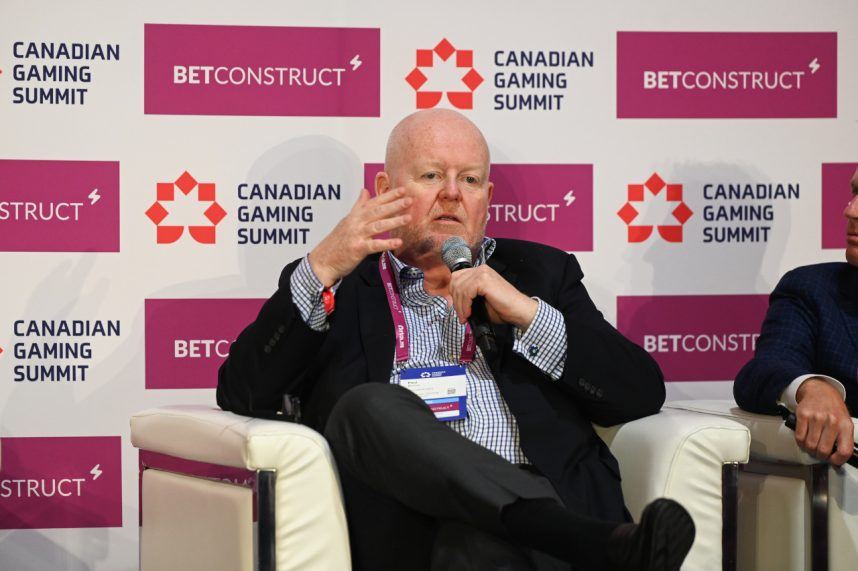
Canadian Gaming Association President and CEO Paul Burns has criticized former Canadian MP Brian Masse for his own criticism of the “full throttle” launch of iGaming in Canada, suggesting he has failed to grasp the key objective of regulation: player protection.
Last week, former NDP MP Brian Masse, who introduced a private member’s bill to lift the prohibition on single-event sports betting in 2019, told CBC News that its implementation in the country has been “deplorable”.
A year after Masse introduced his bill, Conservative MP Kevin Waugh re-introduced it, and the rest is history. Bill C-218 became law in 2021.
A big part of Masse’s concern has been the extent in terms of how much the private sector dominates igaming, since the Ontario competitive market went live in April 2022. The launch, he said, went “full throttle”.
He told CBC it would have been better if the Ontario Lottery and Gaming Corporation oversaw a more measured market implementation.
Trade Association Kingpin Fires Back
In an interview with Casino.org, Canadian Gaming Association President & CEO Paul Burns defended the speed and timing of the launch, citing the growth of the U.S. market and the emphasis on provinces to legalize as they go.
“People were clearly spending money online on sports, there was no Canadian regulated alternative, and that’s how the debate started,” said Burns. “The growth of online gaming never abated. When the U.S. changed their laws in 2018, that brought greater awareness and advertising.”
The Canadian model leaves it up to the provinces to create their own path.
“Ontario is quite clear that when they entered into online gaming, they laid out their objectives beforehand,” he said.
“It was about protecting consumer choice, because they understood where the public was playing. It was about greater consumer protection, which they clearly have succeeded at, probably setting the best regulatory regime in North America, if not the world, and for player protection. And I don’t think Brian has recognized that.”
Unregulated Market Growth
In Canada, Burns added, Canadians have had access to online gaming and sports betting for 25 years, and the unregulated market continues to grow.
“Ontario chose a path because that market was so large, the way they chose to open the market, in bringing in the number of sites and operators, they have clearly given Ontario players a lot of choice that we now see,” said Burns.
“Eighty-six per cent of the play happening (in Ontario) is outside of the black market. That’s not the case in the rest of Canada,” he added.
In his interview, Masse also expressed concerns about the volume of gambling advertising in Canada and is a supporter of Senator Marty Deacon’s bill to restrict sports betting advertising nation-wide.
Burns for his part, expressed his dismay about the potential curbs, suggesting the black market should be the focus for any restrictions rather than regulated operators.
“Whether people worry about seeing an ad … the ads are coming from companies that are licensed and regulated and held to a standard, that have strong consumer protection,” Burns explained.
“Those are the sites that have player exclusion. Those are the sites where the games are fair, and there are player protection tools.
“But Canadians are still accessing sites where there is none of that. There is no player self-exclusion option, and in some cases no age verification. It should be about addressing that, rather than a few TV commercials from regulated operators,” he added.
Misconception
In other words, the igaming horse left the barn a long time ago, the unregulated market continues to grow and flourish in Canada, and that’s where people’s focus should be, according to Burns.
Masse referenced all the “unregulated” activity in the igaming market, which Burns said was a misconception, based on Ontario’s channelization rate (86%).
“Provinces creating regulatory regimes for their own jurisdictions to better protect players, how they choose to introduce it, whether it’s an Ontario model, or something different, than better suits their jurisdictions is their choice, they need to go through the process and figure that out,” said Burns.
Alberta has done that, with market launch in that province set for July 13, and Burns confirmed our reporting last week that other provinces are taking a more serious look at it, as well.
Modernize the Criminal Code
Another focus, Burns added, should be an amendment to the Criminal Code to better protect the market against illegal operators advertising on social media platforms.
“Why has this problem of the grey, unregulated market in Canada lingered for 25 years?” Burns questioned. “Because there’s no clear cut language in the Criminal Code to say ‘yes’ or ‘no’, and maybe it’s time we get that.
The regulatory regimes can’t stand still anymore, the laws can’t either, and they need to be modernized. Ottawa would be better to look at what other tools the provinces need rather than deal with television advertising,” the CGA boss added.
Masse isn’t going to be happy with recent news – as reported first in Canadian Gaming Business, BetNova, the online casino and sportsbook operator, entered the Ontario market last week.
That brings the total number of licensed igaming operators in Ontario to 48 (a few, like Rivalry, dropped off over the past year), with 82 gaming websites, according to iGaming Ontario. The province’s open market generated over $4 billion in revenue in 2025.

 Most Read

Another Shooting Near Las Vegas Strip Casino Injures Man
 971,779 views

Vintners Oppose Napa Valley Casino
555,447 views


Conversation (0)
Be the first to comment on this article.