 Main menu

Las Vegas
Brain-Eating Amoeba Found in Lake Mead Near Las Vegas
Posted on: May 8, 2026, 05:06h.
Last updated on: May 11, 2026, 05:39h.


- A federal study has detected brain-eating amoeba in multiple locations within the Lake Mead National Recreation Area for the first time, including in popular hot springs and swimming spots
- While the amoeba is naturally occurring and widespread, infection remains rare and only occurs when contaminated water enters the nasal passages
- Health officials have not issued new warnings but recommend that swimmers use nose clips and avoid stirring up sediment in warm, shallow freshwater
A new federal study has detected Naegleria fowleri — the so‑called “brain‑eating amoeba” — in multiple U.S. national parks, including Lake Mead, the popular outdoor recreation hub near Las Vegas.
The findings, published in the journal ACS EST Water, expand the known geographic range of the organism but do not trigger new federal warnings.

Naegleria fowleri is a microscopic organism that thrives in warm freshwater, including lakes, rivers, and hot springs. Infection occurs only when contaminated water enters the nose, allowing the amoeba to travel to the brain and cause primary amoebic meningoencephalitis (PAM), a rare but almost always fatal disease.
It cannot infect people through drinking water that contains it.
Symptoms typically begin with headache, fever, and nausea before progressing to confusion, seizures, and coma. According to the Centers for Disease Control and Prevention, death usually occurs within five days of symptom onset, though the range is one to 18 days. Between 1962 and 2024, 167 U.S. cases were reported; only four patients survived.
Health officials say the risk to the general public remains extremely low, but is not zero.
Study Methodology
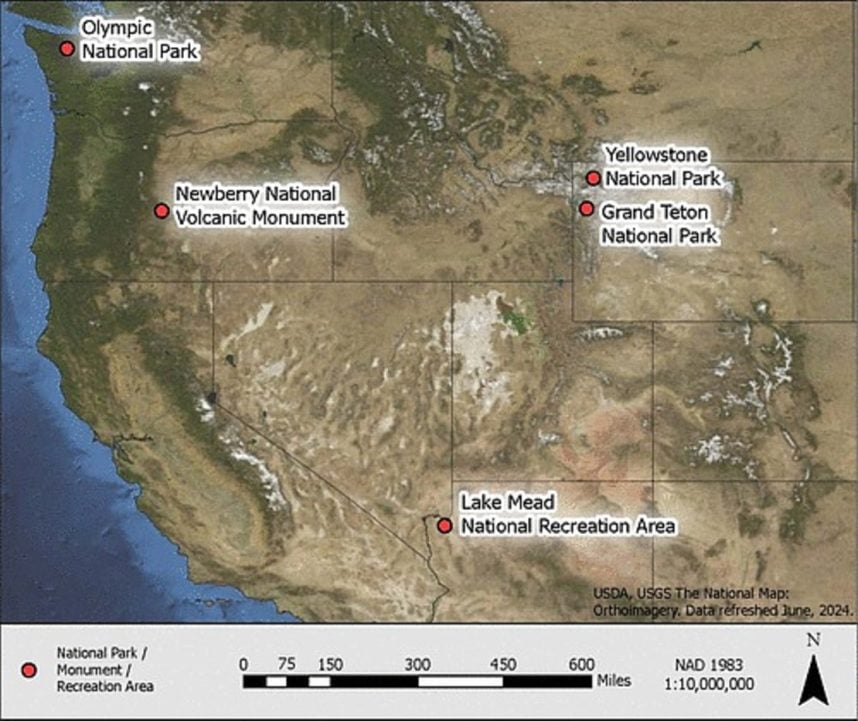
The new study analyzed 185 water samples from five regions: Lake Mead National Recreation Area, Yellowstone National Park, Grand Teton National Park, Olympic National Park, and Newberry National Volcanic Monument.
Naegleria fowleri were detected in 34% of samples, with concentrations ranging from 4.9 to 115.7 cells. The organism appeared across a wide range of temperatures — from 63.9°F to 130.9°F — and pH levels between 5.0 and 8.4. The detection sites included:
- Lake Mead: Blue Point, Boy Scout, Nevada Hot Springs, and Rogers Hot Springs
- Yellowstone: Firehole River, Boiling River, Lewis Lake Hot Springs
- Grand Teton: Polecat Hot Springs, Huckleberry Hot Springs
Researchers emphasized that the findings do not indicate an outbreak. Instead, they show that Naegleria fowleri is more widespread than previously documented.
The amoeba is already known to exist throughout the U.S., particularly in southern states. Experts expect cases to remain rare but note that warming water temperatures may expand the environments where the organism can survive.
At Lake Mead, the National Park Service has not issued new advisories beyond its standard guidance.
State health departments, including the Utah Department of Health and Human Services, recommend limiting the amount of water that enters the nose during recreation in warm freshwater. Nose clips can reduce exposure. Officials also advise avoiding activities that stir up sediment in shallow, warm areas, where the amoeba may be more concentrated.
While PAM remains one of the rarest infectious diseases in the U.S., the study’s authors say the findings highlight the importance of awareness, particularly for people who swim in warm freshwater or use natural hot springs.

 Most Read

Another Shooting Near Las Vegas Strip Casino Injures Man
 972,621 views
Vintners Oppose Napa Valley Casino
556,230 views


Conversation (0)
Be the first to comment on this article.