
Gold Spike Sold in Downtown Las Vegas, 25% Chance Gambling Returns [UPDATED]

Downtown’s once-enjoyable Gold Spike has been sold, and by “once-enjoyable” we mean “it had gambling.”
The diminutive former hotel-casino-bar, located at Las Vegas Boulevard and Ogden Avenue, was purchased by Las Vegas husband-and-wife real estate investors Huan “Jeff” Mai and Qing Zhong for $11.38 million. The sale price is a shocker because the previous owner, Zappos bajillionaire Tony Hsieh, bought Gold Spike for nearly $22 million in 2013 (as part of a broader acquisition deal for $27 million). Cue the collective “oof.”
On the bright side, there’s a small chance Gold Spike could get its gambling groove back. Don’t hold your breath.
NOTE: An earlier version of this story estimated there’s a 25% chance of Gold Spike getting gaming, but then we talked to a source who says they’re getting gaming back, so we’re revising our estimate to 95%. Please keep reading to see how we screwed up our original estimate by nearly 100%.
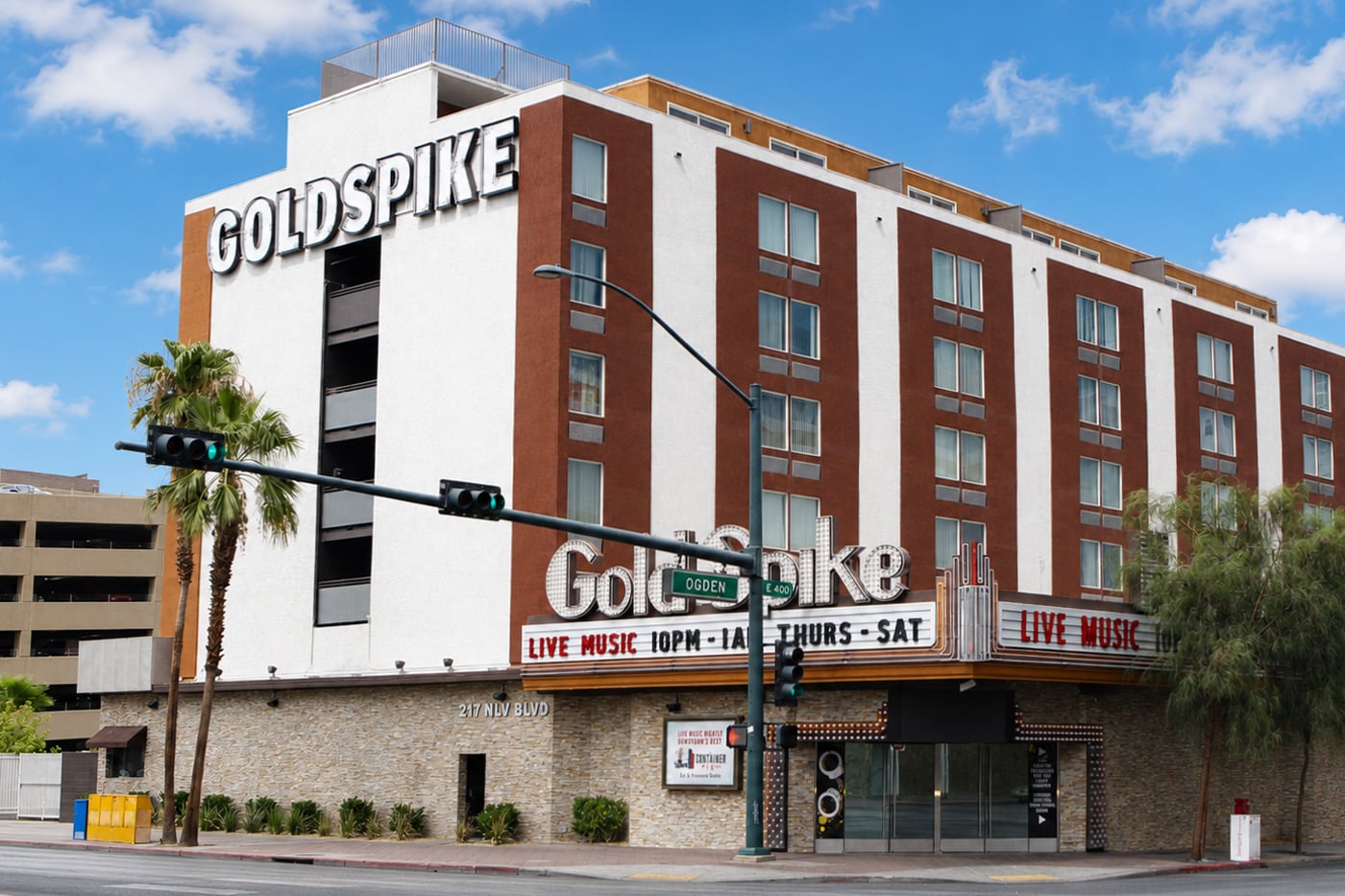
Gold Spike has a wonderfully weird history, even by downtown standards.
Gold Spike opened in 1976 as The Rendezvous, a 112-room hotel-casino owned by 76 Corporation. In 1983, downtown casino legend Jackie Gaughan bought the place after it had been closed for several months. The Gold Spike name arrived in 1985.
Gold Spike was known as a true low-roller joint, with cheap rooms and even cheaper gambling.
In 2002, Gaughan agreed to sell Gold Spike and several other downtown casinos to Barrick Gaming. That sale was completed in 2004 as part of a larger downtown casino deal. Barrick, in partnership with Tamares Group (owners of Plaza), later discontinued table games at Gold Spike and kept the casino slots-only.
In 2007, Greg Covin bought Gold Spike for $15.6 million with plans to make it a boutique hotel. Less than a year later, in 2008, Covin sold it to The Siegel Group for $21 million. The Siegel Group renovated the place and combined it with the adjacent motel that became Oasis at Gold Spike.
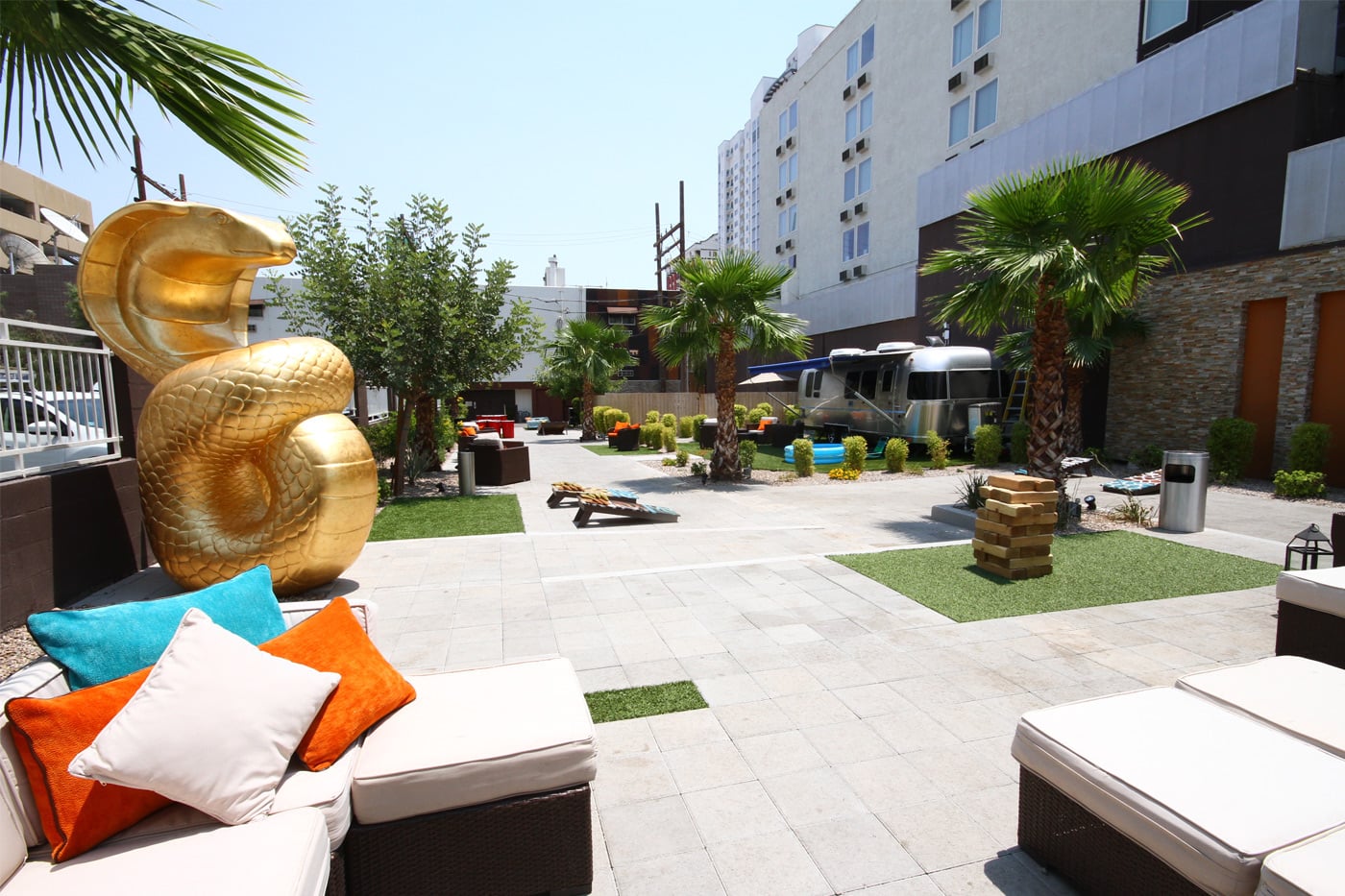
The three-story motel at Gold Spike was originally built in 1962 as the Travel Inn Motel. It had 57 rooms before being renovated, reconfigured and folded into the Gold Spike complex as Oasis at Gold Spike.
Then Tony Hsieh entered the picture.
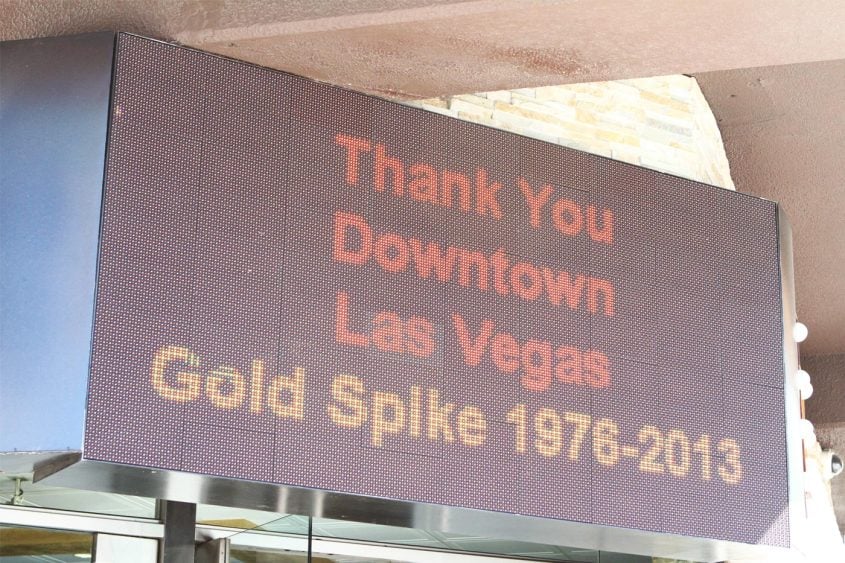
Hsieh’s Downtown Project bought Gold Spike from The Siegel Group in 2013. The casino closed April 14, 2013.
Tony Hsieh had many great qualities, but embracing gambling wasn’t one of them. He was more about community, collaboration and serendipity. As if serendipity conflicts with gambling!
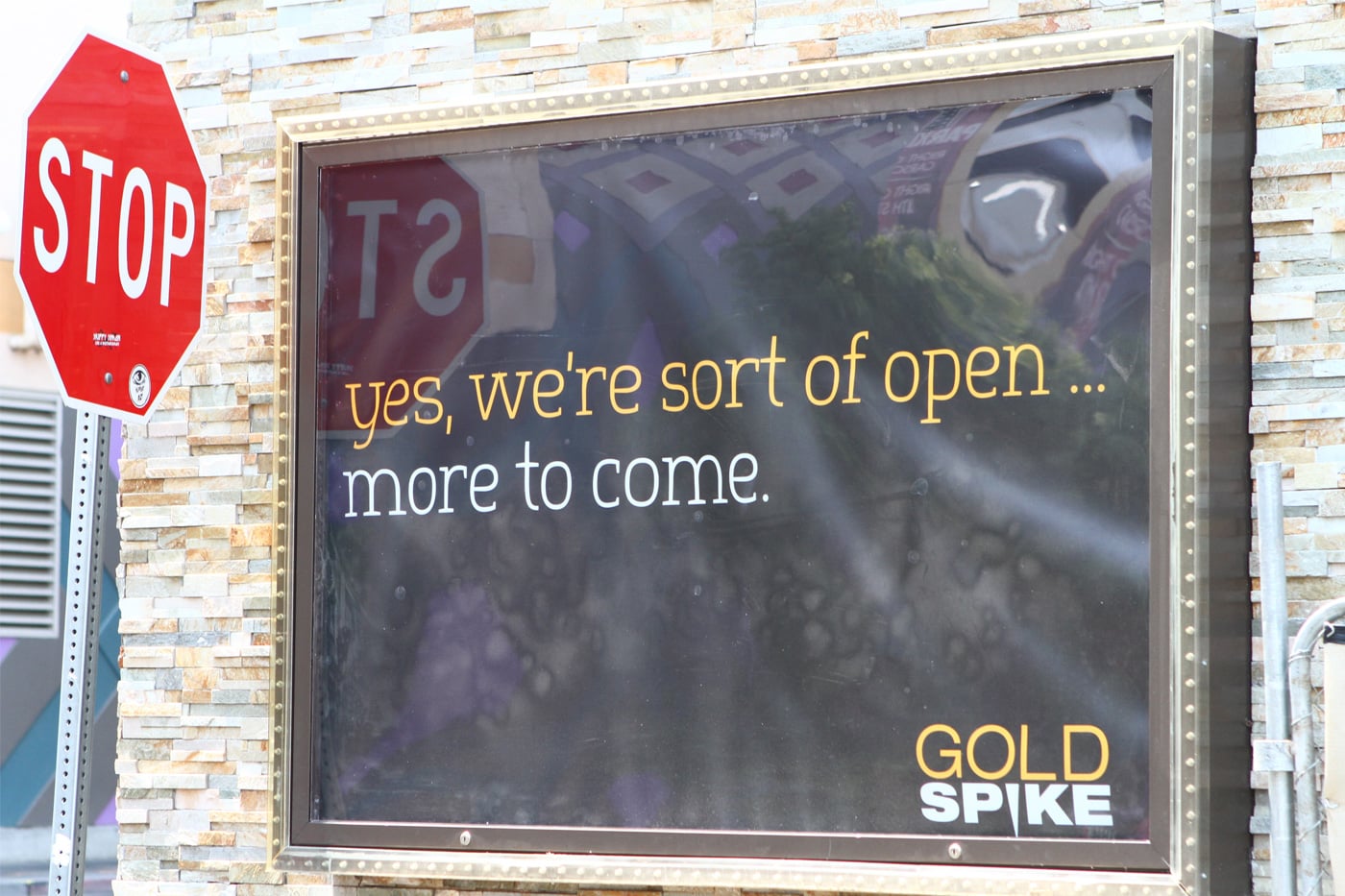
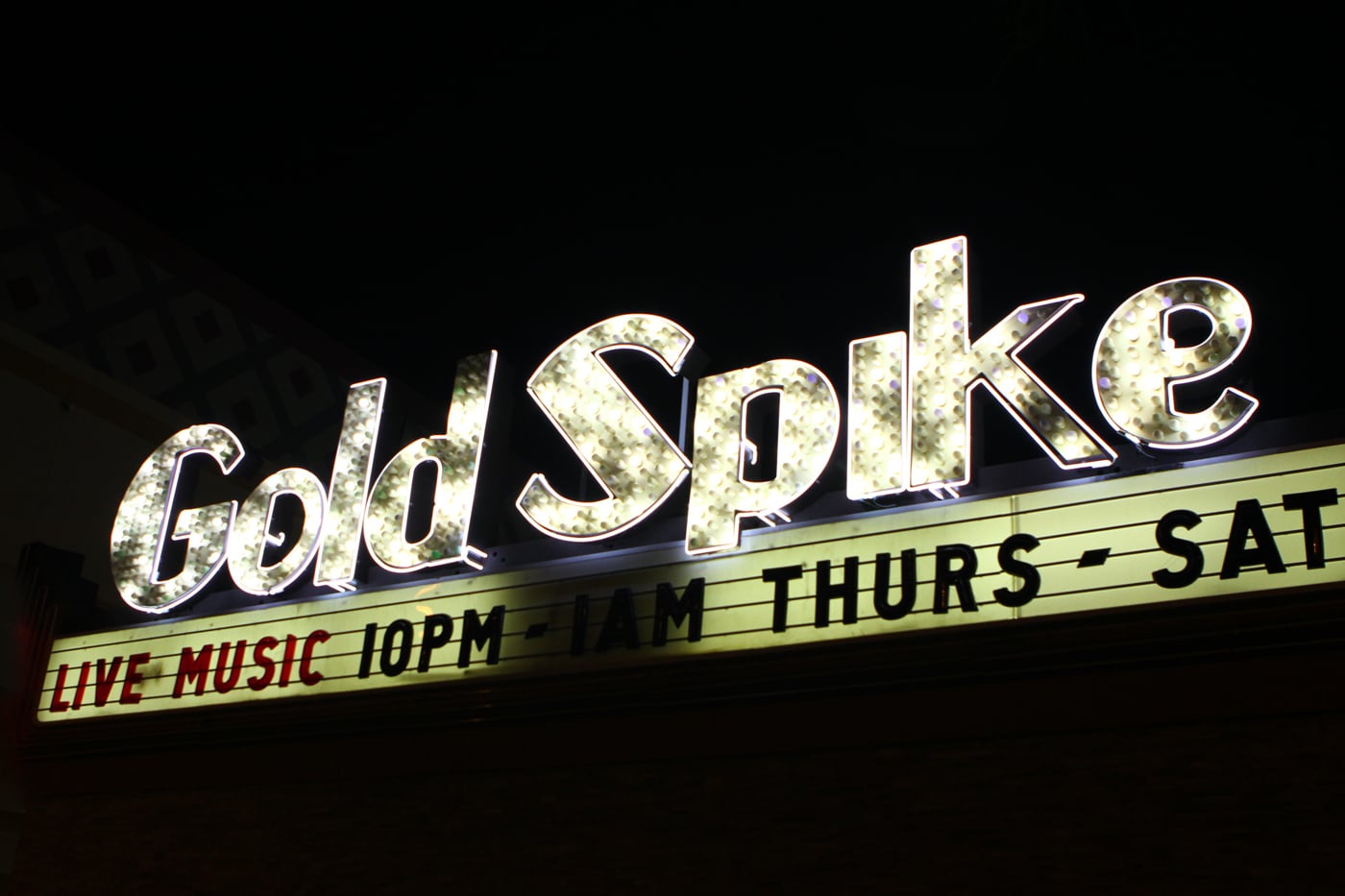
Anyway, Gold Spike reopened without gambling, transformed into a smoke-free bar, lounge and hangout space with social games like giant Jenga, giant cornhole and shuffleboard. Gold Spike is now described as “A 20,000-square-foot nightlife venue and ‘adult playground,’ with oversized interactive games, special events and music.”
Translation: Boring.
With new owners, though, could gambling return to Gold Spike? Answer: Possibly.
Gold Spike has reportedly preserved its non-restricted Nevada gaming license, despite operating without gambling for years. That license is extremely valuable.
Taverns and pubs have restricted licenses. Those establishments can have 15 or fewer slot machines and no table games. Serious casinos have non-restricted licenses. They involve lots of hoops.
Gold Spike’s new owners, Mai and Zhong, are real estate investors, not casino operators. They own grocery stores and shopping centers. That doesn’t scream “Bring back slots to Gold Spike!”
Nevada doesn’t just hand people casino approval because they bought a building with a colorful history.
Gold Spike provides insights about how to attract coveted millennials. Take note, Las Vegas casinos! pic.twitter.com/gnWO2SelRZ
— Vital Vegas (@VitalVegas) December 22, 2017
The Nevada Gaming Control Board’s Investigations Division says it investigates gaming license and key employee applicants to determine their “viability, business integrity, and suitability” for licensure or approval. Those investigations become the basis for recommendations and decisions by the Gaming Control Board and Nevada Gaming Commission.
Suitability investigations are invasive and exhaustive.
Applicants can be required to submit extensive personal history records, corporate applications, financial disclosures and source-of-funds information. Gaming doesn’t just investigate you, it investigates your family members and associates.
This sounds awesome, but when they start to dig around, it can get deeply uncomfortable.
For example, Sam Nazarian failed to get a gaming license for SLS due to some shady history he and his team apparently never thought would be revealed. Regulators investigate character, judgment, associations, finances and anything that could make a licensee susceptible to manipulation or blackmail.
In Nazarian’s case, the process found past drug use and roughly $3 million in payments to a convicted felon Nazarian described as an extortionist.
In the casino realm, having money creates questions. Where did it come from? Who loaned it? Who guaranteed it? Who are the partners? What is the debt structure? What other businesses are connected? Are there overseas assets? Cash businesses? Family investors? Prior lawsuits? Tax issues? It’s brutal.
Would the new owners of Gold Spike want to subject themselves to that kind of scrutiny?
Most business owners are not used to having strangers ferret around in their finances, business history and personal associations. Grocery stores and family-run retail businesses can be perfectly legitimate while still being messy in the way small businesses are often messy. Those dealings can include informal loans, family money, side agreements, tangled ownership structures and tax or bookkeeping issues.
Gold Spike’s license is its most valuable asset, but it is also the asset with the most strings attached.
Even if Mai and Zhong brought in a third-party casino operator (Fifth Street Gaming operates Downtown Grand, for example), that would not necessarily spare them from regulator scrutiny. Nevada regulators also have broad authority to require licensing or a finding of suitability from people with a “material relationship” to a gaming operation.
A path forward could include some slots and video poker (by bringing in a licensed operator), but not a full revamp of Gold Spike. Any gambling revival would probably have to coexist with the current business model. Gold Spike’s current clientele aren’t gamblers, all due respect to our fellow youths.
Bringing back table games is a true longshot, mostly due to the costs of operating live games, and yes, we mean labor. Golden Gate recently removed all its live table games, for example.
We’re putting the possibility of gambling coming back to Gold Spike at 25%. This number was determined by a time-honored process of “mostly guessing.”
Start with a 50/50 baseline for bringing gambling back because the place has history and gambling could give it a pulse again. The lure of gaming revenue is a big plus (+20%), and boutique casinos downtown can work (+10%). Caveats: The buyers aren’t casino people (-25%). Nevada licensing is invasive, expensive and risky (-30%). A third-party operator could improve the odds (+10%), but the owners would have to be willing to surrender control. Finally, Gold Spike has spent years as a non-gambling social space, so there’s no guarantee guests would immediately accept it as a casino again (-10%).
That gets us here: 50 + 20 + 10 – 25 – 30 + 10 – 10 = 25%. It’s called science.
Look, Las Vegas isn’t about math! It’s about fun! You’re having fun, right?
Why did it take so long for Gold Spike to sell? To put it bluntly, the Tony Hsieh estate is populated by knuckleheads. The asking price for Gold Spike at one time was $50 million. We are not making this up.
New asking price for downtown's Gold Spike is $18 million, down from $50 million.
— Vital Vegas (@VitalVegas) March 28, 2025
The estate is notorious for making sales of Hsieh’s assets nearly impossible. When they sell, they often make unreasonable demands. For example, any buyer must agree to have a Tony Hsieh memorial of some sort for 10 years (like the mural on Inspire, a venue in the Fremont East entertainment district). That’s actually the easy part.
The new owners of Inspire agreed to keep this mural for 10 years. Also, if people could stop being asshats and defacing art, that’d be great. pic.twitter.com/4OhMVtdWfC
— Vital Vegas (@VitalVegas) March 24, 2024
Hsieh’s holdings included 100-plus properties downtown, but maybe a dozen have been sold since his tragic passing in 2020 from complications of smoke inhalation and being surrounded by blood-sucking parasites. Long story.
We’d love to see Gold Spike become relevant again!
Keep the dorky “oversized interactive games,” but throw us some bartop video poker and a Top Dollar or Wheel of Fortune, and we’ll put Gold Spike back in our regular rotation despite the presence of young people and DJs.
Update (6/30/26): A source says Gold Spike is getting gaming, so we have adjusted our estimate of it happening to 95%. It’s weird to change a headline after a story has been published, so just go with it, thanks.



Leave your thoughts on “Gold Spike Sold in Downtown Las Vegas, 25% Chance Gambling Returns [UPDATED]”
6 Comments