
VEGAS MYTHS BUSTED: The Luxor is Sinking
Posted on: April 13, 2026, 07:21h.
Last updated on: April 10, 2026, 10:39h.

Did you know the Luxor is sinking just like the parts of Titanic on display inside of it? At least, that’s the takeaway you’ll get from “The Luxor Pyramid Is Sinking – Vegas’ Most Dangerous Casino,” “Inside the Collapse of the Luxor: Vegas’ Most Neglected Casino Hotel,” and other popular social media videos.
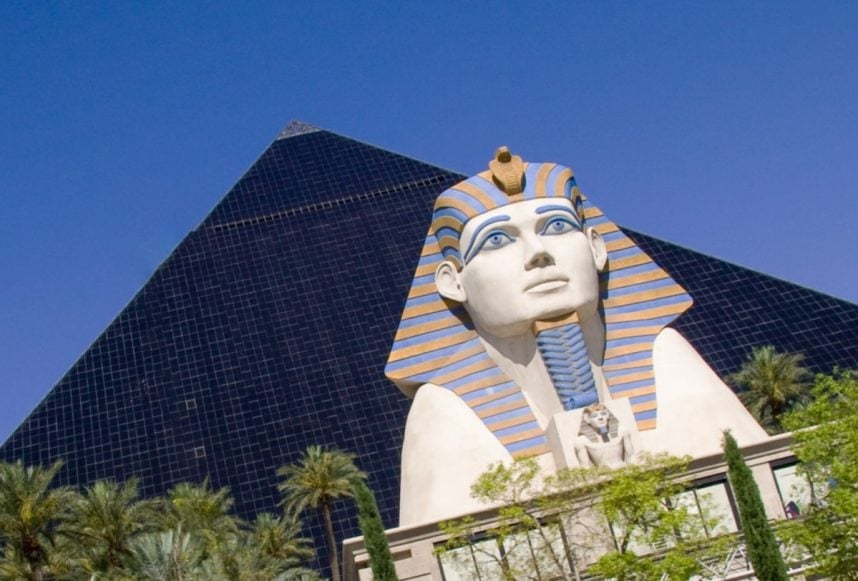
Only no local or national news reports — either from the Luxor’s 1993-95 construction or in the three decades since — have ever mentioned any danger of the property “sinking into the sand,” as claimed by the self-certified expert who hosts the Buried Secrets podcast.
Myth Interpreted
We traced this myth to a single sentence in a 2010 online encyclopedia entry: “Not long after the opening, the hotel learned that part of the building was sinking into a soft spot in the usually hard desert floor and adjustments were made to halt it.”
What you just read was posted on Oct. 6, 2010 to the Online Nevada Encyclopedia. This is a legit educational website produced by a statewide nonprofit called Nevada Humanities. So what gives?
If you click on the article above, its URL begins with http://www.onv-dev.duffion.com. That’s a development/staging server — essentially the “behind-the-scenes” or testing version of the same encyclopedia, a common practice with academic and non-profit encyclopedia projects. This is where drafts of new entries reside before they get reviewed and approved for the main site.
And indeed, if you search the main Online Nevada Encyclopedia site, no Luxor article currently exists.
Casino.org contacted Jeff Burbank, the respected veteran Las Vegas journalist who authored the inaccurate draft entry, and he declined to comment about it.
Hey, we make mistakes, too.
That Sinking Feeling
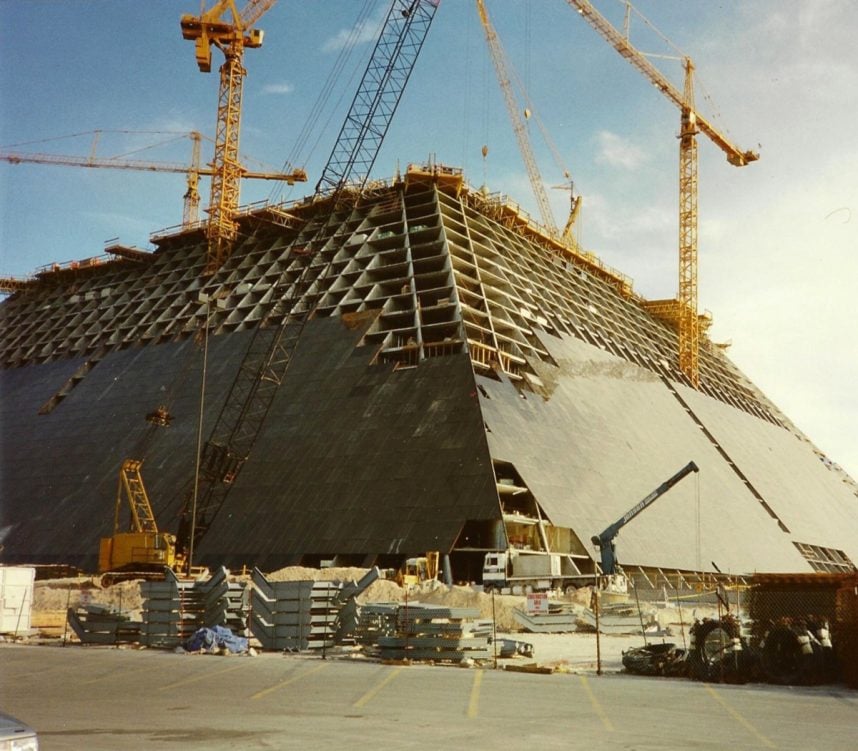
Another possible source for the sinking Luxor myth — one that predates the online encyclopedia entry — is a Sept. 8, 2010 Las Vegas Review-Journal article headlined “Luxor’s Floor Under Review.”
It reported that Clark County ordered part of the Luxor pyramid’s basement — office space not open to the public — vacated after inspectors found two partially cast support columns there, their unfinished state hidden above drop ceilings.
An engineering review found that the columns weren’t part of the original plans and weren’t carrying load, though MGM finished building them anyway.
But county inspectors also flagged “a structural issue” involving the load-bearing capacity of the casino level above, which sat on what they called a “deficient slab.”
MGM shored up the basement with temporary supports, then undertook permanent corrective measures. Since then, the Luxor has not been in danger of compactification, and was never “sinking into a soft spot.”
However, other parts of Vegas are sinking, which also may have informed this myth.
Six Feet Under
According to the U.S. Geological Survey, parts of the Las Vegas Valley have sunk by several feet — almost six in some spots — since the 1930s. Satellite measurements (InSAR) confirm this.
The cause is straightforward: for decades, more groundwater was pumped out than nature could replace. When that happens, the clay and silt layers underground compress like a dried‑out sponge. Once they collapse, the land above them sinks for good.
This sinking happened in “subsidence bowls,” mostly in northwest Las Vegas. The best‑known case is Windsor Park in North Las Vegas, where the ground dropped so much that houses cracked, shifted, and eventually had to be abandoned.
The Strip and downtown were never meaningfully affected.
The good news: InSAR data shows the sinking has slowed a lot since the 1990s. That’s because groundwater pumping was reduced, and treated Colorado River water is now injected back into the aquifers to help keep the ground stable.
Look for “Vegas Myths Busted” every Monday on Casino.org. Visit VegasMythsBusted.com to read previously busted Vegas myths. Got a suggestion for a Vegas myth that needs busting? Email corey@casino.org.
No comments yet