
South Carolina Faith Leaders Rally Against Casino and Sports Betting Bills
Posted on: January 15, 2026, 09:10h.
Last updated on: January 15, 2026, 10:02h.

- Gaming bills are once again expected in South Carolina this year
- Faith leaders are rallying to oppose any form of gambling expansion
- South Carolina only has lottery gaming
A new year means a new push for gambling in South Carolina. It also means staunch opposition from religious groups.
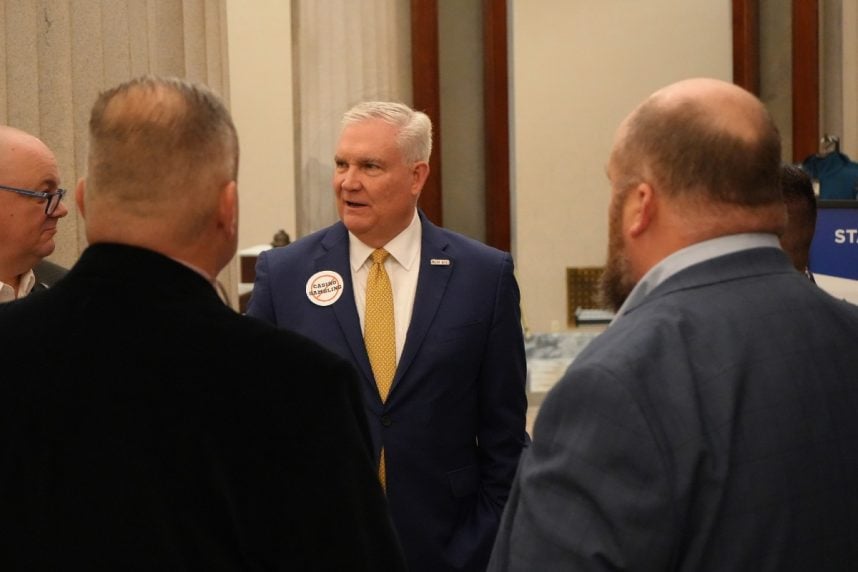
On Wednesday, a coalition of religious organizations and church leaders held their annual “Pastor’s Day at the Capitol” in Columbia. The yearly event coincides with the start of the South Carolina Legislature’s session.
While no gaming bill was filed during the session’s first two days, certain lawmakers have declared that they will soon introduce legislation to authorize casino gambling and sports betting in the Palmetto State. Faith Wins, a nonprofit dedicated to “activating and mobilizing” faith leaders in the political arena, said more than 175 pastors from 11 denominations across South Carolina gathered for “Pastor’s Day,” where they united to oppose casino gambling.
Christians will not stand for policies that exploit communities and weaken families,” the organization declared. “When people of faith unite to stand for their communities and speak truth with conviction, faith wins.”
Aside from the state-run lottery, South Carolina bans all other forms of gambling, including charitable gaming, parimutuel wagering, video lottery machines, casinos, racinos, iGaming, and sports betting.
Casino Bill
State Rep. Bruce Bannister (R-Greenville) plans to file legislation authorizing a Las Vegas-like casino destination somewhere along Interstate 95, the major highway that intersects the state from North Carolina to Georgia. The bill is expected to come with a proposed 35% tax on gross gaming money and reserve much of the state tax proceeds for land and environmental conservation.
Prominent businessman and Republican megadonor Wallace Cheves has long sought to bring casino gambling to South Carolina. After state officials balked at his effort to build a tribal casino with the Catawba Indian Nation, Cheves and the federally recognized Native American community relocated the project to Kings Mountain, NC. Federal officials later ordered Cheves to depart the project after the National Indian Gaming Commission (NIGC) found that the Two Kings Casino would primarily benefit Cheves and not the tribe.
Bannister has proposed placing a casino in the so-called “Corridor of Shame,” an impoverished region along the interstate consisting of parts of Orangeburg, Dillon, and Marlboro counties. Cheves believes a casino could generate more than $100 million in annual tax revenue, with $35 million allocated each year to protect farmland and forests.
With 35% allocated for conservation, another 30% would be directed to the Veterans’ Trust Fund, 26% would go to the state’s General Fund, and 5% would stay with the host county. The remaining 4% would be distributed to eligible counties along the I-95 corridor.
Faith Influence
Along with faith leaders and lawmakers who vote on their religious convictions, Bannister’s casino bill faces opposition from Gov. Henry McMaster (R). The governor says he remains steadfast in opposing casinos and sports betting.
In its 2025 report, Pew Research ranked South Carolina as the second most religious state behind only Mississippi. About 46% of adults in South Carolina report being “highly religious,” while 57% report praying daily.
No comments yet