
LOST VEGAS: The Kit Carson Club
Posted on: April 8, 2026, 08:21h.
Last updated on: April 8, 2026, 09:55h.

- The Sands Hotel was built around the bones of a 1940s roadside gambling joint originally called the Kit Carson Club
- Mob-connected former LAPD vice cop Guy McAfee and Flamingo founder Billy Wilkerson both saw their dreams fail at the site
- The old club became the Sands’ fine dining hall, where Frank Sinatra got into one of the most famous standoffs of his life
The ghost of a roadside gambling joint lived on inside the Sands for decades, hidden in plain sight amid the mid-century glamour of the Rat Pack playground.
Many histories of the Strip assume the Sands was built on a vacant patch of desert in 1952, but it actually had a much more exciting lineage, strewn with cameos from unexpected Las Vegas historic figures and culminating in one of the most famous standoffs of Frank Sinatra’s life.
Opened in 1946 on a lonely stretch of Highway 91, the Kit Carson Club didn’t begin as a big deal. A prototypical roadside “grind joint,” it was a long, narrow building with a bar, a few table games, and a neon sign designed to snare motorists white-knuckling the long drive from L.A.
(Kit Carson was the scout for explorer John C. Frémont’s 1844 expedition, which produced the first scientific map and report on the Las Vegas Springs.)
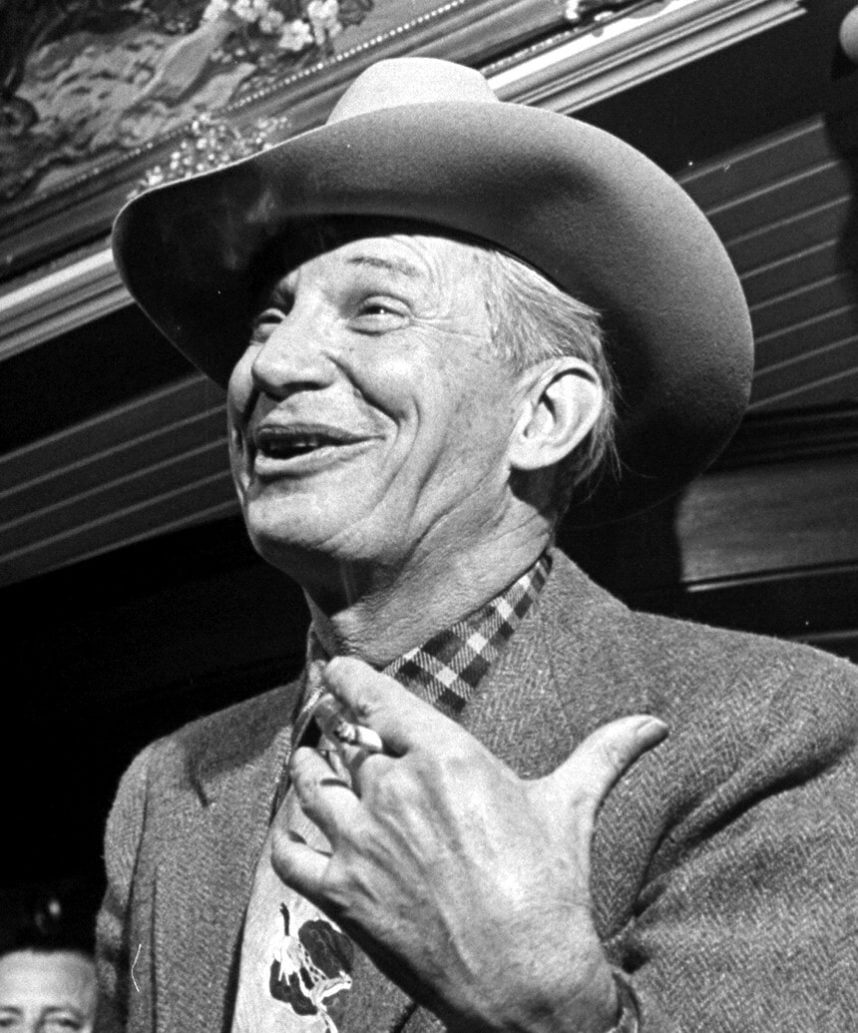
The club was legally built by Harold Bynum, David Anderson, and George Frisbee, who pulled the construction permits in 1945. Their “clean” names provided a vital shield for the project’s true, silent financier: Guy McAfee.
McAfee was the colorful, mob-connected former L.A. vice cop widely credited with nicknaming Highway 91 “the Las Vegas Strip” in 1939 — though that story is highly suspect.
While McAfee legally operated the former Pair-O-Dice as the 91 Club, this new build was a “stealth” play because the Nevada Tax Commission remained wary of his high-profile vice past.
By 1950, McAfee’s focus shifted to the fancy downtown club he opened four years earlier, the Golden Nugget, and the Kit Carson Club had become a liability he decided to close.
Strip Visionary’s Second Sad Failure
The license grandfathered into the Kit Carson Club’s dirt is what interested Billy Wilkerson. He was the Los Angeles nightclub mogul (and problem gambler) who founded the Flamingo and lost it to Bugsy Siegel after accepting mob money to finance its 1946 construction.
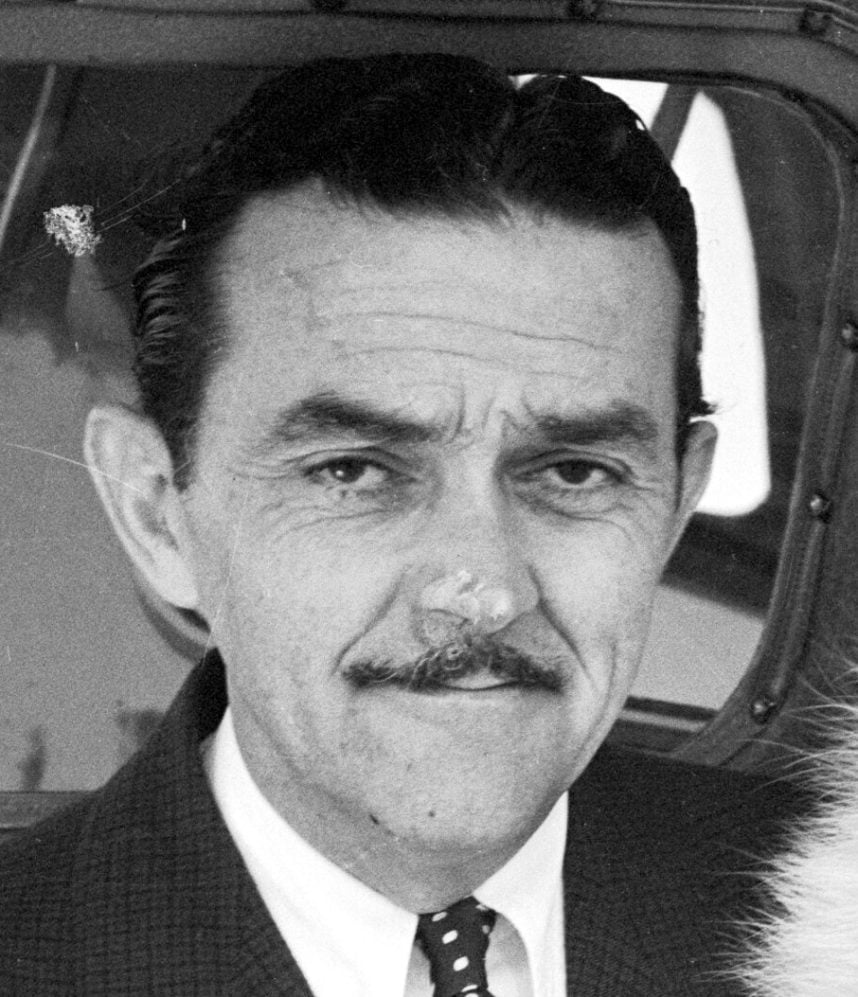
By 1950, Wilkerson was a man with few options. After years of financial strain, regulatory scrutiny, and pressure from organized‑crime interests around the Flamingo, his chances of securing a new Nevada gambling license on his own were slim at best. So he crawled into the one held by the Kit Carson Club.
Partnering with Nola Hahn — the premier “ghost operator” of L.A.’s illegal gambling rooms — Wilkerson spent $150,000 ($1.9 million today) to revive the Kit Carson Club. Loathing its cowboy aesthetic, though, he remodeled and reopened the site as Club La Rue on Dec. 23, 1950, capitalizing on the reputation of Café La Rue, the A-list French restaurant he owned and operated in Hollywood.
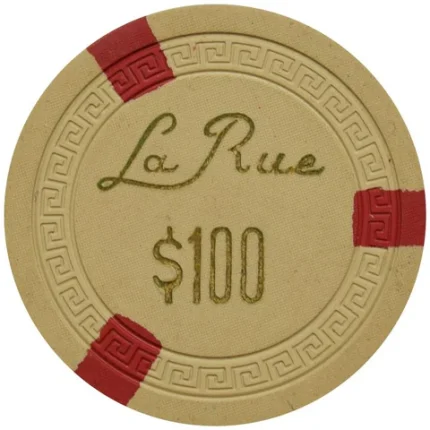
But the “carriage trade” Wilkerson hoped for never showed up. The room — which featured blackjack, craps and roulette tables — remained mostly empty as motorists filled the Flamingo and Thunderbird on their way from L.A. to Fremont Street.
Another Swing and a Miss
Before the Sands could rise, the site nearly died again. Mack Kufferman, a New Jersey liquor wholesaler, snagged the Club La Rue wreckage in 1951 with an eye to knock it down and build a full-scale new resort. But his association with mob lieutenant “Doc” Stacher made him radioactive to gaming regulators, who denied his license application in April 1952.
Enter Jake Freedman, a Houston bookmaker with Texas oil money. He bought out Kufferman’s lease and gaming rights for a mere $15,000 ($186K today), securing the gaming license eluding Kufferman.
In 1952, Freedman performed not a redevelopment of the property but an envelopment.
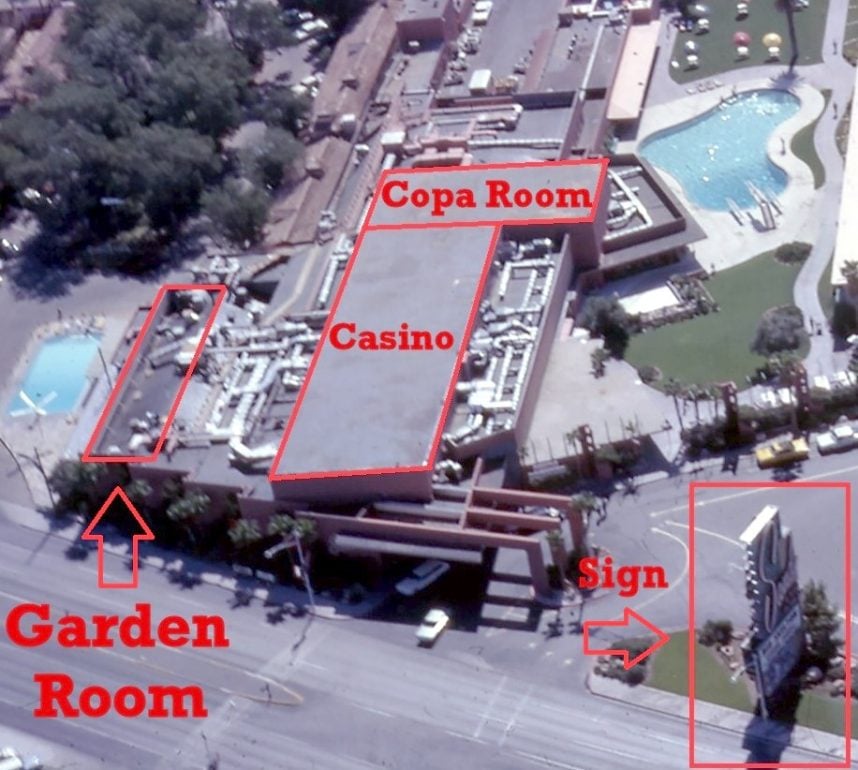
He hired L.A. architect Wayne McAllister to roll the still perfectly good bones of the old Kit Carson Club into his modern new casino hotel. It became the new property’s 24-hour, high-end dining space.
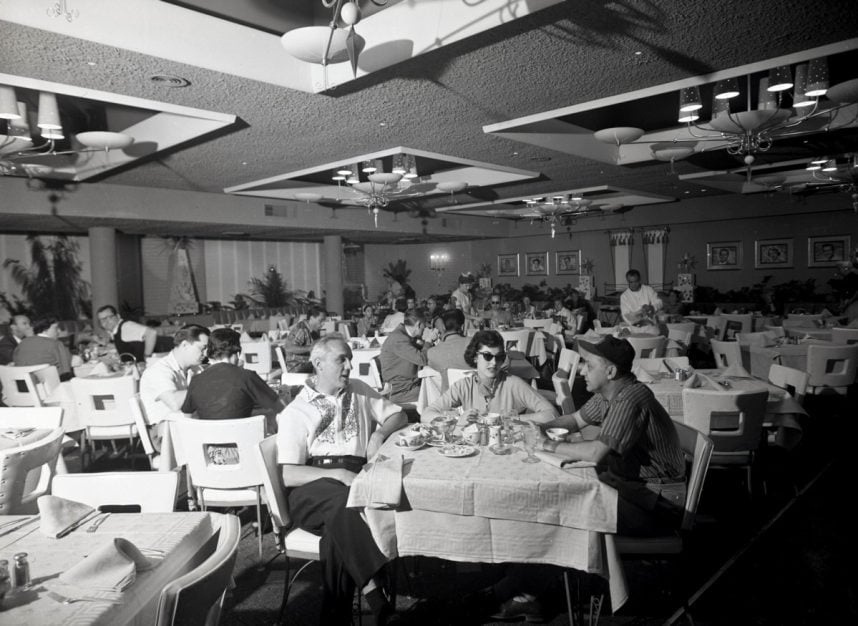
When the Sands opened its doors on Dec. 15, 1952, few guests realized that its Garden Room was once the Kit Carson Club and Club La Rue.
A Line in the Sands
Members of the Rat Pack occasionally dined at the Garden Room after their sets at the Copa Room down the hall. On the evening of July 23, 1956, it was after a set by Nat King Cole.
According to Mr. S: My Life with Frank Sinatra — the 2003 New York Times bestseller written by Sinatra’s valet, George Jacobs — Frank asked the restaurant manager if his friend, Nat King Cole, could join his party for dinner. Sinatra said he didn’t understand why someone who had just headlined the Sands had to eat alone in his dressing room.
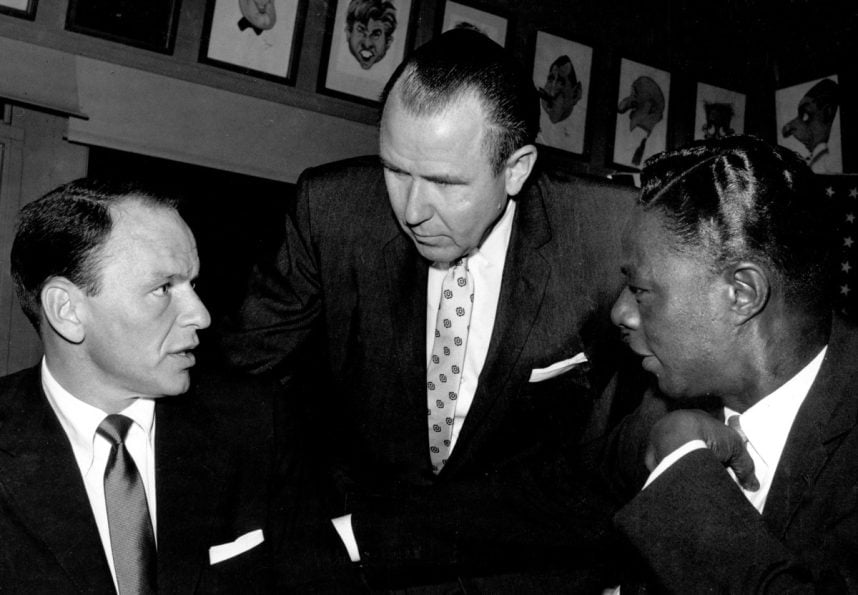
When informed it was against hotel policy — which Sinatra already knew — he threatened to cancel all his upcoming Sands performances if his request was not granted.
Management relented and allowed Cole into the Garden Room, effectively breaking its color barrier.
However, the gesture had no lasting impact. As soon as Sinatra was gone, people of color went back to being banned up and down the Strip until the Moulin Rouge Agreement ended segregation in Las Vegas casinos four years later.
The Kit Carson Club’s original walls survived until a massive 1963 expansion necessitated their removal to make way for the Sands’ 15-story cylindrical tower.
“Lost Vegas” is an occasional Casino.org series spotlighting Las Vegas’ forgotten history. Click here to read other entries in the series. Think you know a good Vegas story lost to history? Email corey@casino.org.
No comments yet