
Quebec Gaming Coalition Aims to Bring Order to Gaming Market
Posted on: February 10, 2026, 02:01h.
Last updated on: February 11, 2026, 08:02h.

- Quebec Online Gaming Coalition represents private operators pushing for an Ontario-style igaming model in the province
- Group submitted brief to Ministry of Finance with four recommendations on how to move forward
- Loto-Québec currently the only platform in the province where people can bet legally
Loto-Québec’s has a new deal to bring Incentive Games’ real money and free-to-play content to its platform, a further boost to the platform there, but that isn’t stopping those pushing for an Ontario-style competitive igaming market in Quebec from raising their voices even louder.
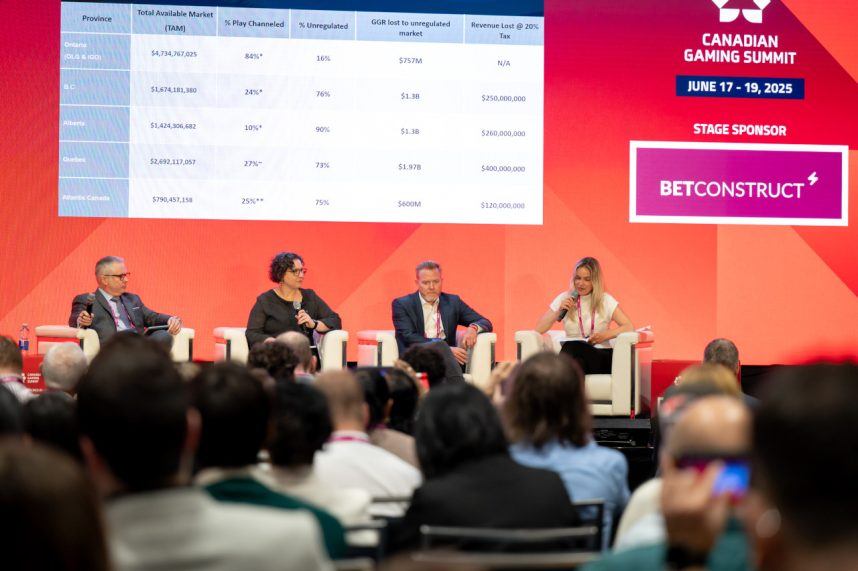
The day after the Super Bowl, an event that generates massive sports betting volume in the province, the Quebec Online Gaming Coalition submitted its brief to the Ministry of Finance.
The Quebec Online Gaming Coalition was launched in May 2023 when Betway, Bet99, DraftKings, Entain, Flutter, Games Global, Rush Street Interactive, and Apricot Investments came together to work with the Quebec government and local stakeholders to develop a new regulatory framework for the province that competes with government-owned Loto Québec.
The crown corporation is the only place people in the province where can go bet online legally.
Coalition: Time for Market Shake-up
The main issue, according to the Coalition, comes down to the need to regulate the approximately 2,000 grey market websites out there, offering sports betting, casino and poker games, to Quebec players, with varying levels of quality and little or no responsible gambling safeguards.
According to the Coalition, the Quebec government is needlessly placing vulnerable people at risk while also depriving itself of more than $300 million in tax revenue each year. By focusing solely on land-based or “physical” gaming offerings, such as Loto-Québec’s Salon de jeux, video lottery terminals and bingo nights, Quebec is missing the online gaming boat.
Why limit the regulation of online gaming to Loto-Québec sites alone, when the offering available on the Internet is much broader?” said Ariane M. Gauthier, spokesperson for the Quebec Online Gaming Coalition.
“Quebec could very well apply the same rules to private online gaming platforms, whether for advertising, age verification, or accountability, for example. This would channel the vast majority of online gaming into a stable and regulated environment, which is desirable for everyone.”
Ontario’s Market Model
A presentation by TRM Public Affairs at last summer’s Canadian Gaming Summit in Toronto put a number on what Quebec is missing out on – the province leads the charge in the lost gross gaming revenue department, at CAD $1.97 billion, followed by Alberta and B.C., at CAD $1.3 billion, Ontario, at CAD $757 million, and Atlantic Canada, at CAD $600 million.
Based on input from public health experts and looking at the experience in Ontario – a market that’s about to celebrate its fourth anniversary, with 48 licensed operators, that made just over $4 billion in non-adjusted gross gaming revenue in 2025 – the Coalition made four recommendations to the provincial government.
In Ontario, 20% of private operator revenue goes back to the government as tax.
Canadian Gaming: Coalition Recommendations
- Put an independent regulator in charge of overseeing all online gaming operators, public or private.
- Work with stakeholders to create Quebec-only government standards for regulating private and public online gaming.
- Lay out the rules for getting an operating license and agree to share revenue with the Quebec government.
- Use part of private online gaming profits to help communities and ramp up prevention funding.
Gauthier’s group also referenced the Alberta private igaming market model, which is expected to go live this spring or summer. Under that scenario, Alberta Gaming, Liquor & Cannabis (AGLC) will handle registration, then the new Alberta iGaming Corporation will finalize commercial agreements with the operators.
The registration cost for an iGaming Operator license will be a $150,000 annual fee plus a $50,000 one-time application fee.
Last Comments ( 1 )
Canadian Provincial Governments rule with a very heavy hand. It will be interesting if they move forward to watch them build their oversight model and who will be their preferred operators. Over the years we have seen who are the favored operators on other provinces. In the end, my bet it will be heavily taxed and heavily regulated.