
Land Ownership Under Fremont Street Casinos Is a Wackadoodle Jigsaw Puzzle

There’s a fair amount of chatter about who owns what on the Las Vegas Strip. That’s because Strip casinos often aren’t owned by the entities we think they’re owned by. One company may own the land (usually Vici Properties), but another owns the operations (usually Caesars or MGM Resorts).
While that can be confusing, it’s nothing compared to the utter insanity of who owns what under the casinos along Fremont Street.
It’s not just inside baseball for real estate nerds. Land ownership plays a big part in why investments are made, or aren’t, downtown. Why could Derek Stevens build Circa, but Binion’s has a hotel tower sitting empty for nearly two decades? As our fellow youths say, LFG.
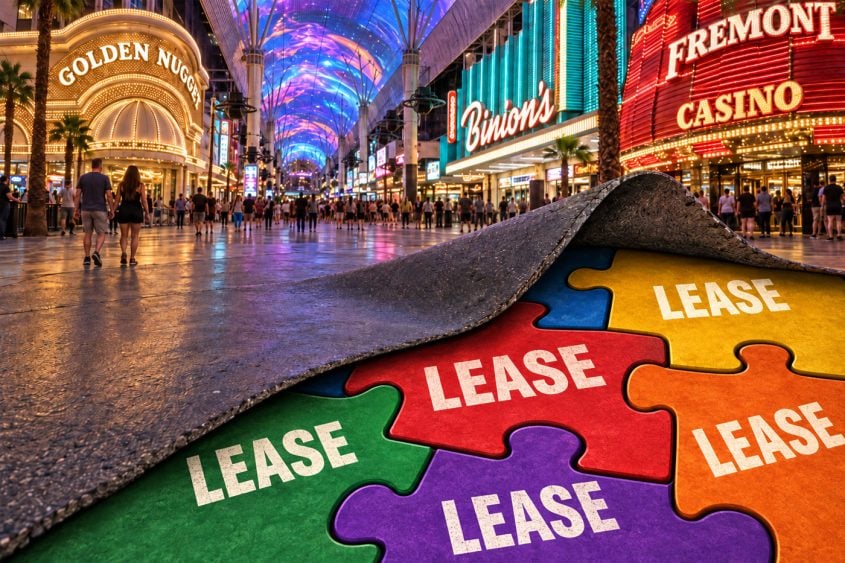
Who owns what downtown is public information. With some detective work, anyone can see the ownership records, and all the various parcels that lie beneath your favorite downtown casinos. But public records don’t have snarky asides, so screw all that.
Let’s dive into the land ownership associated with the casinos along Fremont Street. A little for curiosity, a little for posterity and a lot because we just love mansplaining Las Vegas. You’re welcome.
Let’s start with the easy ones.
Some casinos are on land owned by the casino owner.
Take the aforementioned Circa, for example. The entire plot of land upon which Circa is built is owned by brothers Derek and Greg Stevens. There’s debt, but no rent payments.
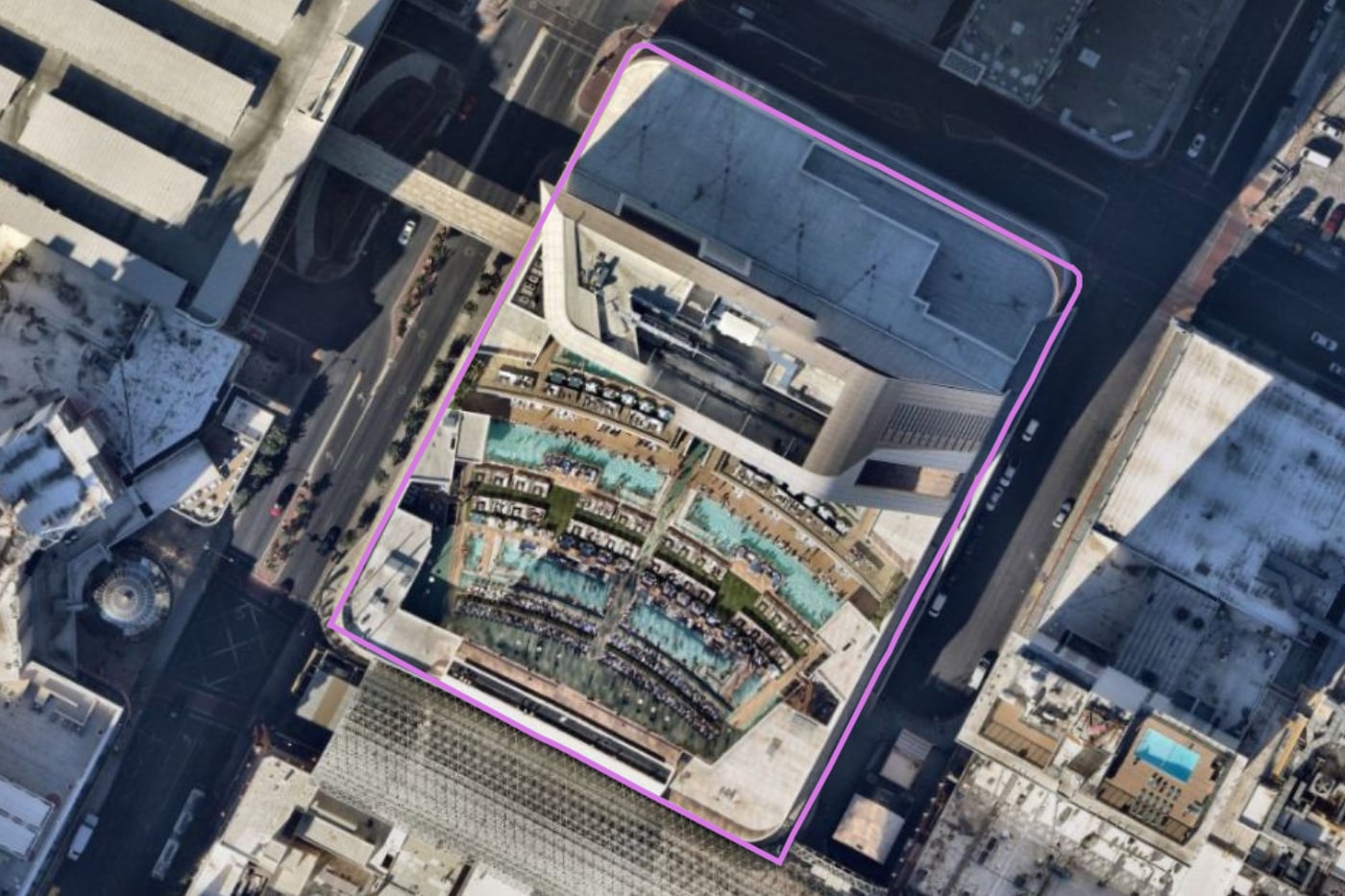
Circa cost $1.156 billion to build. We are the first and only news outlet to report that, and the Stevens have never confirmed it. How do we know this information? Dogged journalism, and by that we mean a financial presentation including that figure was accidentally left at a local restaurant and we have sources everywhere.
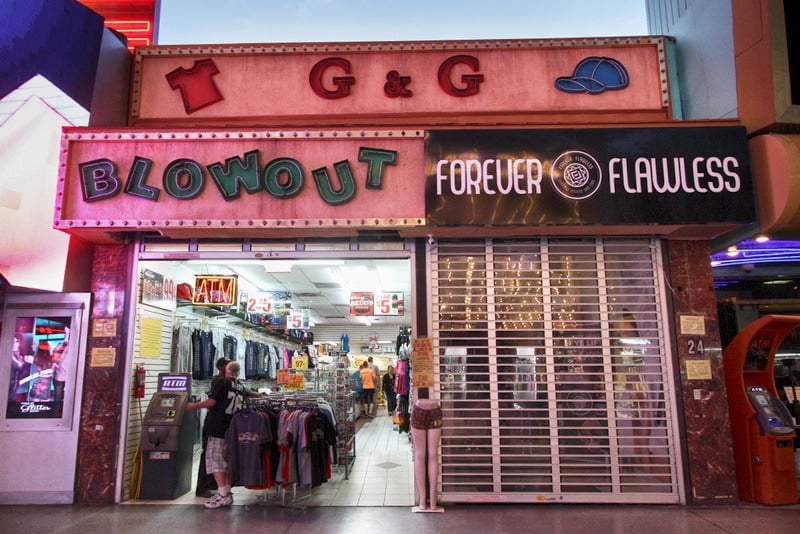
The Stevens spent a lot of money acquiring parcels to build Circa. They bought Las Vegas Club and Mermaids. It came down to a lone hold-out, Haim Gabay, who owned a couple of shitty gift shops between Las Vegas Club and Mermaids. Eventually, the Stevens got his .08-acre parcel for a whopping $13.5 million.
Owning the land gives you complete control over what happens with your casino. Others along Fremont don’t have that luxury.
But before we get to that, here’s another easy one. Plaza. The whole place is owned by T-U P R LLC, Tamares Group. The wrinkle here is that Tamares leases the casino’s operations to Jonathan Jossel, under the name PlayLV Gaming, but no legacy land owners are involved.
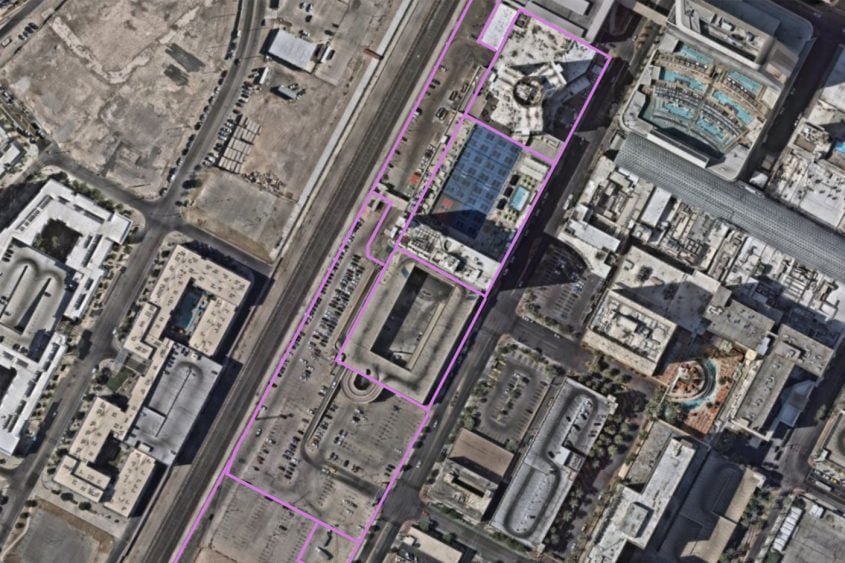
On the other end of Fremont Street is El Cortez Hotel and Casino. (Not the “other end” geographically, as Fremont Street extends 2.4 miles beyond El Cortez, eventually turning into Boulder Highway, but spiritually.)
El Cortez also owns all the land it sits upon.
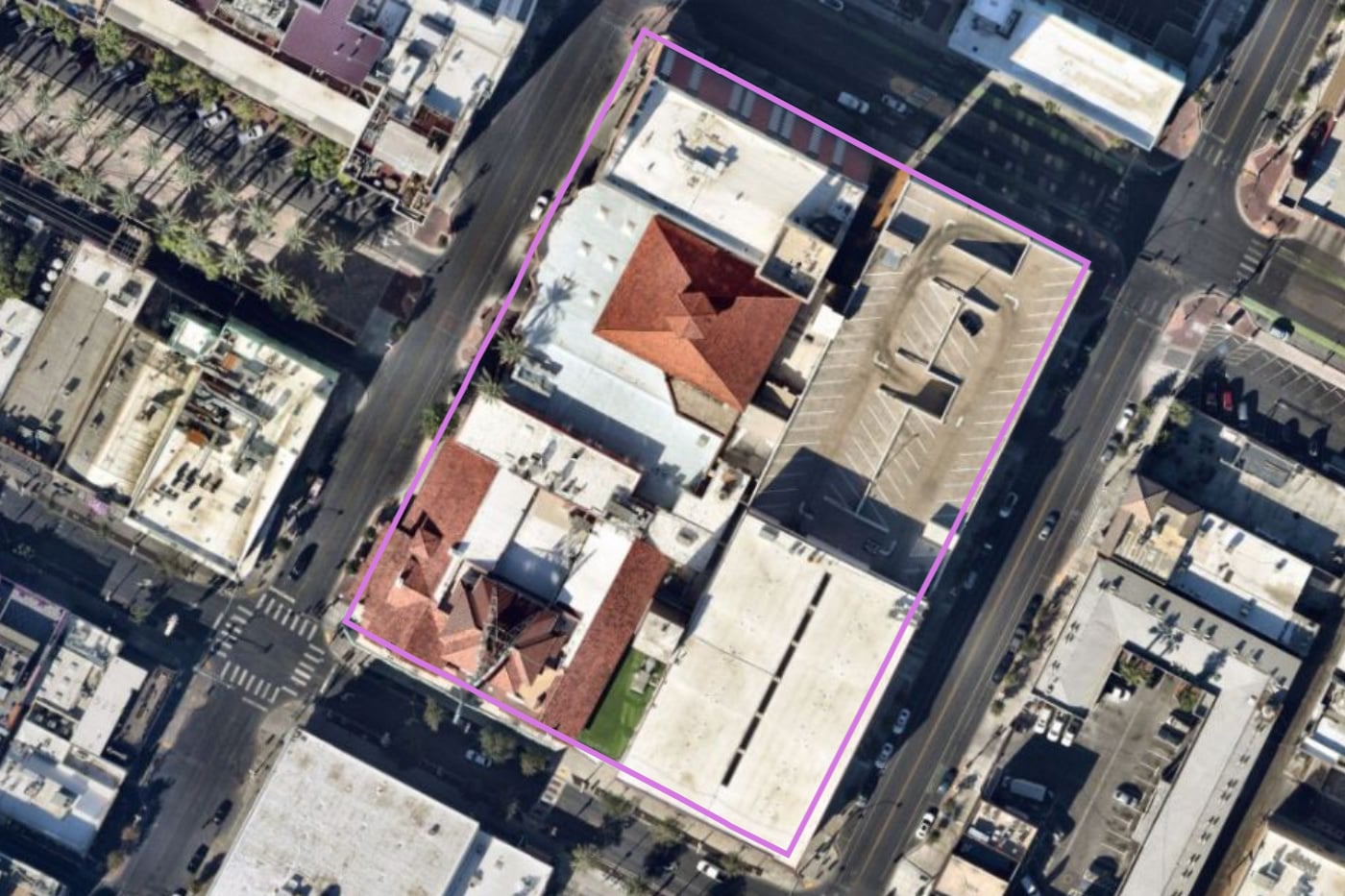
We are not making that up. It was part of an announcement for the Life is Beautiful festival, now defunct. The festival, not Duran Duran. They are still the best band in the world.
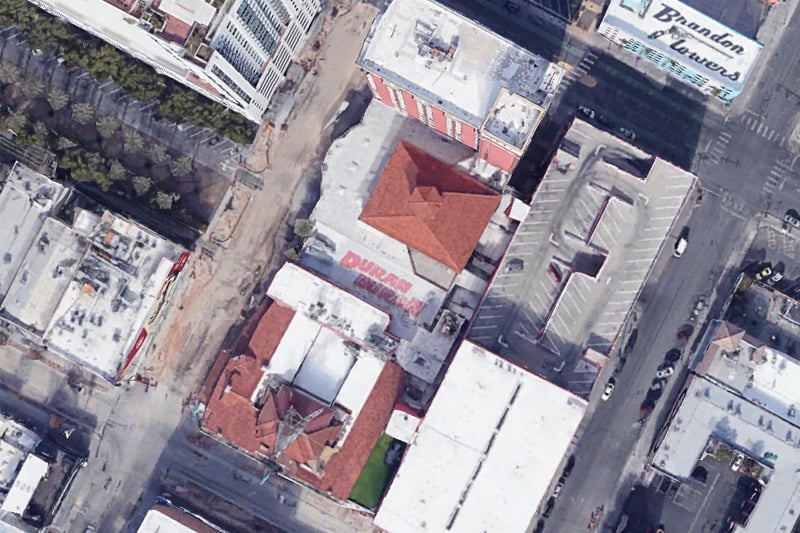
That’s where the simplicity ends.
Not long ago, local news reported Derek Stevens had acquired “all the land beneath Golden Gate” for $19 million. That was, in real estate parlance, hooey.
The Stevens bought all the land under the original Golden Gate, but there’s another section of the casino (it was formerly La Bayou) that has a different land owner, Harold and Mayme Stocker Trust and First Interstate Bank Trust.
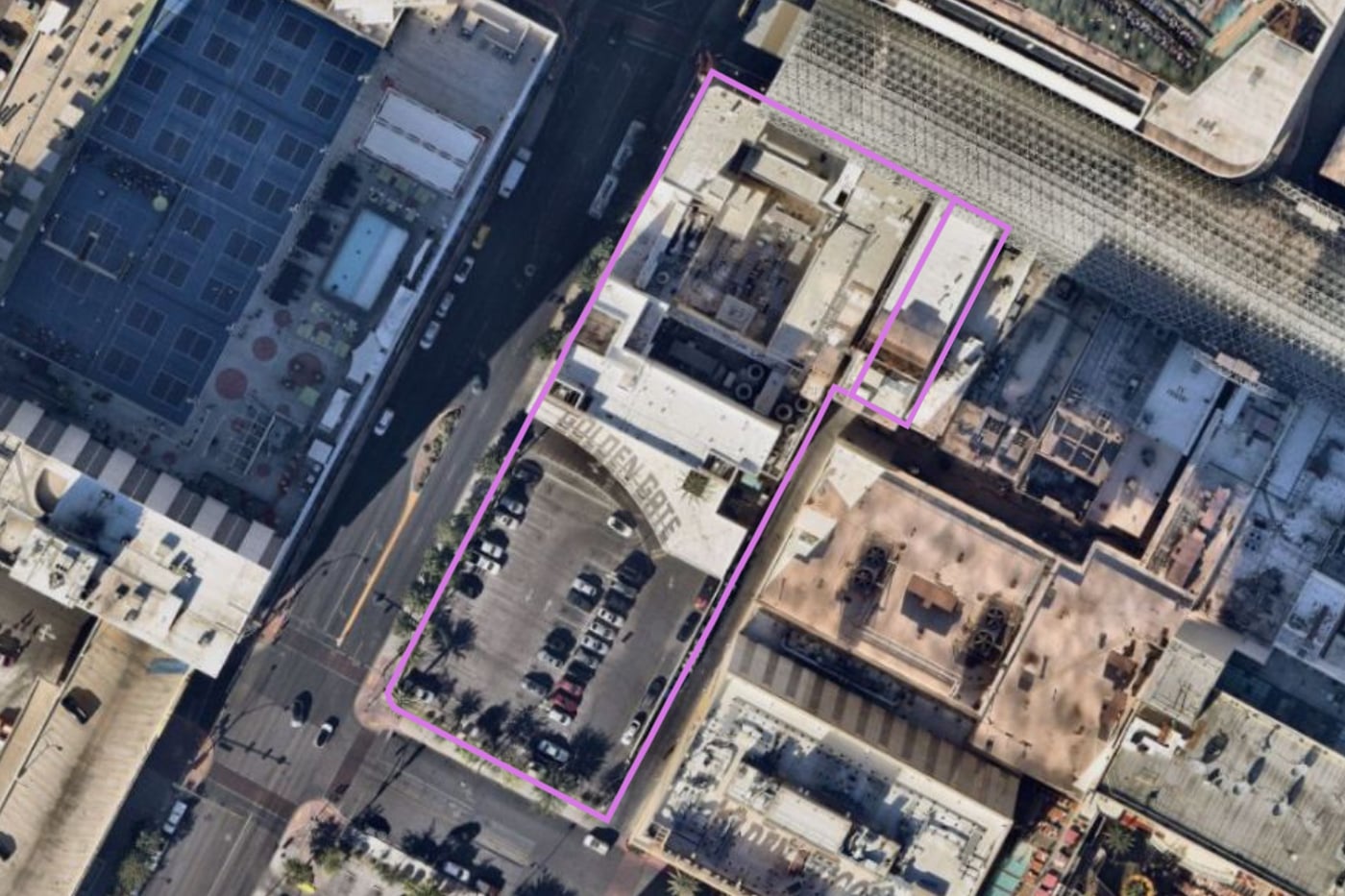
Given that the Stevens like owning the land their casinos sit upon, why wouldn’t they buy that remaining sliver?
We told you it’s complicated. Pretty much everything about land ownership along Fremont is complicated.
See, many parcels are owned by descendants of the original land owners through trusts and other legal machinations we only vaguely understand. These longtime lease deals mean rent payments from casinos on the regular.
The people who manage these ownership entities, lawyers and trustees, get fees on the regular, too.
There, as they say, is the rub.
There is simply no incentive to sell these parcels. In the case of the remaining sliver of land at Golden Gate, the land was owned by noted Nazi enthusiast Ralph Englestad. He owned Imperial Palace. When he died, he donated the land to the Stocker Trust, which donates their rent to scholarships at UNLV. Honorable, but nobody involved has any reason to sell. Ground leases are a money machine.
Thus, land ownership along Fremont is a minefield of WTF, and will continue to be for the foreseeable future.
We’re just getting started!
Up next, Binion’s.
Binion’s is a fun one, mostly because its land ownership structure has arguably prevented Binion’s from being able to evolve into a modern resort. Not exaggerating.
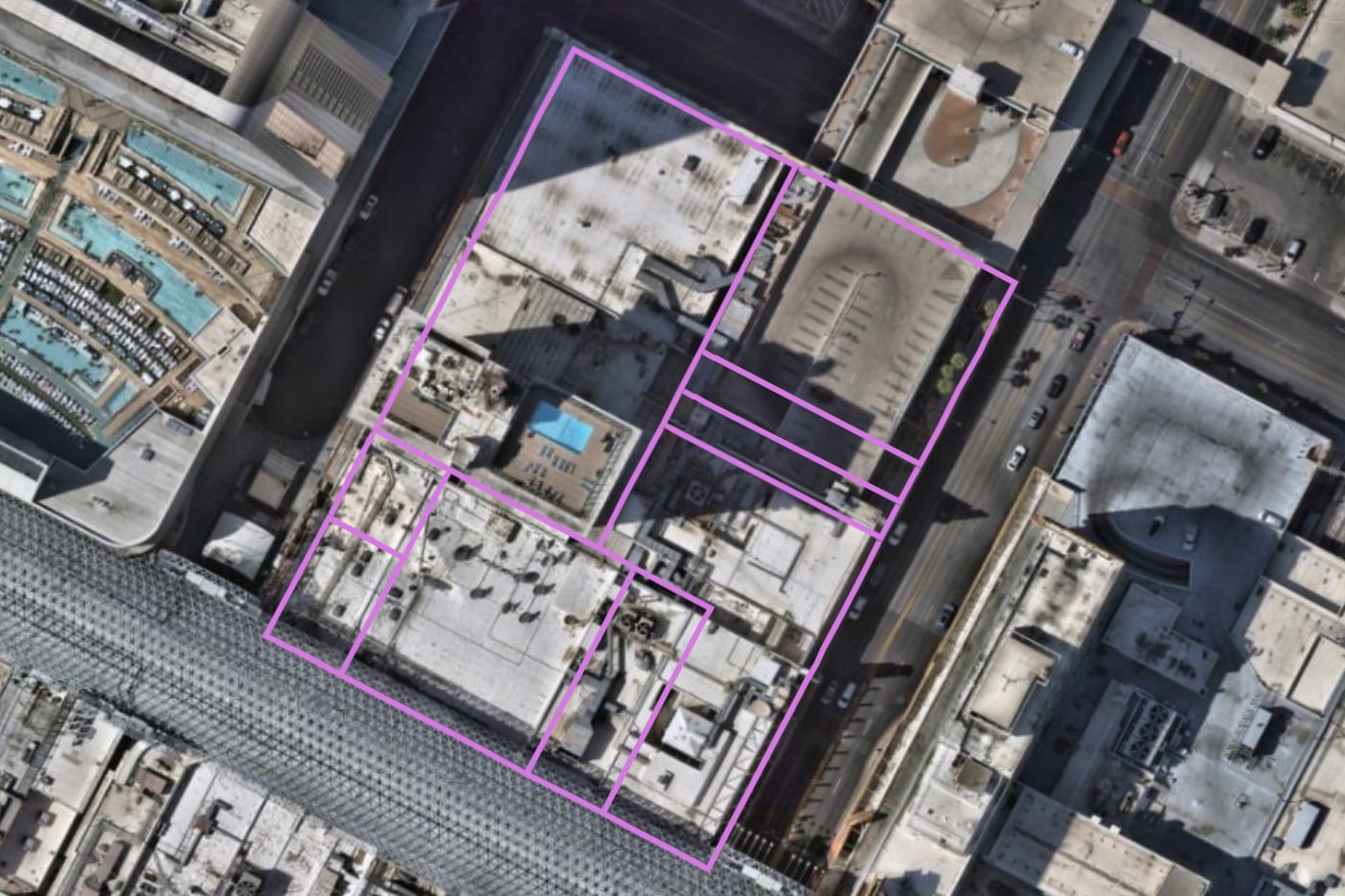
The owners of the Binion’s land: Vintage Vegas Gaming Inc.; Linda J. Isola Present Interest Trust and Brett K. Sellers, trustee; Wadsworth 1994 Trust et al., with Maria Wadsworth and Donald K. Wadsworth as trustees; Robert T. Stevenson et al., with Norma J. Hale as trustee; Sage Realty Co. and Speakeasy Gaming Fremont-Improvements; and Doris E. Hamilton Family LP et al., with Tara Lee Zipp.
To make serious capital investments takes, well, investors. Buyers and investors get nervous when things are complicated.
A little background. Back in 2004, when Becky Binion Behnen’s Binion’s Horseshoe collapsed financially, Harrah’s and MTR Gaming put together a complicated deal to acquire it. The problem was that the casino (wait for it) did not own all the land beneath the property. The Horseshoe sat on land owned by seven separate landowners. MTR and Harrah’s said they needed rights to all of those parcels or they could walk away from the transaction. At least five groups of landowners were involved in negotiations, and lawyers for two of those groups said there was still no agreement over back rent and new lease terms. One landlord attorney complained that Harrah’s was trying to get the owners to reduce their rents because the casino wasn’t profitable.
MTR sold Binion’s to Terry Caudill’s TLC in March 2008 for about $28 million. MTR remained on the hook as guarantor for certain Binion’s ground leases. Then the recession hit. By 2009, Binion’s was writing landlords telling them the situation was “perilous.” Binion’s wasn’t generating positive cash flow. One lease is particularly revealing. The existing rent was: $252,000 per year, or $21,000 per month. TLC argued that the underlying parcel was worth only about $609,800. Applying what it claimed was a normal 6%-7% return would produce annual rent of about $40,000. TLC offered $48,784 per year, about an 80% reduction. The landlord declined and filed suit in Clark County District Court alleging violations of the lease. By late 2009, at least four of the nine parcels beneath Binion’s were owned by outsiders collecting rent. TLC was fighting multiple landlord lawsuits involving unpaid rent or requests for higher rent.
Another 2009 lawsuit involved roughly a quarter-acre underneath Binion’s. The landlords sought $19,594 per month, or $235,128 annually, under a lease dating back to 1960. That figure is useful for illustrating how valuable even tiny pieces of land underneath a functioning casino can become. Because MTR had guaranteed the leases when it bought Binion’s in 2004, TLC’s failure to pay rent became MTR’s problem even after it sold Binion’s. MTR told shareholders that beginning in July 2009, TLC paid only part of the monthly rent on one guaranteed lease. The landlord then demanded payment from MTR. MTR ultimately paid about $700,000 to take care of the defaults. It sued TLC for reimbursement. The companies eventually settled.
Flash forward to 2019. Binion’s really, really wanted to reopen its hotel tower.
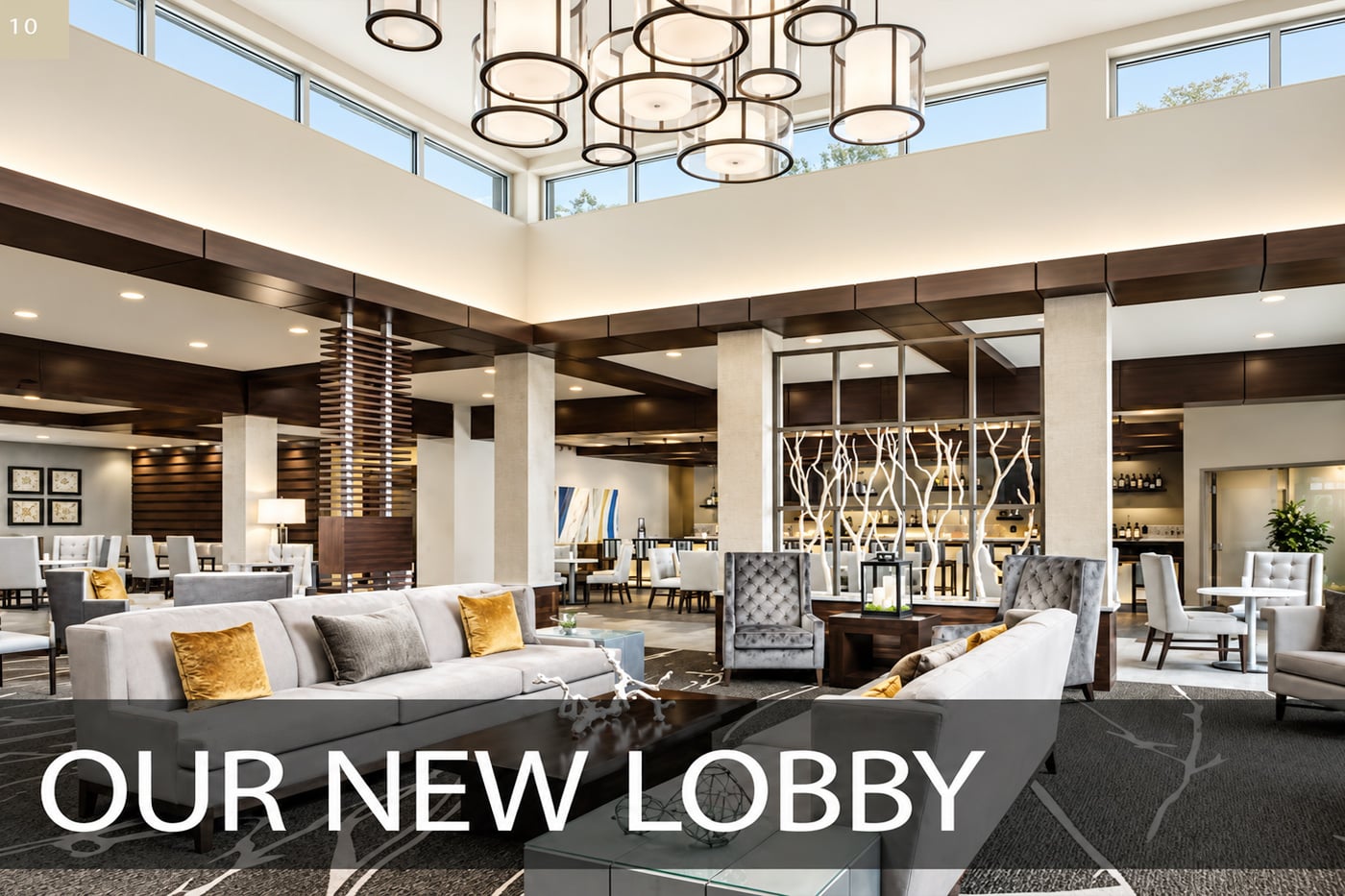
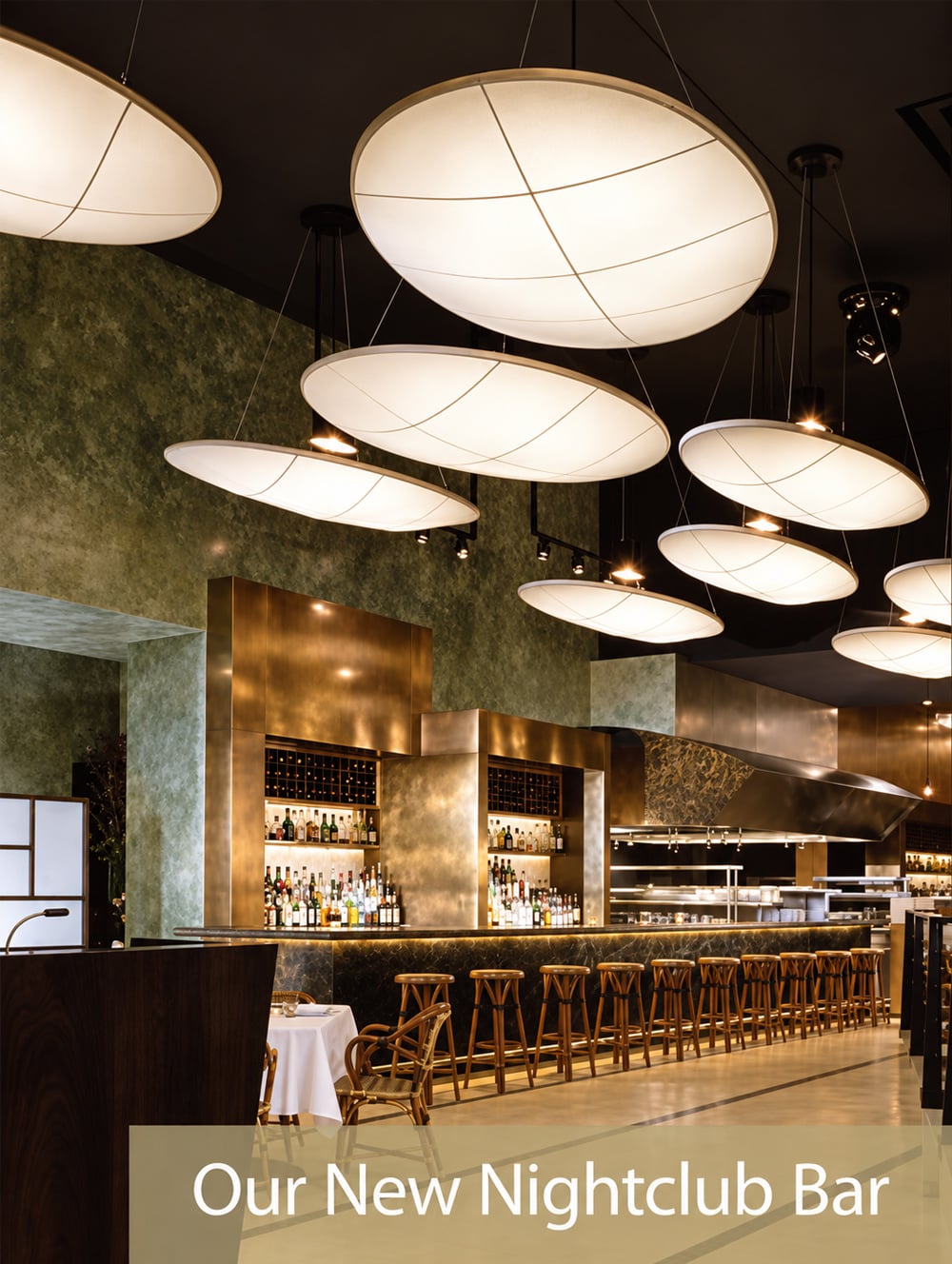
In 2019, TLC Casino Enterprises circulated an EB-5 investment proposal with a redevelopment plan with a $48 million total budget. That proposal involved a hotel overhaul, as well as new amenities including a nightclub, spa/salon and gym.
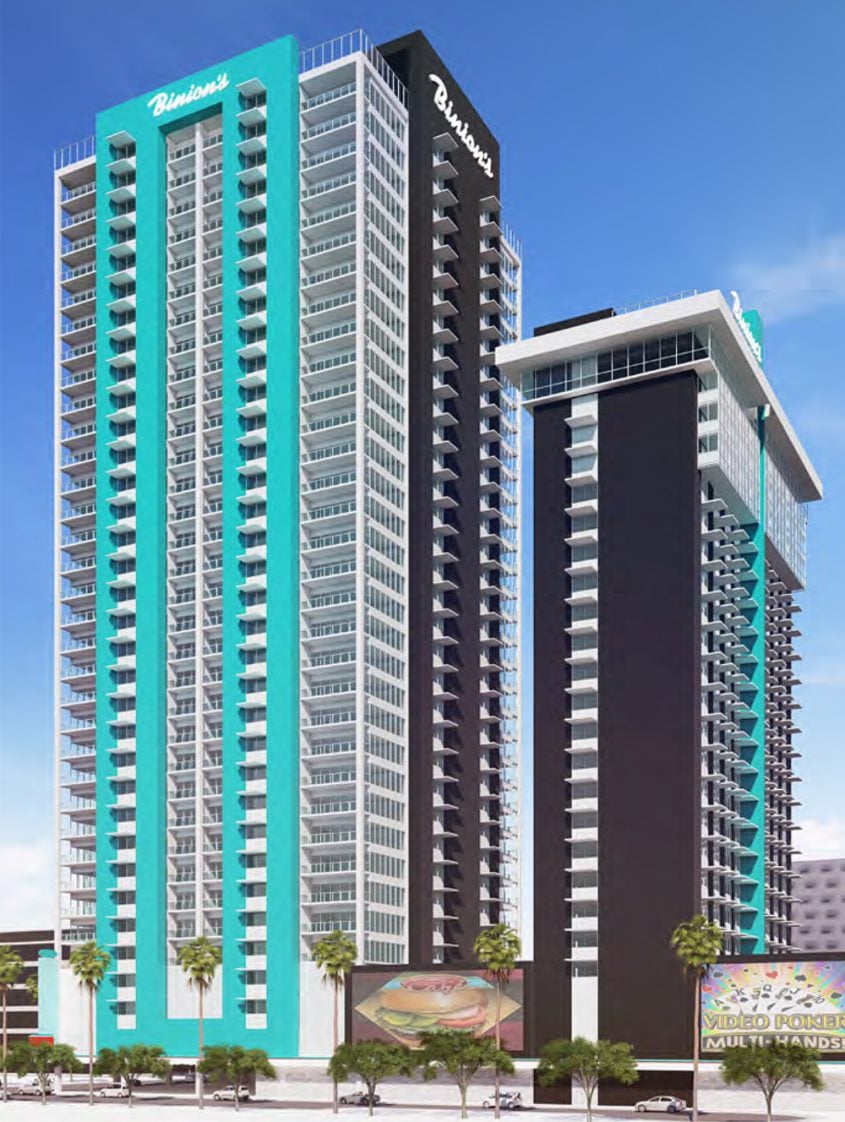
You can view the Binion’s sales pitch (.pdf) to investors online.
It’s downright fanciful!
The bottom line is Binion’s hasn’t moved an inch toward its goals, despite an explosion in downtown visitation in recent years, due largely to our being the digital marketing manager of Fremont Street Experience for several key years, largely because of its complicated land ownership.
There have even been rumblings some land owners aren’t thrilled with their financial arrangements with Fremont casinos, which means a land owner could end its arrangement with the casino and all hell could break loose.
The exact number isn’t public, but based upon SEC filings from the MTR Gaming days, along with the increase clauses in Binion’s ground leases, we’d estimate the casino currently pays outside landowners about $8 million a year, or $670,000 a month, for the dirt beneath the place.
As we move eastward on Fremont, up next is Golden Nugget. Golden Nugget has about six parcels. Even bajillionaire Tilman Fertitta pays rent to the land owners.
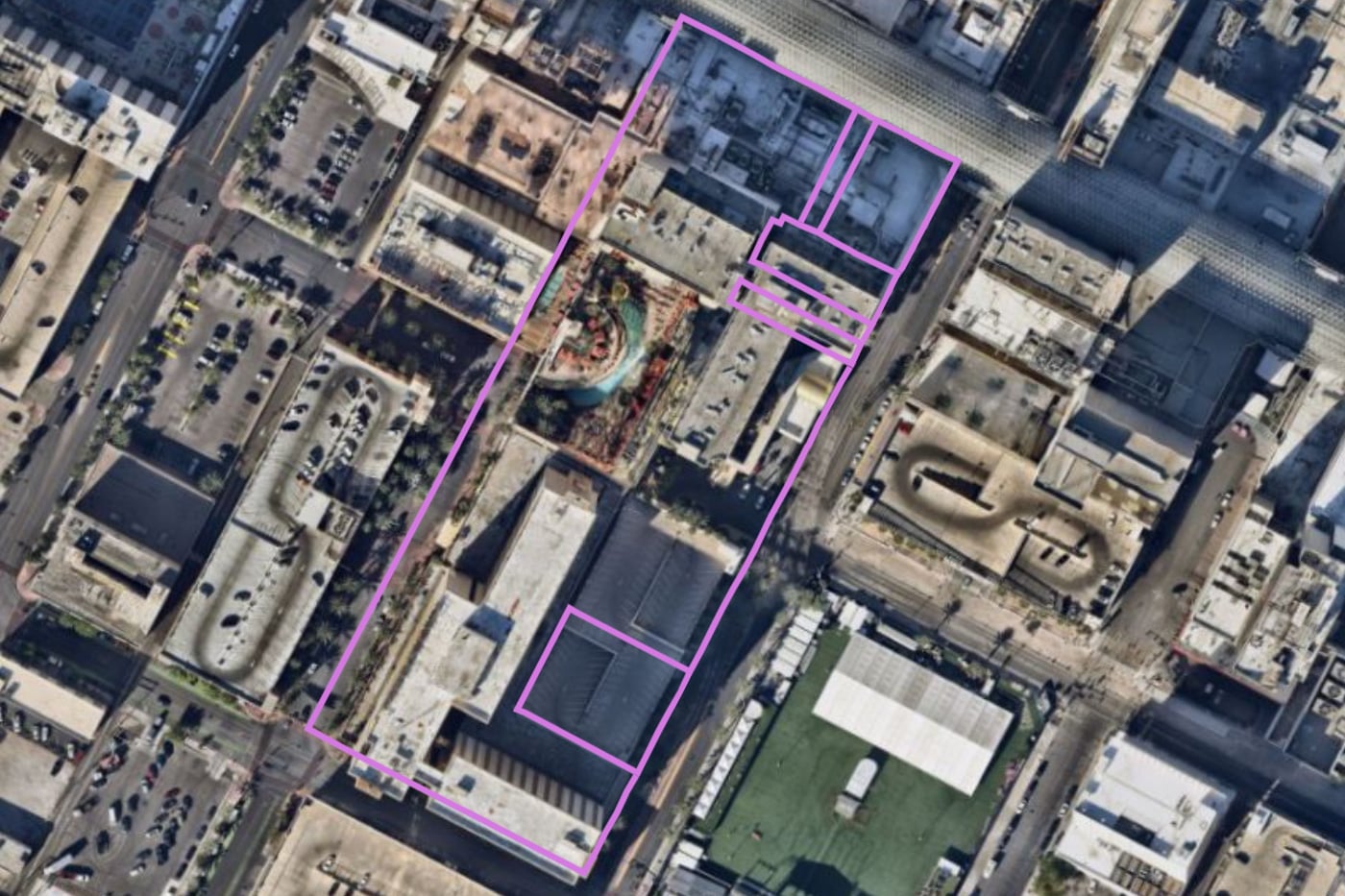
While Golden Nugget owns some of the parcels, there’s also Elizabeth Zahn, trustee; Mtnest Family Trust et al., with Clinton E. Stay Jr. and Kim E. Stay; Laurence R. Stay-Jak Living Trust and Mtnest Family Trust et al.; and Fraternal Order of Eagles, Lodge No. 1213.
Oh, yes, the Fraternal Order of Eagles, Lodge No. 1213. Technically, Las Vegas Aerie No. 1213, Fraternal Order of Eagles. Think Elks, Moose, Odd Fellows or Masons, but their own thing. Our fellow youths may not be familiar with fraternal orders, but they exist so men can escape their wives and children. Shout-out to the patriarchy!
Who next?
Let’s take a look at the land ownership of Fremont Casino.
The Fremont can provide some additional insights into how much rent is paid on land leases because its owner, Boyd Gaming, is a public company.
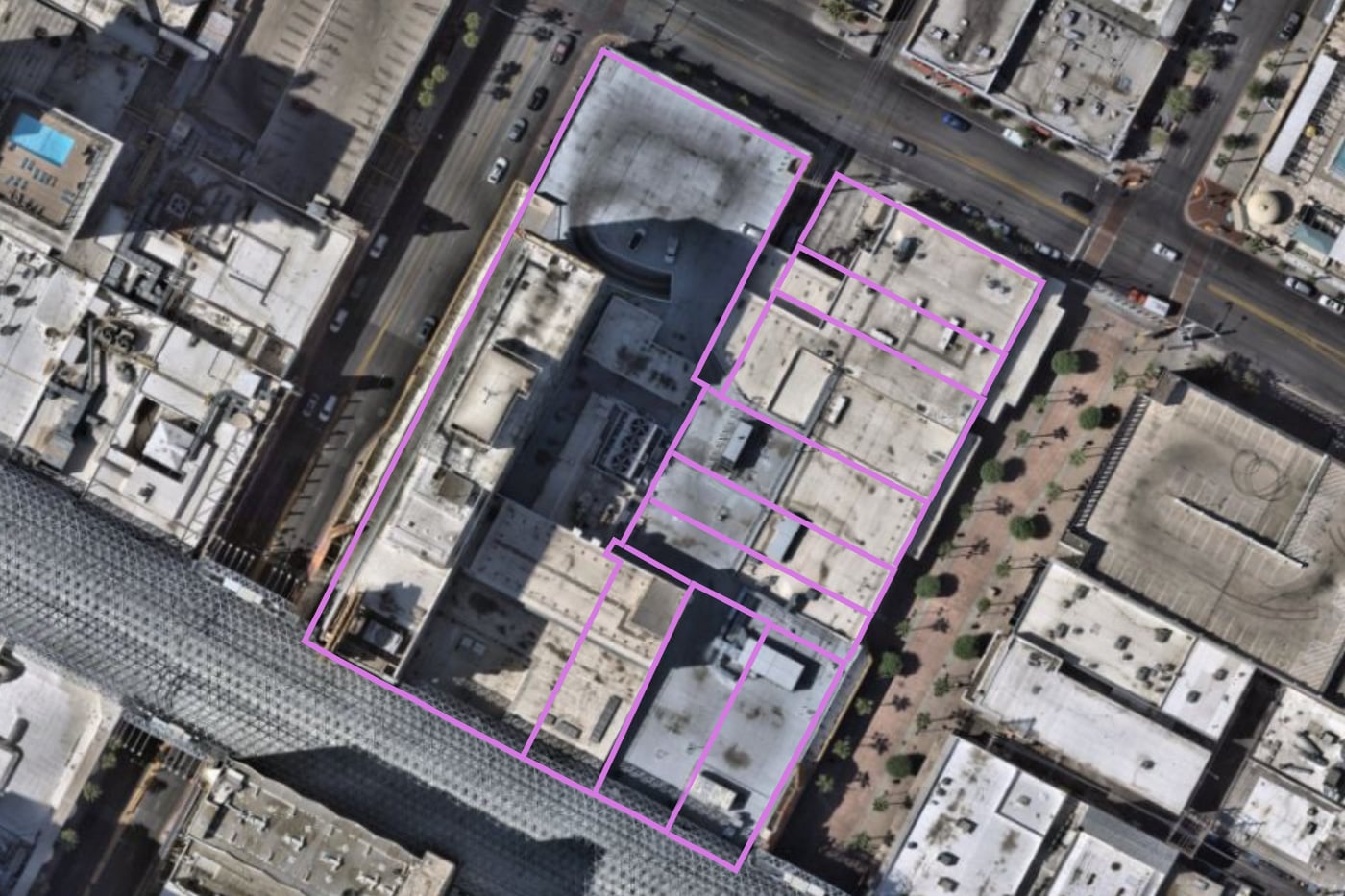
Some of the parcels are owned by Sam-Will Inc., which is Boyd. We know this because the name is a combination of Sam Boyd and William Boyd, father and son and the founders of Boyd Gaming. We also looked it up on the Internet.
Also owning parcels beneath Fremont Casino: George William Morgan and the Morgan Family Trust; Sannene Carpenter and Harry Richardson; Rockwell Legacy Properties LLC et al., with Michael O. Riley and Carol L. Riley; Mary Lee Coleman Separate Property Trust et al., with Mary Lee Cole as trustee; and Rockwell Legacy Properties LLC et al., with the Justine Halliday Revocable Living Trust.
Boyd says the Fremont sits on about three acres. Those leases require monthly payments totaling about $100,000 per month, or $1.2 million a year. Five of its ground leases expire in July or August 2053 and one expires in December 2077. The rents increase based on CPI, usually on five or 10-year cycles. CPI is the Consumer Price Index, a government measure of how prices for everyday goods and services change over time. Basically, rents are adjusted for inflation. One of the leases dates back to 1954, with others from 1963, 1971, 1974 and 1978. Several of the leases are for terms of 99 years.
About one-third of the Fremont Casino’s footprint is ground-leased from descendants, trusts or successors of several old Las Vegas landowning families.
Let’s move over to Four Queens, also owned by Terry Caudill.
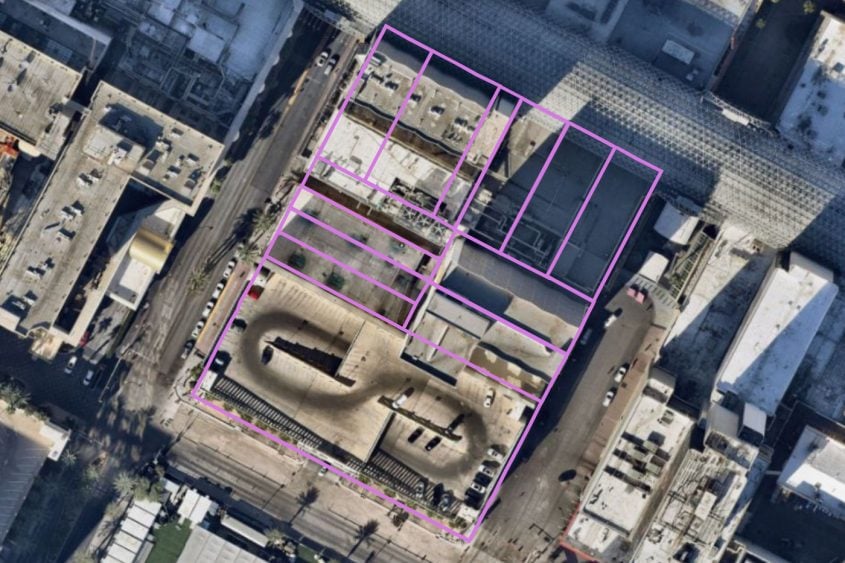
Parcels are owned by Caudill’s Four Queens Inc., as well as Prop 4 Q LLC; Fremont Land Investment LLC; Rockwell Legacy Properties LLC et al. and Michael O. and Carol Riley; FCDE LLC; Thomas L. Carroll Estate et al. and Santa Clara University; McCall LLC et al. and Forbes B D LLC; McCall LLC et al. and B O G O LLC; B O G O LLC et al. and the Purkiss Family Trust; and the City of Las Vegas and Four Queens Hotel & Casino lease (parking garage).
Last but not least, there’s The D Las Vegas, another Derek and Greg Stevens casino, previously Fitzgeralds and before that Sundance.
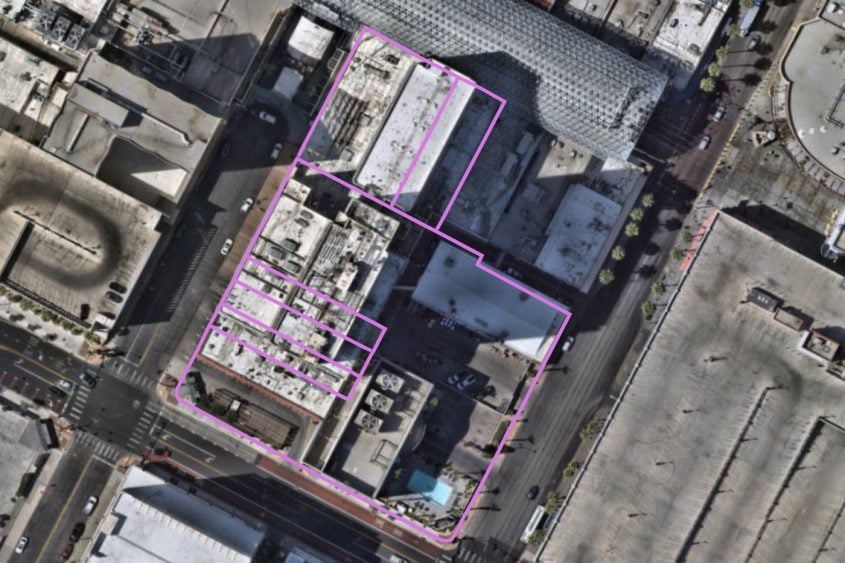
The land owners include DRock Gaming LLC; John A. Kramer Sr., trustee; Tinkler 2014 Trust, with Ashley Clarke Tinkler as trustee; Tinkler Revocable Trust No. 1, with Richard J. and Edith E. Tinkler as trustees; Masonic Lodge No. 32; and Georgia D. Makeever Revocable Trust et al., with Donald S. Makeever as trustee.
DRock Gaming is Derek and Greg Stevens. The Derek J. Stevens Trust owns 78% and The Gregory J. Stevens Trust owns 22%, with Derek Stevens serving as manager.
And, yes, the Masonic Lodge owns a parcel underneath The D. The patriarchy has its fingers in everything!
As mentioned, you can do a deep dive into who owns what through public information provided by Clark County.
We’re happy to have given ourself carpal tunnel to take you under some of our favorite Fremont Street casinos to reveal who owns the land.
These leases are a built-in expense for casinos, and part of doing business downtown.
There’s not much motivation on the part of land owners to sell, so Fremont is sort of stuck in a time warp. While we love Circa, we also like the idea of our favorite gritter places staying gritty due to the paralysis caused by multiple land owners having to agree about any major changes like demolitions or rebuilds.
The dynamic between members of this sometimes dysfunctional family of casinos is an endless source of fascination for us. Nobody talks about why Terry Caudill (with two casinos) has two shares of Fremont Street Experience but Derek Stevens has 1.5 (with three casinos). That’s right, Circa isn’t even technically part of Fremont Street Experience! Neither are Main Street Station and The Cal.
We told you not to get us started.
We’re already busy soaking our hand in ice water.
Like Derek Stevens does on his ride home after shaking hands all day. No joke.
Even the patriarchy has a vig.



Leave your thoughts on “Land Ownership Under Fremont Street Casinos Is a Wackadoodle Jigsaw Puzzle”