

11 Once-Popular Casino Games That Went Extinct

You sometimes hear about new games being introduced at casinos, but we’ve recently become fascinated by casino games that were once everywhere but which are now nowhere. They’ve simply gone extinct.
Games like blackjack, roulette, craps and baccarat have had impressive staying power; lots of other games have disappeared over time. Some fell victim to changing tastes, others were too complicated, others couldn’t generate enough revenue to justify taking up valuable floor space.
Here are 11 once-popular casino games that have gone the way of free parking, cheap buffets and virgins.
1. Red Dog
This game was also known as Acey-Deucey or In-Between. Red Dog was a simple card game in which players bet on whether a third card would fall between two cards dealt face up. The wider the spread between the first two cards, the better the player’s chances of winning. Red Dog was easy to learn, fast-paced and required almost no strategy. It gradually disappeared as operators shifted toward games attracting more customers and generating greater revenue. Bring back Red Dog, we say, it sounds fun.
2. Faro
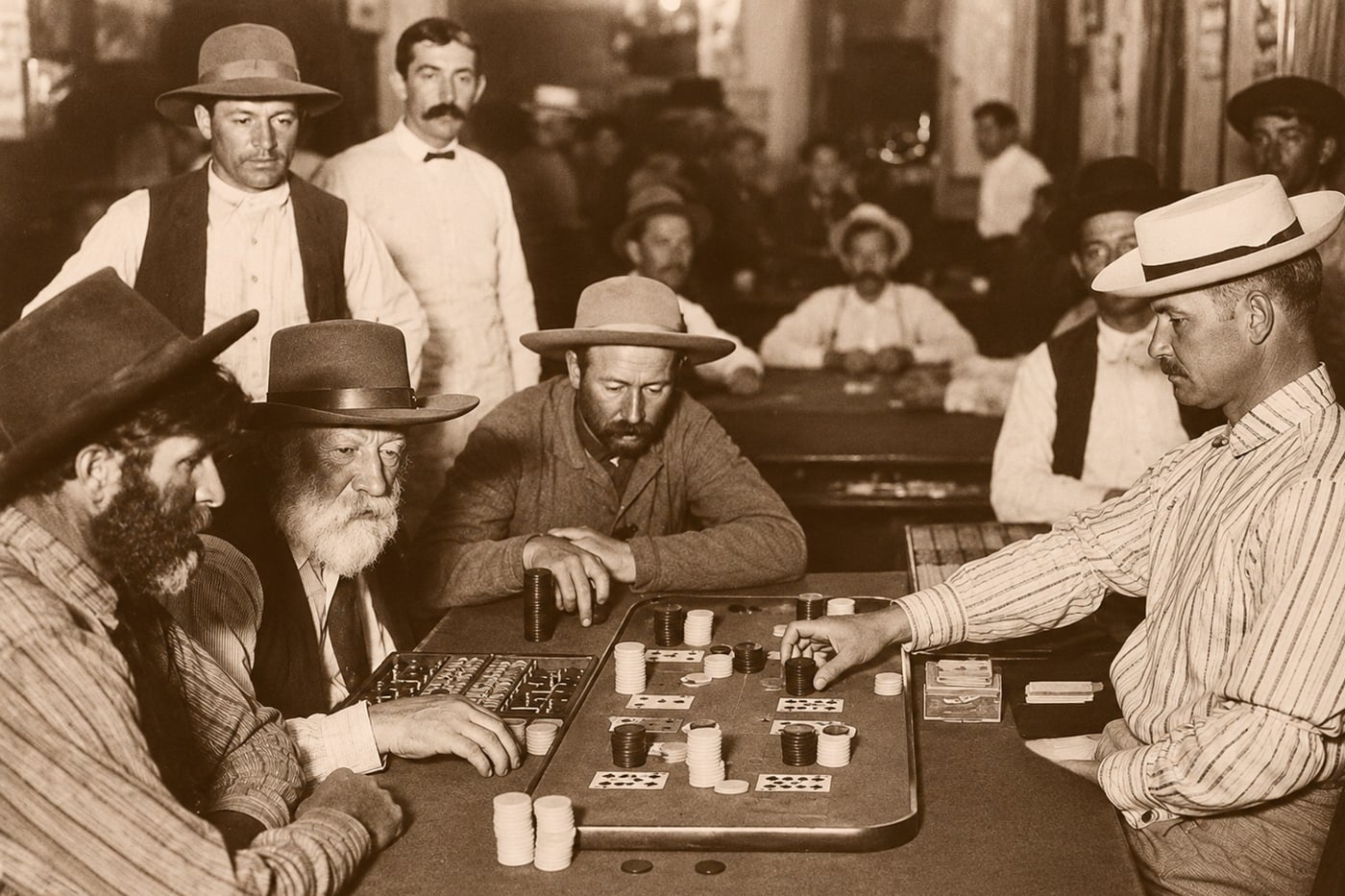
Before blackjack dominated the floor of your favorite casino, there was faro. Faro was very popular in 19th-century America, especially in Old West saloons. At one time, it was even more popular than poker. Players bet on which cards would appear as a dealer worked through a deck, placing bets on a layout showing all 13 card ranks. Faro was easy to understand and offered decent odds compared with other card games. Unfortunately, it was also vulnerable to cheating. As gambling evolved, faro lost ground to other games and disappeared from casinos.
3. Chuck-a-Luck
Chuck-a-Luck was a dice game with three dice inside a rotating cage that looked like a birdcage. Players bet on which numbers would appear when the cage stopped spinning. If a chosen number appeared on one die, the player won; payouts increased when it appeared on two or three dice. The game was popular in carnivals, gambling halls and early casinos, where the spinning cage provided an entertaining spectacle. Chuck-a-Luck eventually fell out of favor as casinos embraced games offering more excitement and betting options. Fun fact: the game was sometimes called “sweat rag.”
4. Panguingue
Panguingue, also called “Pan,” was once popular in Nevada cardrooms. A variation of rummy, Pan involved multiple decks and a complicated system of combinations, payments and bonuses. Unlike most casino table games, it was played against other players, while the house collected a hosting fee, like the “rake” in modern-day poker. Pan attracted a devoted following, especially among older gamblers who liked the social aspect of the game. As its players aged and the youths didn’t learn the game, it faded into the mists of time or whatnot.
5. Hazard
Before craps, there was hazard. Hazard goes back to medieval times. Like craps, it involved rolling two dice and betting on the outcome, but the rules were more complicated. Depending on the rolls, players could win, lose or continue rolling. Hazard eventually evolved into craps, although the two games coexisted for a time. It was still played in Nevada casinos during the 1930s. Today, hazard is nowhere to be found, while craps is still around, despite being on life support due to the economics of a game that often requires five people to staff it (three dealers, a boxman and a floor supervisor or pit boss).
6. Fan-Tan
Long before electronic baccarat and stadium gaming, Chinese gamblers were playing fan-tan. Traditional fan-tan involved betting on the number of small objects (buttons, beads or similar items) remaining after a dealer removed them in groups of four. Players wagered on whether the final remainder would be one, two, three or four. The game was popular in Chinese gambling establishments throughout the American West during the 19th and early 20th centuries. You can find fan-tan elsewhere, but it has vanished from modern Las Vegas casino floors.
7. Rouge et Noir
Rouge et Noir translates from French to “Red and Black.” The card game started in Europe. Players bet on the outcomes of two hands, one designated red and the other black. The dealer arranged cards into rows, with winning wagers determined by the resulting totals. Rouge et Noir eventually reached American casinos in the 1930s. Today, SOL.
8. Spanish Monte
Spanish Monte was once popular in old-timey Old West saloons. The game got its start in Spain before becoming a fixture in American gambling joints.
Spanish Monte used a 40-card deck, with players betting on which card ranks would appear. It was simple and fast-moving, making it well suited to 19th-century gambling halls. Rife with cheating, Spanish Monte today is no mas, possibly with an accent mark over the “a.”
9. Klondike
Klondike was another card game once common in Nevada casinos. The name gives off an 1890s Klondike Gold Rush vibe. The game eventually disappeared as casinos standardized their offerings around more familiar and commercially successful options. Today, Klondike is far more likely to remind people of ice cream bars than a game of chance.
10. Chemin de Fer
Before baccarat became synonymous with high rollers and James Bond, one of its well-known variations was chemin de fer. The name translates to “railway” in French. Chemin de fer is a version of baccarat in which players take turns acting as banker and wager against one another rather than simply playing against the casino. The game was popular in European gambling establishments, and was available in Nevada casinos during the early years of legalized gambling but lost ground to punto banco, the version most familiar to modern casino customers. Full transparency, we are not a baccarat person, so we were unfamiliar with the term “punto banco” before writing this article. The player is “punto,” the banker is “banco.” Now, you know.
11. Lansquenet
Lansquenet, sometimes spelled “lansquenette,” is an old European card game. The name comes from the German Landsknechts, mercenary soldiers associated with gambling. Lansquenet was a banking game in which players wagered against a dealer, with outcomes determined by matching card ranks. We are exhausted from all the mansplaining, so you’re on your own. Let’s just say finding lansquenet in a casino today is about as likely as finding the wad of cash you dropped in Lost and Found.
Are you not entertained?
Casino games come and go for many reasons, but the underlying motivation endures: money. Shocker.
Modern casino games have to check a lot of boxes. The house edge has to be high enough to warrant offering it, and games can’t be vulnerable to cheating, either by players or staff.
If a game generates enough revenue, it stays. If not, kicked to the curb.
One awkward aspect of which games survive and which don’t: Games can’t require too much brain power. Minimal effort to learn, play and deal are prerequisites of games that stand the test of time.
The reality is the number of table games is shrinking as casinos realize slot machines make consistent money and never call in sick or file sexual harassment claims. The number of live tables at Las Vegas casinos has declined about 20% since 2010. We blame F1.
We’d love to see casinos bring back some of these forgotten games. They could spread sawdust on the floor, too, just to add some flair. A vintage games area could appeal to nostalgia and give players a feel for the Golden Era of casinos where the patriarchy gathered and drank and talked shit about everyone who wasn’t a member of the patriarchy.
Since you asked, yes, early casinos in Vegas were known as “sawdust joints” because they had sawdust covering their floors. The sawdust absorbed spilled drinks, tobacco spit and assorted unpleasantness while helping control dust and dirt. Eventually, more upscale “carpet joints” arrived. There’s an ongoing argument about which Vegas casino was the first “carpet joint.” It wasn’t Binion’s, despite that being a popular myth. The first was Meadows Casino & Hotel, which opened in 1931, near Boulder Highway. Binion’s was the first downtown property with a fully carpeted casino. It’s unknown if the carpet matched the drapes, and why would you even wonder about that, weirdo?
Which extinct casino game would you like to see make a comeback? Any of the games mentioned catch your fancy?
And while we’re on the subject, what, exactly, is a fancy?
These and other questions answered in our next installment of “stories we wrote because it was a slow news day.”




Leave your thoughts on “11 Once-Popular Casino Games That Went Extinct”