
Vegas Myths We COULDN’T Bust in 2025 (Pt 2): Sheldon’s Shadowy Palazzo Tale, Vegas’ First Serial Killer
Posted on: December 22, 2025, 07:21h.
Last updated on: December 22, 2025, 09:52h.

No matter how much we try to bust Vegas myths, we don’t always succeed. Though we are certain that many repeated Las Vegas stories are baloney, it’s not always so easy to prove it. Part 1 of this series ran last Monday.
Sheldon Adelson Threw Intentional Shade on the Wynn
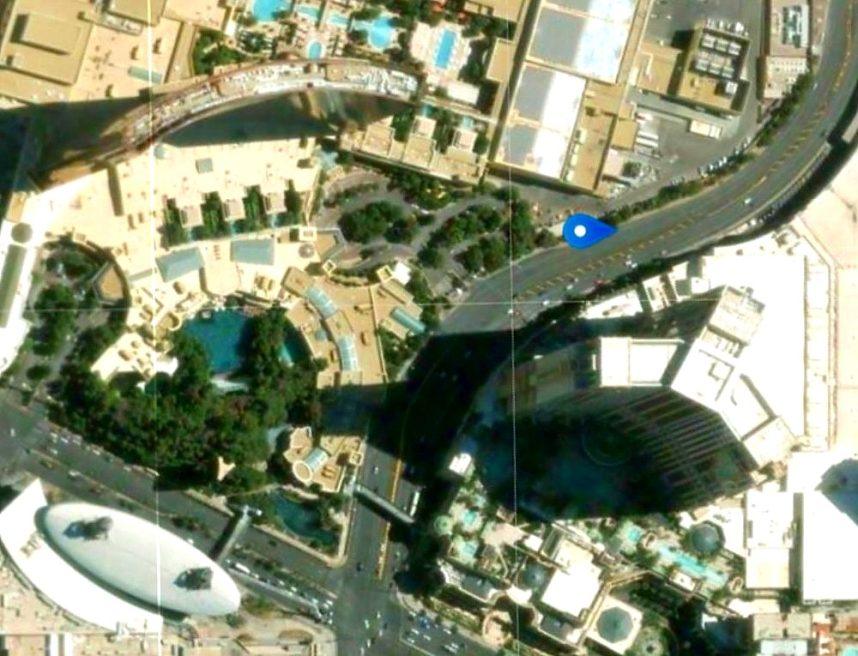
The shadow that Sheldon Adelson casts across the Las Vegas Strip, five years after his death and his family’s subsequent sale of the Venetian and Palazzo, is long. But it’s also physical.
“Occasionally, the rumor pops up that when Adelson opened the Palazzo in 2007, it was built in such a way that when the sun was right, it would cast a shadow over the Wynn, across the street to the north,” University of Nevada-Las Vegas history professor Michael Green told the Las Vegas Advisor in 2024.
We checked this one out, and at least part of it is true. Every day, Adelson’s second Las Vegas resort partially blocks sunlight from reaching the Wynn’s pool.
That sounds like something Sheldon would do,” Green speculated. “He could be petty at times, magnanimous at others — as when he kept the entire Venetian/Palazzo workforce on salary during the COVID shutdown, including workers at the four-walled restaurants, when other casino magnates were slashing payroll left and right.”
But no one either can — or will — say whether Adelson intentionally orchestrated this effect. He certainly never copped to it in his lifetime. And if it was unintentional, as seems to be the case, he probably liked his arch business rivals thinking he would go that far to mess with them.
Anyway, the most important detail is that the Palazzo’s shadow doesn’t fall over the Wynn’s pool until between 5:30 pm – 6 pm in the summer, and between 4:45 pm – 5:15 pm in the spring and fall — hours after sun worshippers would be seriously annoyed by it. So, even if the phenomenon was calculated, it wasn’t very effective.
Queho was Las Vegas’ First Serial Killer
It is impossible to tell through the fuzzy lens of bigoted old news reporting whether the man known as Queho was Las Vegas’ first bona fide serial killer or its most unfairly hunted scapegoat.
Queho did kill, as did many men in the 19th century — especially in frontier regions where “justifiable homicide” was legal doctrine. But Queho was a Native American who killed white people. And there was no justifying that in a time and place when only white men decided the law.
“Piute Savage Goes on Warpath,” announced the Lafayette Weekly Courier newspaper on Dec. 2, 1910, explaining that “the Indian, it appears, quarreled with the other members of his tribe and went on a lone warpath after whites.”
The Reno Gazette-Journal’s Feb. 15, 1919 edition called Queho an “insane half-breed.” (According to various reports, his father was either Mexican or white, and his mother from the Pauite, Cocopah, or Apache tribes.)
The first murder attributed to Queho was that of his half-brother, Avote, in 1910. Then came J.M. Woodworth, for whom Queho reportedly cut timber near Searchlight, Nev. This was followed by the murder of California doctor L.W. Gilbert and a night watchman at the Gold Bug mine near Eldorado Canyon.
In total, the Queho body count allegedly numbered between 13-23 — nearly every suspicious death in sparsely populated Southern Nevada between 1910-1919.
Though no credible evidence tied him to most of the crime scenes, newspapers demanded his head. Sheriffs spent decades scouring the desert for him. Parents warned children to behave or Queho would come.
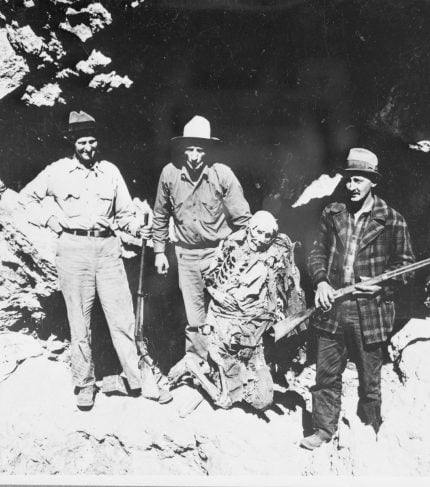
In 1940, 21 years after the last death blamed on Queho, prospectors happened upon a cave 2,000 feet above the Colorado River, 10 miles below Hoover Dam. Inside was a tripwire alarm, stolen dynamite, a mummified corpse, and a badge from the dead watchman.
The cause of death was most likely a rattlesnake bite.
Clark County Sheriff Frank Wait, who had chased Queho for 20 years, reportedly kicked his corpse.
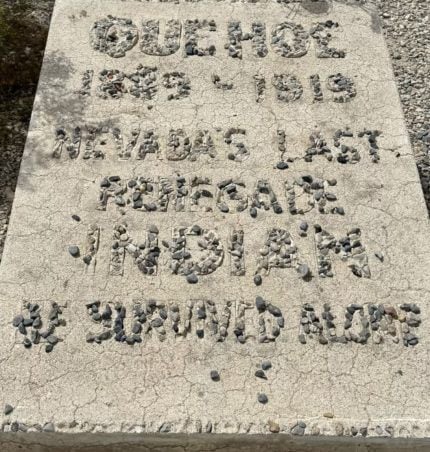
Queho’s remains were purchased by the Las Vegas Elks Club, disrespectfully displayed at that year’s annual Helldorado parade, stolen, recovered, and eventually laid to rest near Cathedral Canyon in the desert near Pahrump, Nev.
Who was Queho? At this point, the trail of his true story is too faint to track.
Look for “Vegas Myths Busted” every Monday on Casino.org. Visit VegasMythsBusted.com to read previously busted Vegas myths. Got a suggestion for a Vegas myth that needs busting? Email corey@casino.org.
No comments yet