
VEGAS MYTHS BUSTED: Strip Resorts Can’t Be Protested on Their Private Sidewalks
Posted on: January 19, 2026, 07:12h.
Last updated on: January 19, 2026, 10:20h.

- Some of the sidewalks in front of Las Vegas’ most famous Strip casinos are considered to be private property
- As such, the property owners have argued that it’s illegal to hold demonstrations on those sidewalks
- US district courts have ruled against those claims
While the sidewalks in front of most Las Vegas Strip casinos are public property, many — such as those passing in front of the Venetian, MGM Grand, and Caesars Palace — are owned by the casinos. A privatized sidewalk conveys several advantages. For example, it allows developers to build and maintain them in a decorative manner of their choosing. But, contrary to popular belief, it doesn’t prevent picketing and other protests in front of the resorts.
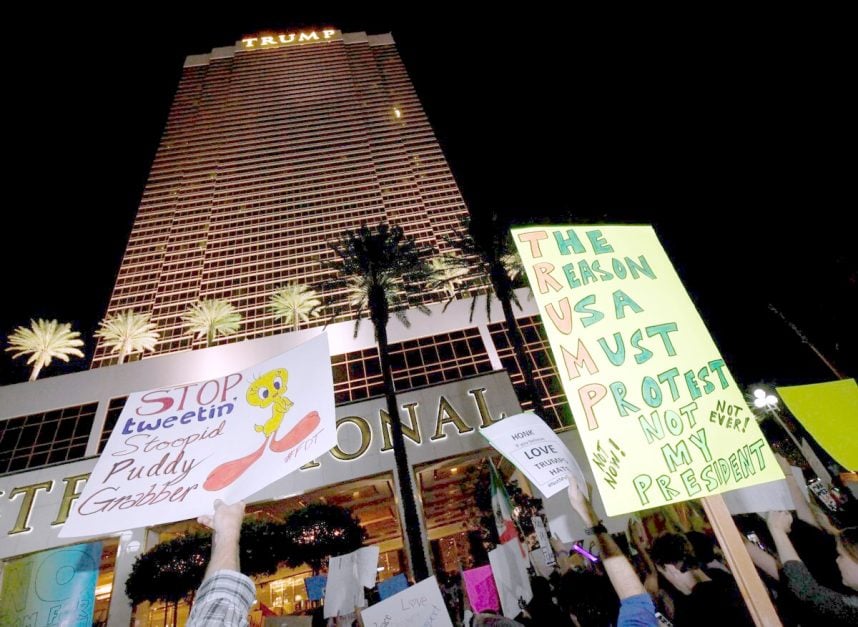
That’s not for the resort companies’ lack of trying. Before they opened, both the MGM Grand and Venetian sued the local culinary union, trying to prevent it from picketing their nonunion shops on their sidewalks. Both suits argued that the public’s First Amendment right to free assembly doesn’t apply on private property.
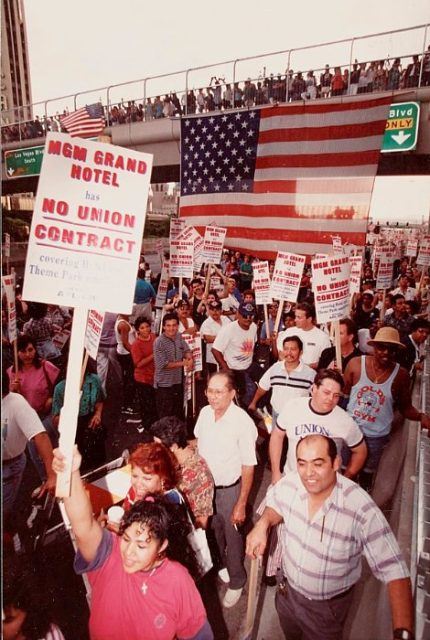
In 1993, the US District Court ruled that the easements previously granted to the public by Clark County — to ensure safe, unobstructed, and accessible pathways between casinos on one of the busiest thoroughfares in the world — transformed the MGM Grand’s private sidewalks into public ones.
The same court denied the Venetian’s request for an injunction in 1999, and both casinos lost subsequent appeals.
Alan Feldman, the former PR director for MGM Resorts, explained the MGM Grand’s position at the time to the Las Vegas Advisor in 2020.
“When the MGM was built, they negotiated to give the county private land to build a dedicated right turn lane from westbound Tropicana to northbound Las Vegas Boulevard,” he said. “They negotiated that the land used for the sidewalk would remain private, with a public easement granted for pedestrians.
The intent was to prevent demonstrations,” Feldman admitted, “but that never worked.”
The MGM Grand has been a union shop since 1994, incidentally. And since the Venetian/Palazzo accepted Local 226’s terms in August 2024, the Las Vegas Strip is considered 100% unionized.
Bridges Too Far
It’s worth noting that the pedestrian bridges spanning the Strip are no longer as constitutionally protected as the sidewalks lining it.
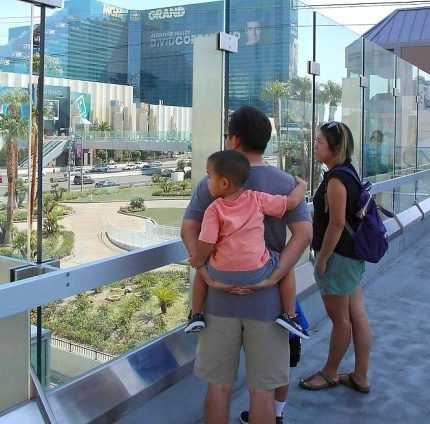
Since the Clark County Commission approved its Pedestrian Flow Zone Ordinance in January 2024, arguing that the public’s safety takes precedence over its right to assemble in this specific instance, it has been unlawful to “stop, stand, or engage in an activity that causes another person to stop or stand” on any of these 15 pedestrian walkways.
If found guilty, six months in jail or a $1,000 fine could apply. (A last-minute amendment to the ordinance had to be provided just to exempt anyone waiting to use an elevator, stairway, or escalator.)
In February 2024, the ACLU of Nevada filed suit in US District Court, seeking an injunction against the ordinance for being “unconstitutionally vague” and violating the First and 14th amendments, as well as the Americans with Disabilities Act.
The lawsuit — filed on behalf of Lisa McAllister, who uses a wheelchair to get around due to a spine injury, and Brandon Summers, a violinist who performs for tips on the bridges — is still active and pending.
Look for “Vegas Myths Busted” every Monday at Casino.org. Visit VegasMythsBusted.com to read previously busted Vegas myths. Got a suggestion for a Vegas myth that needs busting? Email corey@casino.org.
Last Comments ( 1 )
I'm confused, a sidewalk is not private property. It's a public easement because that cannot be restricted by a private business. What would stop them from putting up toll booths and charging $5 a person to walk past their building? The actions of the police the other night are constitutionally unlawful. I'd like to know what charges were actually bought to the 11 people who were arrested and whether they will actually go to court for it. LVMPD will do anything to put you in cuffs, take you to CCDC and charge you with obstruction.