
VEGAS MYTHS BUSTED: Bo Gritz Inspired Rambo
Posted on: March 9, 2026, 07:21h.
Last updated on: March 9, 2026, 09:34h.

- Decorated Vietnam war hero Bo Gritz, who died on February 27, 2026, claimed he was the basis for Stallone’s Rambo
- Author David Morrell, who created the character more than a decade before Gritz became a public figure, said he based it mostly on a WWII soldier
- Gritz used the “Real Rambo” label to fuel his political and conspiratorial platforms
Decorated Vietnam War Green Beret James “Bo” Gritz’s death on February 27, 2026 unleashed a fresh wave of claims that he inspired Sylvester Stallone’s second most popular character after Rocky Balboa. He did not. But, either out of respect for the dead or a failure to perform basic research, local obits — and even TMZ — repeated the fabrication that the 87-year-old Las Vegas cult hero had been using as a calling card for decades.
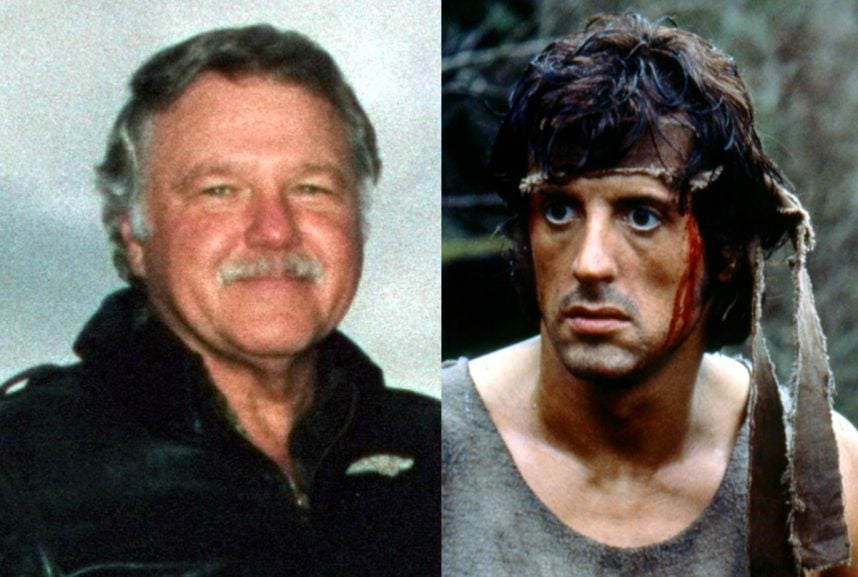
“I was the model for John Rambo as first conceived,” Gritz (rhymes with “rights”) said in Andrea Luka Zimmerman’s 2017 documentary Erase and Forget. “They took my life and they put it on the screen, but they didn’t give me the credit or the cash.”
First Bloodline
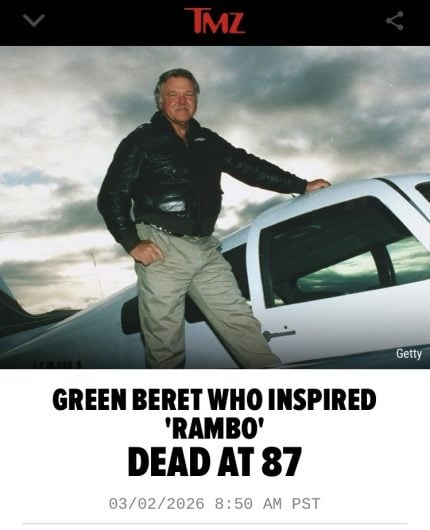
If anyone knows who inspired Rambo, it’s the man who created him. And author David Morrell felt that Gritz’s self-created myth was important enough to refute in the introduction to the 2000 and 2014 reprints of his 1972 novel First Blood.
“When I was writing the novel in the late 1960s and early 1970s, I had never heard of Bo Gritz,” Morrell wrote. “He was still on active duty and wasn’t a public figure at the time.”
Morrell described Rambo as “most notably inspired by Audie Murphy, the most decorated soldier of WWII, and the Vietnam veterans who were in my graduate seminars.”
The author was fascinated by the psychological toll of Murphy’s “superhuman” battlefield heroics. He didn’t want to write about a soldier who could simply fight; he wanted to explore the “Season in Hell” (a nod to poet Arthur Rimbaud, from whom Rambo’s name was partially derived) that veterans endured after returning home.
Murphy’s PTSD, his habit of sleeping with a loaded pistol, and his struggle to reconcile civilian life with wartime trauma formed the character’s emotional core.
These were the true roots of John Rambo. Yet, after the movie adaptation became a box-office smash in 1982, Bo Gritz toured the talk-show circuit riding its success. While appearing on The Today Show and The Larry King Show in 1983, he leaned heavily into the idea that Stallone’s character was modeled after his missions and lone-wolf tactics.
The Similarities
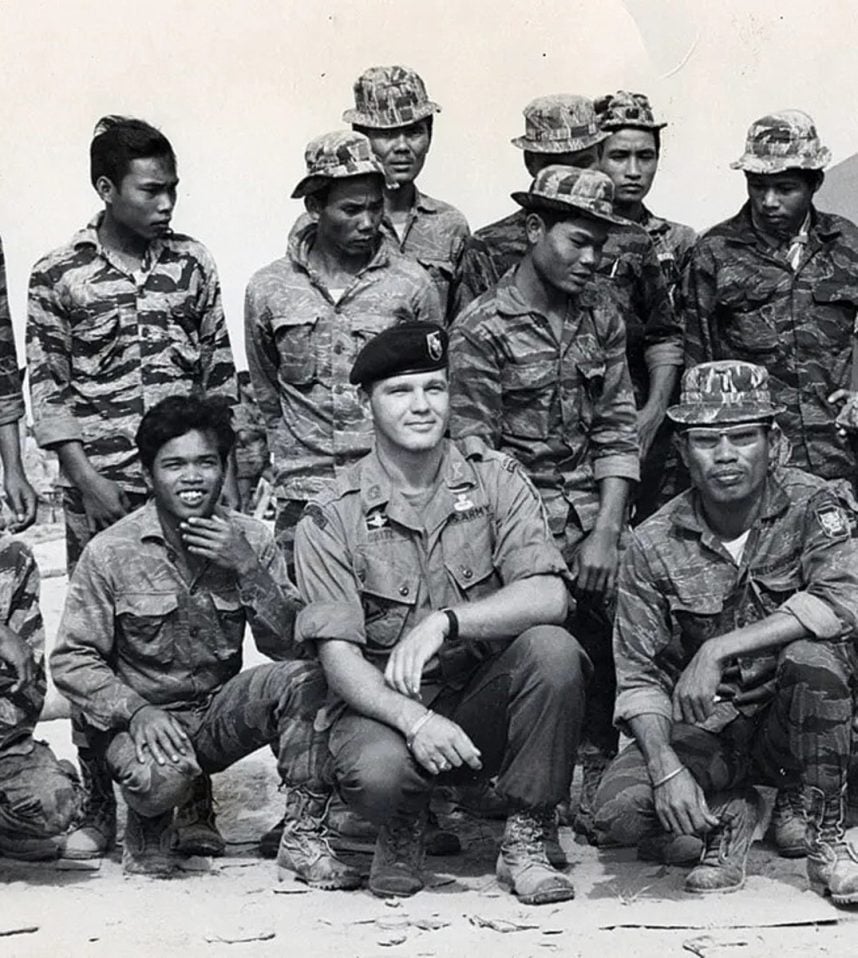
Gritz had a storied military career fighting in the Vietnam War with the 5th Special Forces Group (Airborne). He ran missions that General William Westmoreland described as “Mission Impossible-style operations.” In one, Gritz led 250 Cambodian mercenaries behind enemy lines to recover a top-secret black box from a crashed U-2 spy plane deep in the Cambodian jungle.
He is also remembered for negotiating the end of the Ruby Ridge standoff in 1992, convincing fellow Special Forces veteran Randy Weaver to surrender after an 11‑day siege that left Weaver’s wife and 14‑year‑old son dead.
But the real parallels between Gritz and Rambo lie in the unauthorized commando raids he staged into Laos starting in November 1982 — a month after First Blood came out — searching for American POWs allegedly left behind.
Dubbed Operation Lazarus by Gritz, the first mission was famously funded by Hollywood stars Clint Eastwood and William Shatner, who paid Gritz $30K and $10K for the story rights.
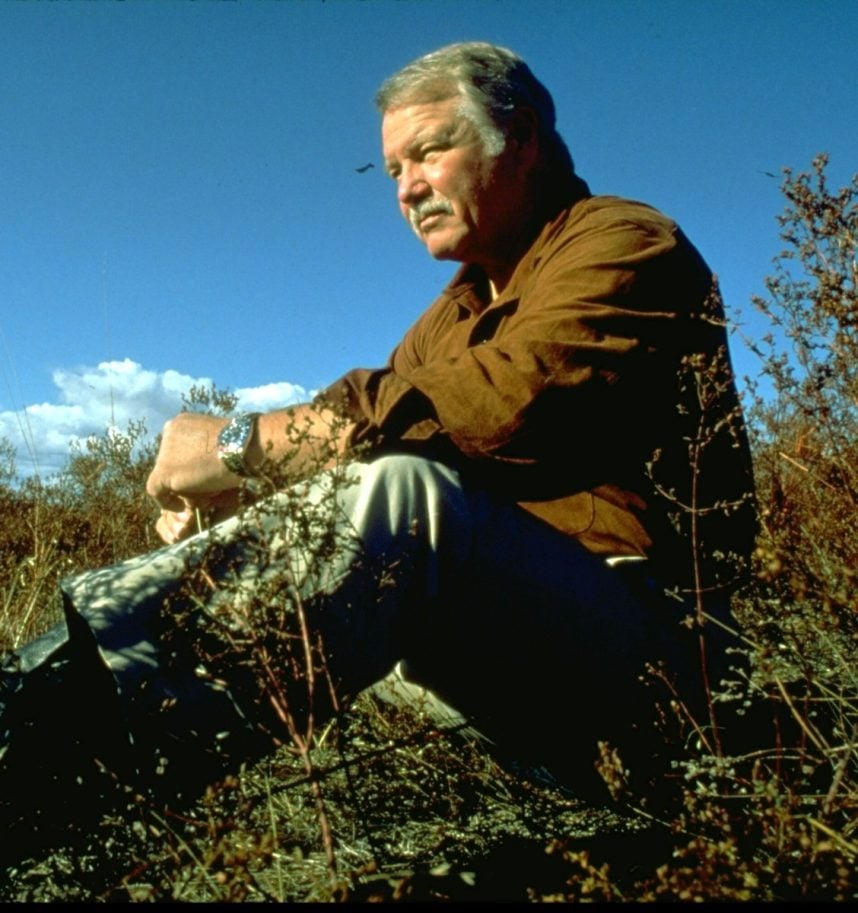
Gritz claimed the plot of 1985’s Rambo: First Blood Part II was lifted directly from news accounts of this raid, though, unlike Rambo, Gritz never found any POWs and the mission collapsed in an ambush within three days, forcing him to pay a $17,500 ransom to free one of his own mercenaries.
In March 1983, Gritz testified to a U.S. House committee that he led two more unsuccessful forays into Laos after that.
Gritz also claimed that Stallone — who wrote or co-wrote all five Rambo films — met with him secretly that same year, to study his gear, mannerisms and look. According to Gritz, that’s how the A-lister got the idea for Rambo’s now-iconic red headband.
Other than Gritz’s word, no evidence supports that such a meeting ever occurred, and Stallone has consistently credited James Cameron’s original 1983 script treatment for the sequel’s plot.
Cameron was hired to adapt a story treatment already completed by screenwriter Kevin Jarre, who stated that he was reacting in general to the POW/MIA movement — a widespread cultural phenomenon at the time and not a one-man story, fueled by thousands of reported “sightings” and a national lobbying effort.
Gritz frequently dovetailed his claim to have consulted on First Blood: Part II with a complaint about being neither compensated nor credited for his services. Yet, when the movie became an even bigger hit than its predecessor, Gritz, curiously, didn’t sue.
Instead, he began calling himself “The Real Rambo” as a branding tool to fundraise, sell books, and build a political platform. (He ran for president on the Populist Party ticket in 1992.)
Myth Understood
Understanding who Bo Gritz was requires knowing that he was more than a military hero whose postwar missions resembled a popular fictional character’s. He was also a prominent anti-government conspiracy theorist with his own Art Bell-like national radio show.
Gritz launched The American Voice in 1994, from his rural Idaho home, via the militant right-wing Talk America network. After moving to the desert 50 miles southwest of Las Vegas in 1998, he bounced around similar networks before launching his signature daily program, Freedom Call, on the American Voice Radio Network in 2005.
Among the conspiracy theories Gritz actively promoted on the show:
- The 1995 Oklahoma City bombing was an inside job
- UN peacekeepers planned to invade American soil
- The CIA was the world’s largest heroin trafficker
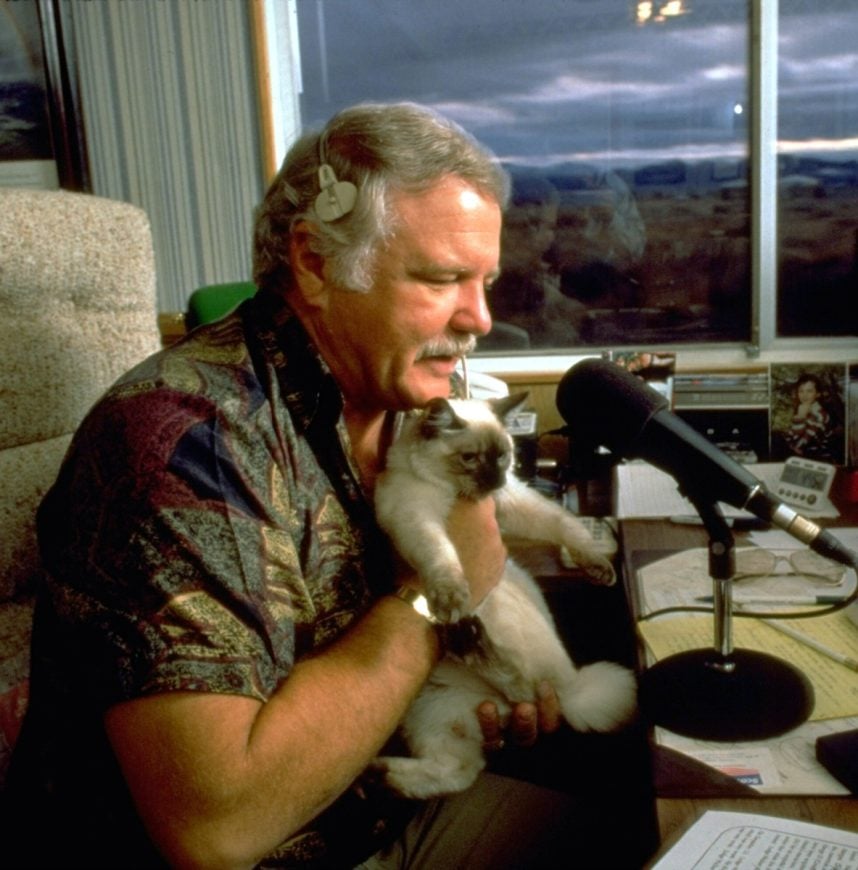
Gritz wove his own story into his conspiracy worldview, claiming that the Rambo franchise he inspired was a government-sponsored psychological operations (PSYOPS) campaign to fictionalize his real life.
By turning his missions into Hollywood blockbusters, Gritz maintained, the government discredited his actual discoveries about POWs and CIA drug trafficking by making them seem like mere action-movie fantasy.
If all that still tracks with you as sound logic, you might also want to consider that Gritz also claimed to have inspired Marlon Brando’s Col. Kurtz in in Apocalypse Now and George Peppard’s “Hannibal” Smith in The A-Team.
Maybe we should have led with that.
Look for “Vegas Myths Busted” every Monday on Casino.org. Visit VegasMythsBusted.com to read previously busted Vegas myths. Got a suggestion for a Vegas myth that needs busting? Email corey@casino.org.
No comments yet