
Texas Poker Club The Lodge Cleared of Money Laundering – but Not Illegal Gambling
Posted on: April 12, 2026, 07:02h.
Last updated on: April 12, 2026, 08:00h.

- Texas drops laundering case but still holds $2M in seized funds
- Authorities claim poker club violated Texas gambling laws
- Players left unpaid as The Lodge shuts down indefinitely
Authorities in Texas are no longer pursuing a money laundering investigation into the state’s largest poker room, The Lodge Card Club in Austin, but still believe it may have violated state gambling laws.
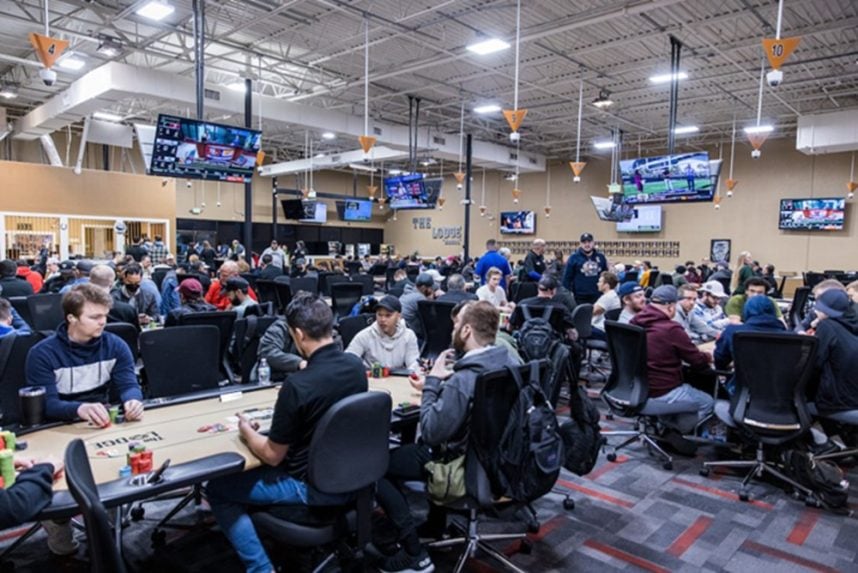
A search and seizure warrant filed April 8 in the 480th Judicial District Court in Williamson County outlines authorities’ reasoning for retaining roughly $2 million in seized assets, even though no criminal charges have been filed.
The filing argues that when The Lodge was raided by the Texas Alcoholic Beverage Commission’s (TABC) Financial Crimes Unit on March 10, it was operating in violation of Texas Penal Code Sections 47.03 and 47.04, which prohibit promoting illegal gambling and keeping a gambling place.
To date, no arrests have been made and an investigation is ongoing. The warrant suggests that illegal gambling charges could yet be filed against the club, which is part-owned by celebrity poker player Doug Polk and has remained closed since the raid.
Players present at the club on the morning of March 10 reported that law enforcement entered the building and ordered them to head home. They were not permitted to cash out their chips.
Polk later described the raid as a “witch hunt” on social media and has offered a verbal guarantee that players will be reimbursed.
Legal Loophole?
Until recently, it was hard work finding a game of hold’em in Texas outside the Kickapoo reservation on the Mexican border. But over the past few years, several dozen poker rooms have sprung up across the state – in Austin, Dallas, Houston, San Antonio, Lubbock, and elsewhere – but they operate in a gray area of the law
The Texas Penal Code 47.04 states that is a “defense to prosecution” if “the actor engaged in gambling in a private place [which includes a club]; no person received any economic benefit other than personal winnings; [and] except for the advantage of skill or luck, the risks of losing and the chances of winning were the same for all.”
The clubs argue they are private venues that do not take a percentage of each pot. Instead, they generate revenue by charging players an hourly fee, which they say keeps them compliant with state law.
Economic Benefit
However, it’s clear from the search and seizure warrant that authorities in Williamson County aren’t buying it. The filing argues the clubs’ owners were gaining an economic benefit by “charging membership fees and seat fees for individuals to gamble” and by “selling food, beverages, alcoholic drinks, merchandise, streaming poker play, and hosting poker tournaments.”
That’s no different than what other clubs are doing elsewhere in Texas, which remain open – at least for now.
The legality of this business model may be ultimately tested by the Texas Supreme Court. But for now, the outlook appears bleak for The Lodge. The club laid off employees in late March and said it will remain closed for the “foreseeable future.”
No comments yet