
Pennsylvania Skill Game Consumer Protection Act Proposes Various Guardrails for Slot-Like Machines
Posted on: April 7, 2026, 11:17h.
Last updated on: April 7, 2026, 11:17h.

- Legislation in Pennsylvania proposes consumer protections for skill games
- Skill games remain unregulated and untaxed in the commonwealth
- An estimated 70K skill games are operating across Pennsylvania
The Pennsylvania Supreme Court is expected to soon rule whether unregulated skill games constitute illegal gambling in the commonwealth. In the interim, lawmakers in Harrisburg continue to mull legislation to provide the slot-like games a legal, regulatory footing.
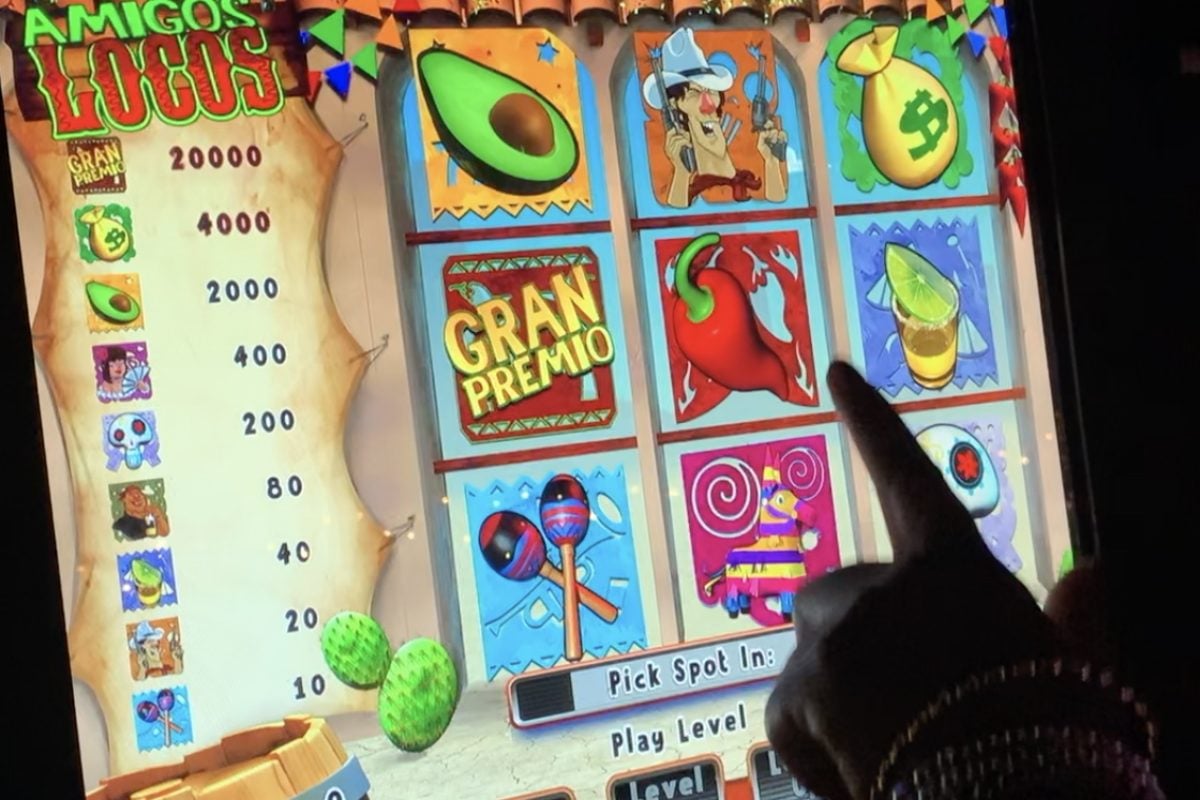
Skill games task players to identify winning paylines. Losing spins can be redeemed by completing various challenges, like a memory task, which allows players to alter the machine’s payout rate. The elements of aptitude, proponents of the machines argue, make them immune to the Pennsylvania Gaming Act, which regulates games of chance.
Rep. Ben Waxman (D-Philadelphia) will soon file the Skill Game Consumer Protection Act. The forthcoming bill proposes establishing a baseline set of consumer protections to reduce harm and promote transparency.
As discussions continue over the potential regulation of skill games in Pennsylvania, we must ensure that any authorization is paired with meaningful consumer protections. Skill games often operate in a manner similar to slot machines, but without the safeguards required in regulated casinos, and they present a heightened risk to problem gamblers and vulnerable populations due to their accessibility and speed of play,” said Waxman.
Currently, skill games are not required to pay out at a certain rate, as are regulated casino slot machines. The machines also provide no state or local tax benefit, as 100% of the revenue is shared between the game’s developer, route distributor, and host establishment.
Skill Game Regulations
Waxman’s Skill Game Consumer Protection Act, he says, will require games like Pennsylvania Skill to be connected to a centralized monitoring system overseen by the Pennsylvania Gaming Control Board (PGCB). Each terminal would also need to be equipped with various responsible gaming tools, including play-speed options, cooling-off periods, and loss limits.
The legislation will additionally require that a voluntary self-exclusion option be implemented. The self-exclusion list would be administered by the PGCB. Self-excluded persons would be denied when trying to deposit with a credit or debit card. Should they use cash to play, they would need to redeem winning vouchers with the store cashier. The cashier would need to check the person’s identity against the self-exclusion list.
Waxman also wants to dedicate a percentage of any state tax received from skill games to problem gambling treatment and prevention.
This legislation reflects a simple principle: if skill games are going to be regulated, they should be designed to minimize harm,” Waxman explained.
The law would take effect upon the enactment of any future law that regulates skill games in Pennsylvania.
PA Skill Game Estimates
The state estimates that roughly 70,000 skill games are operating in Pennsylvania. Gov. Josh Shapiro (D) is supportive of forming a regulatory and tax arrangement for the machines to support his increased spending.
The casino lobby and Pennsylvania Lottery argue that skill games are poaching play from their operations. Slot machine revenue at casinos declined from $2.46 billion in 2023 to $2.44 billion in 2024, to $2.43 billion last year. Still, those numbers remain far above pre-pandemic slot win, when skill games weren’t around.
Pennsylvania Lottery sales, however, have dropped from $5.3 billion in 2020 to $4.3 billion last year.
Last Comments ( 1 )
In Pennsylvania, the PA Gaming Control Board offers a voluntary self-exclusion process where participants voluntarily request to be banned from all legalized Gaming activities and prohibits the person from collecting any winnings, recovering any losses or accepting complimentary gifts or services or any other thing of value on a licensed iGaming website. There are three available timeframe options available to participants, one year, five years, or lifetime. Problem gamblers in Pennsylvania often see the self-exclusion process as a “quick fix” to solve the gambling addiction chaos that won’t go away. After signing up to self-exclude themselves, they quickly realize their gambling addiction is still strongly in place and is actually doing pushups in the corner of the room. They immediately gravitate to PA skill games because the self-exclusion process does not include skill games. Long story short (too late for that) they proceed to gamble out of control and into extinction at PA skill games.