 Main menu

Legal
Landmark EU Court Ruling in Lottoland Case Could Trigger Waves of Player Refund Claims
Posted on: April 17, 2026, 06:38h.
Last updated on: April 17, 2026, 11:01h.


- EU countries can ban online gambling despite foreign licenses
- Players may reclaim losses from cross-border gambling services
- Ruling limits market access for Malta and Gibraltar-based operators
The European Court of Justice (ECJ) has ruled that EU law does not stop member countries from prohibiting certain online gambling services, even where those operators hold licenses issued in another member state.
It also confirmed that consumers may, in principle, seek to recover losses through civil claims against operators where those services were prohibited in the consumer’s country of residence.
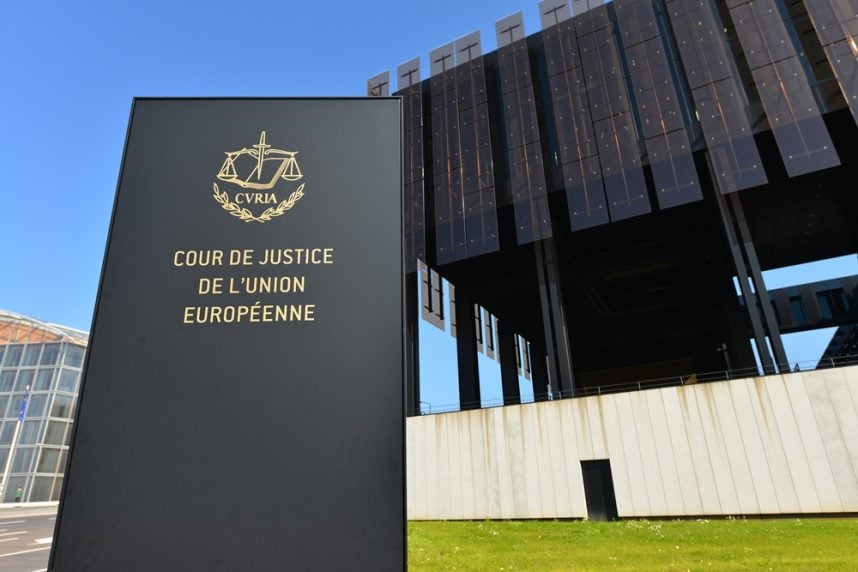
The ruling is likely to raise concerns among operators, as it strengthens the position of players seeking to recover historic losses.
It is likely to also have wider repercussions for online gambling hubs such as Malta and Gibraltar, emphasizing that licenses issued there do not necessarily guarantee access to the broader European market.
German Player Sues for Losses
The case arose after a German player lost money via two Malta-licensed operators, European Lotto and Betting Ltd (linked to Lottoland), and Deutsche Lotto und Sportwetten Ltd, between June 2019 and July 2021 at a time when German law prohibited online games of chance generally.
The player filed a civil claim against the companies in a bid to claw back his losses through a Maltese court, which turned to the ECJ for guidance.
Specifically, the court asked whether the foundational EU principle that enshrines the free movement of services across the Single Market overrides national legislation where an operator holds a license from another member state.
The ECJ said it doesn’t, confirming that the principle of free movement of services is not absolute.
EU law does not preclude a member state from prohibiting certain services provided online and authorized in other member states, and from attaching civil-law consequences to that prohibition,” reads the ruling.
“A consumer may bring a claim for restitution of lost stakes against operators established in another member state where the games of chance at issue were prohibited in the consumer’s Member State of residence,” it adds.
All on the Operator
In addition, the ECJ confirmed that Germany’s transition from prohibition to regulation does not clear the record for activities conducted before 2021.
The ECJ made clear that member states can still enforce the legal consequences of a previous ban, including treating contracts as void and allowing players to recover losses incurred during that period.
The ECJ also declined to place automatic responsibility on the player. Simply using a foreign-licensed gambling site, even knowingly, is not in itself an abuse of EU law. Any question of bad faith is on the operator and up to national courts to assess under domestic rules.

 Most Read

Another Shooting Near Las Vegas Strip Casino Injures Man
 972,175 views

Vintners Oppose Napa Valley Casino
555,823 views





Conversation (0)
Be the first to comment on this article.