
Is Mid July the Target for Alberta’s Market Launch?
Posted on: March 26, 2026, 11:36h.
Last updated on: March 26, 2026, 11:48h.

- Alberta sets July 13 deadline for grey market operators to join the regulated market
- Speculation zeroes in on July as potential “go live” date
- New Blask research shows the dominance of grey market operators in terms of market share in Canada
Alberta’s grey market operators have been given until this July 13 to apply for licensing and pay all fees to Alberta Gaming, Liquor and Cannabis (AGLC) in the soon-to-be-live regulated igaming market, a possible indicator of market launch timing, according to an industry source.
Deadline for Grey Market Operators
Under the province’s new igaming regulatory regime, AGLC is handling registration and licensing while the newly formed Alberta iGaming Corporation (AiGC) is in a conduct and manage role.
The Alberta government has yet to announce a “go live” date. AiGC CEO Dan Keene hinted at a spring/summer market launch during a roundtable discussion at ICE Barcelona in January.
In a guidance document posted by AGLC, unregulated operators in the province must cease taking bets by July 13. AGLC added that it would consider an extension to Oct. 13, 2026, “only where an operator can demonstrate a path to compliance for market launch that was unattainable prior to July 13, 2026.”
Late submissions are not considered a viable reason. Operators will need to pay a one-time application charge of $50,000 and an annual registration fee of $150,000. Tax rate for Alberta will be 20%, after First Nations and responsible gaming deductions.
No “Go Live” Date As Yet
Operators joining Alberta’s regulated market are required to integrate with AGLC’s centralized Self-Exclusion Program.
If the “go live” date is after July 13, all unregulated market activities must cease by that date.
“Failure to adhere to this guidance may result in a finding of unsuitability for iGaming registration in Alberta.”
Grey market operators must ensure all outstanding bets are satisfied or cancelled prior to ceasing unregulated operations. That includes settling any open wagers, returning player account balances, and informing players of timelines and procedures for account closure.
Nally at Upcoming Summit
Something to keep in mind is the new date for the renamed SBC Summit Canada – May 19-21, the annual Canadian gaming industry conference and exhibition, to be held at the Metro Toronto Convention Centre.
As we’ve written, the agenda for SBC Summit Canada will focus on Alberta’s new market. Operators at the show will have ample opportunity to assess Alberta-ready solutions, compare vendors, and begin conversations about market entry. The conference programme will give operators practical insight into how Alberta’s market is expected to take shape, with sessions focused on regulation, advertising, and acquisition strategy.
Billions In Lost Revenue
On May 20, at 11:30 a.m., the province’s Minister of Service and Red Tape Reduction, Dale Nally, kicks off two days of panel discussions with a session called “Alberta: The new sheriff in town”.
It will be interesting to see where the government is in terms of launch date, when Nally takes the stage, and all industry eyes are on him.
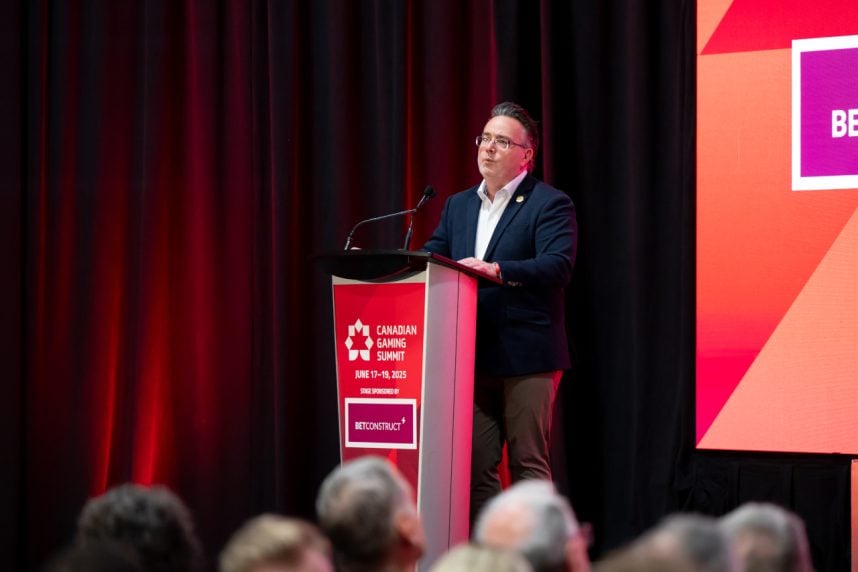
On the grey market front, last year, at what was called the Canadian Gaming Summit, Troy Ross, President, TRM Public Affairs, part of a panel discussion, presented data that showed Quebec leading the charge in gross gaming revenue being lost to the unregulated market at CA$1.97 billion, followed by B.C. and Alberta, at CA$1.3 billion each, Ontario, at CA$757 million, and Atlantic Canada, at CA$600 million.
In Alberta, at a 20% tax rate, that translated to CAD$260 million in lost government revenue, according to Ross’ research.
Market Share in Alberta
Data on market channelization rates according to industry sources contradicts claims by PlayAlberta, the government-run igaming platform in the province, that it has captured 45% of the market. That market share is more around 10%, a senior industry source told Casino.org.
Then there is research released a few days ago by Blask, the AI analytics platform for the igaming industry, that melds broadly distributed data from domestic and offshore operators, a view of industry metrics and market share trends. The research takes a more sobering view of the impact of grey market operators on the Canadian igaming landscape.
Blask Report Data
According to Blask, Canada’s online gambling market reached Competitive Earning Baseline (Blask’s new metric incorporating AI-driven analysis of market position, competitive dynamics, and consumer behaviour to evaluate a brand’s revenue expectations in any given market) of USD $9.5 billion in 2025, making Canada an online gambling powerhouse internationally, the third largest market behind the United States and the United Kingdom. Canada saw the highest year-over-year growth rate among the top five markets in the world.
The report shines a sobering spotlight on the size of the grey market in the USA and Canada. In Canada offshore is outpacing domestic in terms of growth (offshore CEB grew 40% year-over-year versus 23% for domestic brands in 2025), with offshore operators added $1.6 billion in volume in 2025, compared to $0.8 billion for domestic. The gap between offshore and domestic is widening, they said.
Ontario’s Performance
Up to now, Ontario has been the market’s exception, the report said. Ontario has had the country’s only open, regulated igaming market competing with the province’s crown corporation since April 2022. Licensed operators now capture 85% of CEB in Ontario. Monopoly provinces in Canada capture only 24% domestically by comparison, according to Blask.
In Alberta, according to Blask, offshore operators currently have 88% market share. Manitoba is at 88% as well. Only Saskatchewan eclipses those two provinces – 93%.
No comments yet