
American Gaming Association Running Commercials Against Prediction Markets
Posted on: December 23, 2025, 11:12h.
Last updated on: January 6, 2026, 09:06h.

- The AGA has launched a campaign against prediction markets offering sports contracts
- The AGA claims such platforms threaten sports integrity and lack consumer protections
The American Gaming Association (AGA) has deployed commercials in select US markets campaigning against the proliferation of prediction markets that offer sports contracts.
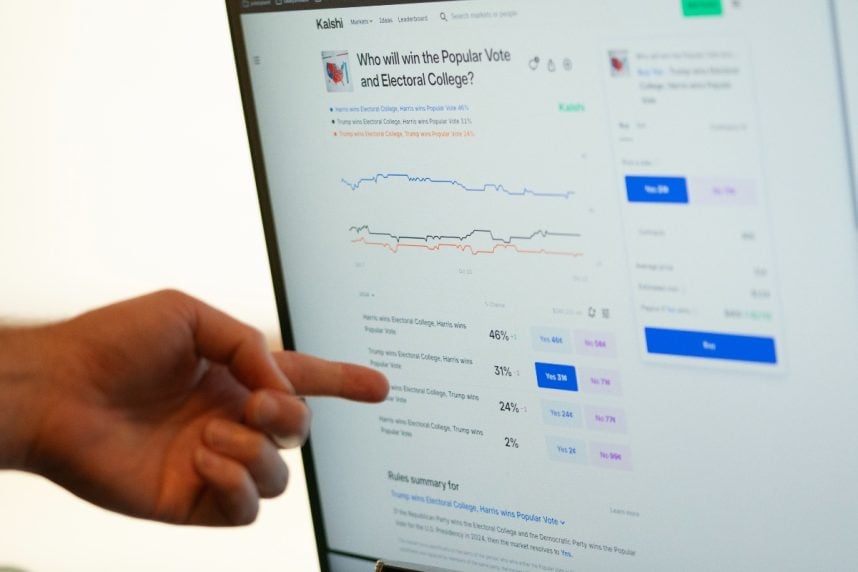
The AGA, the lobbying group representing the interests of the commercial and tribal gaming industries in Washington, DC, and in state capitals across the nation, recently bought advertising time on social media and YouTube to campaign against sports event contracts on prediction market platforms. Prediction markets have rapidly emerged in the US, prompting sportsbook leaders DraftKings and FanDuel to join Kalshi, Polymarket, and Crypto.com in developing online exchanges that facilitate the buying and selling of shares related to various outcomes, including sports.
Casino.org has seen YouTube ads from the AGA promoting the group’s opinion that sports contracts on prediction markets are nothing more than sports betting.
No matter the name, it’s still sports betting,” the AGA website against sports event contracts reads.
“Prediction market platforms openly flout sports betting’s state and tribal oversight in offering sports event contracts. These platforms disregard vital consumer protections, generate no benefits for local communities, and threaten the integrity of games,” the AGA adds.
The AGA spot can be viewed in its entirety here.
American Gaming Campaign
The American Gaming Association opposes sports event contracts on prediction markets on various claims.
The group contends that prediction markets aren’t aligned with integrity monitors that detect and report suspicious betting activity, therefore threatening the integrity of sports. The AGA also takes issue with the fact that prediction markets aren’t subjected to state gaming taxes, nor the federal excise tax that legal sportsbooks must pay on every bet they take.
“These operators try to pretend they’re not enabling sports wagering, seeking to bypass the industry’s effective regulatory framework, but they’re not fooling anyone,” the AGA said.
Prediction markets claim they’re running derivative contracts under the regulation of the Commodity Futures Trading Commission (CFTC). Such prediction markets hold Designated Contract Market (DCM) licenses from the federal government agency that oversees derivatives markets, including futures, swaps, and certain kinds of options.
Historically, DCM licensees have been exchanges facilitating the buying and selling of futures and options on commodities. Kalshi and Polymarket altered the DCM landscape by offering contracts on everything from where Taylor Swift will get married to the outcome of the 2024 US presidential election.
Costly Problem
The AGA believes prediction markets are costing state governments dearly. Since prediction markets began offering contracts involving sports, the gaming group estimates that states have missed out on nearly $200 million in tax revenue.
“Legal gaming generates $53 billion annually in state and local tax revenue to fund hospitals, libraries, schools, and first responders in communities that welcome it. Because prediction markets bypass state and tribal authorities entirely, they operate without local approval or oversight and contribute nothing to residents. Every dollar prediction markets siphon from the legal, regulated sports betting market drains money from a framework that supports local communities,” the AGA said.
No comments yet