
Virginia iGaming Bills Gain Committee Support, Casinos Have Mixed Opinions
Posted on: February 6, 2026, 10:02h.
Last updated on: February 6, 2026, 10:02h.

- Virginia iGaming legislation continues to progress in Richmond
- Virginia is home to five brick-and-mortar casinos and numerous slot-like historical horse racing venues
- Casino operators have polarizing opinions regarding iGaming
Virginia iGaming legislation is making progress in the Richmond capital, as some state lawmakers think it’s time to authorize online casino gambling with internet slots and interactive table games.
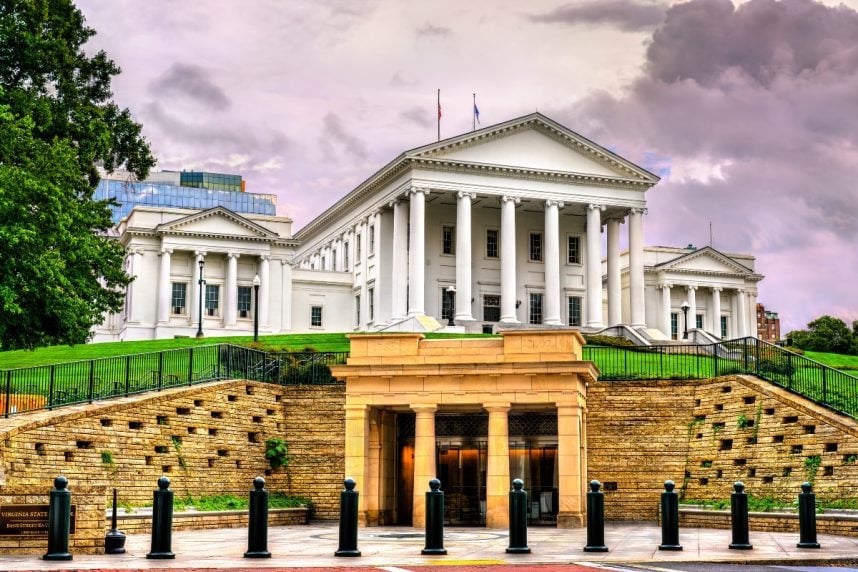
This week, both House Bill 161 and Senate Bill 118 gained committee support, respectively, in the House General Laws Committee and the Senate General Laws and Technology Committee.
The bills seek to authorize iGaming, with each of the commonwealth’s five casinos able to secure an online gaming license for an initial fee of $500,000. Rivers Portsmouth, Hard Rock Bristol, Caesars Danville, Live! Petersburg, and Boyd Norfolk would additionally be allowed to partner with as many as three third-party iGaming platforms, with each skin license costing $2 million.
HB161 and SB118 propose a state tax of 15% on iGaming gross gaming revenue, or the money kept by the online casinos. The bulk of the taxes would be allocated for Virginia’s General Fund, with some of the money used to establish a state gaming commission. Five percent would be set aside for problem gambling support and treatment.
Casinos Have Mixed iGaming Views
The Cordish Companies, which is behind the Live! Casino & Hotel Virginia development in Petersburg, and Churchill Downs, Inc., the owner-operator of The Rose Gaming Resort in Dumfries and seven Rosie’s Gaming Emporium off-track betting venues, all of which feature slot-like historical horse racing (HHR) machines, are opposed to iGaming.
Cordish and Churchill are founding members of the National Association Against iGaming (NAAiG).
Online casino gambling, also known as iGaming, would put casino-style games on phones and computers 24/7, anywhere in Virginia. Many Virginians are concerned this expansion would increase addiction, deepen financial harm for families, and remove the basic safeguards that exist in regulated, in-person gaming,” an NAAiG statement read.
Caesars Entertainment, Boyd Gaming, and Rush Street Gaming (Rivers Portsmouth) are generally supportive of iGaming. They believe iGaming brings in new customers, some of whom are already gambling online through offshore, unregulated casino websites and/or controversial sweepstakes casinos.
Virginians are already gambling online, mostly on unsafe, illegal offshore sites. HB161 and SB118 bring that activity into a regulated environment that protects players and delivers new revenue for Virginia,” said the iDevelopment & Economic Association (iDEA), in which Boyd is a member. “Lawmakers can either regulate online gaming responsibly, or continue allowing illegal operators to profit with no oversight and no accountability.”
iDEA says legal iGaming would provide consumer protections, drive players away from illegal and unregulated casinos, generate nearly $1 billion in new tax revenue over five years, and strengthen the Virginia gaming industry as a whole.
Casino Insurance
A key component of the Virginia iGaming bills is that they would provide insurance for brick-and-mortar casinos, should they suffer revenue losses as a result of online casino gambling.
HB161 and SB118 would require that 6% of the state’s iGaming taxes be directed to the Internet Gaming Hold Harmless Fund. The account would be “used solely” for “offsetting any loss of revenue experienced by casino gaming operators that is attributed to internet gaming.”
HB161 now lies with the House Appropriations Committee. SB118 has been sent to the Senate Finance and Appropriations Committee.
No comments yet