 Main menu

Legislation
Virginia Governor Vetoes Gaming Bill Issuing Regulatory Authority Demand
Posted on: April 11, 2026, 10:04h.
Last updated on: April 15, 2026, 11:52h.


Virginia Governor Abigail Spanberger (D) has made it abundantly clear that she won’t sign legislation authorizing additional gambling in the commonwealth unless lawmakers first approve and allocate funding for the creation of an independent gaming regulatory commission.
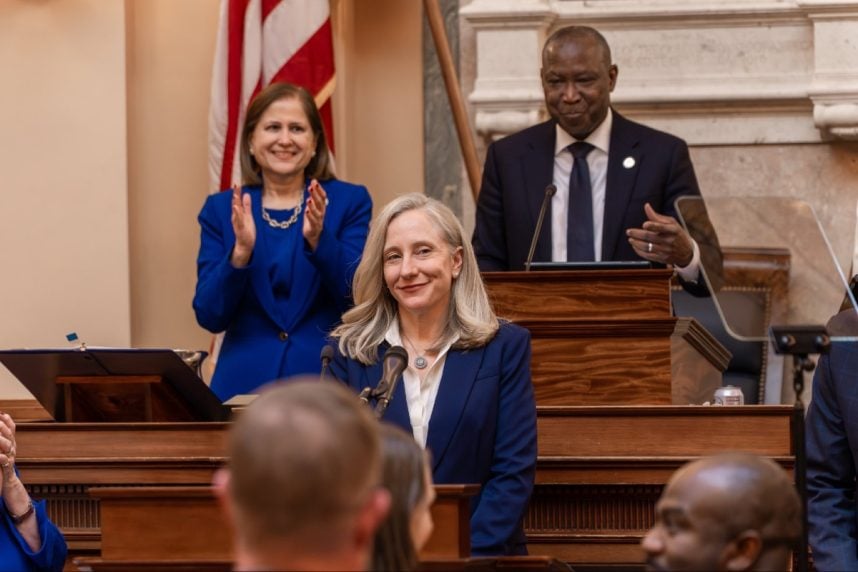
A day after Spanberger vetoed a bill to qualify Fairfax County for a commercial casino, the governor, whose approval numbers in her first months in office are lower than her eight predecessors, trashed a measure to restore the regulatory framework for skill games.
Spanberger explained that Virginia needs a dedicated gaming regulation board to monitor the commonwealth’s recent embrace of gambling.
The absence of a centralized regulatory authority for gaming creates gaps in oversight that threaten the Commonwealth of Virginia’s ability to provide consistent enforcement, prevent illicit activity, and protect all consumers. Right now, legalizing skill gaming and introducing more of these machines into our communities would strain an already fragmented system,” Spanberger said.
The slot-like machines were temporarily legalized in Virginia during the COVID-19 pandemic to provide small businesses with additional revenue. They became illegal in 2021, though legal challenges kept the games running until October 2023.
Skill Games on Hold
Proponents of skill games say the machines helped many small businesses remain profitable during the pandemic. The advocates said the added income also kept employees employed in the pandemic’s aftermath, as business owners offset high inflation with the gaming dollars.
Skill games resemble slot machines but include skill-based contests that allow the player to alter the game’s payout rate. The skill game lobby alleged in state court that the games are not gambling games.
In October 2023, the Virginia Supreme Court ruled that the General Assembly had the legal authority to ban the games after temporarily legalizing them.
Lawmakers have since sought to relegalize skill games. Gov. Glenn Youngkin proposed heavy amendments to a skill game bill in 2024, resulting in the legislation being canned by the General Assembly.
The legislature got behind Senate Bill 661/House Bill 1272 this year, with the thinking that a Democratic governor would be willing to allow skill games. Spanberger didn’t openly object to skill games, but the lack of an appropriate state agency to take on the governing responsibilities.
Since 2020, Virginia lawmakers have signed off on casinos in five locales, as well as retail and mobile sports betting. Those regulatory powers have been assigned to the Virginia Lottery Board.
“The rapid expansion of gaming in Virginia over the last decade has outpaced the Commonwealth’s ability to provide consistent enforcement, robust public safety oversight, and meaningful assessments of the potential impacts or harms of gaming in all its forms,” the Governor explained.
Skill Games Targeted Poverty
Spanberger also cited claims that during Virginia’s temporary allowance of skill games, operators targeted communities where higher percentages of the population live below the poverty line, as well as neighborhoods with lower education rates and where more ethnic minorities live.
“The data clearly show that devices were disproportionately located,” Spanberger said. “I remain committed to working with the General Assembly to ensure that any future approach to gaming expansion prioritizes consumer protection, public safety, public health, and the economic and social well-being of all our communities.”

 Most Read

Another Shooting Near Las Vegas Strip Casino Injures Man
 972,574 views

Vintners Oppose Napa Valley Casino
556,192 views


Conversation (0)
Be the first to comment on this article.