
VEGAS MYTHS BUSTED: Clark County Was Named After a Man Who Never Set Foot in Nevada
Posted on: March 23, 2026, 07:21h.
Last updated on: March 24, 2026, 03:04h.

“What’s a fact about Vegas that sounds made up?” someone addressed a Las Vegas subreddit group not long ago. Most of the responses covered ground that should be familiar to our readers: that prostitution is illegal in Las Vegas, that the Las Vegas Strip isn’t in Las Vegas, and that the Linq garage was designed to flood. But one stood out because it actually was made up.
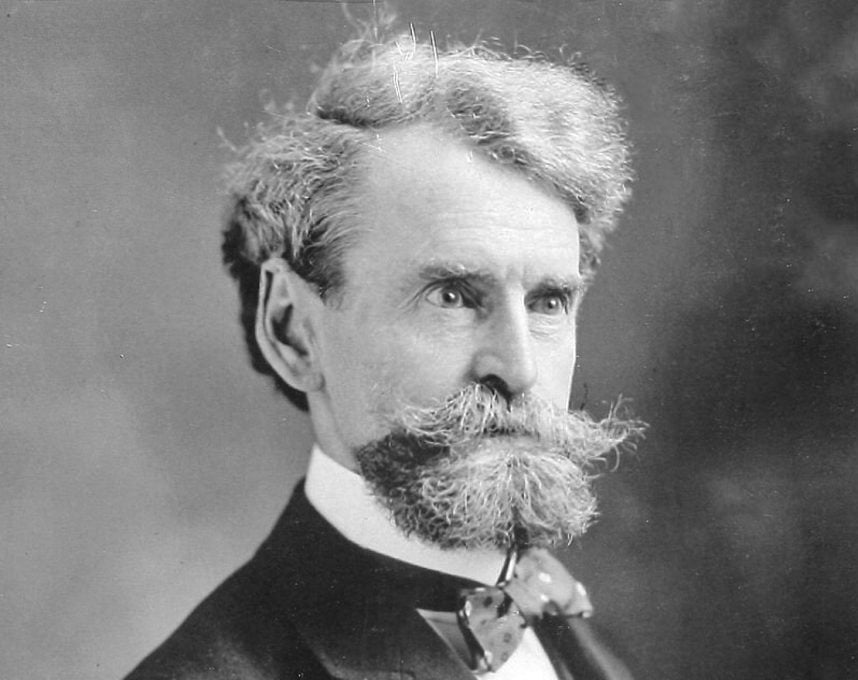
“Clark County is named for someone who has never set foot in Nevada,” claimed @Awkwardmoment22.
The man in question was William Andrews Clark, the Montana copper baron who founded the San Pedro, Los Angeles and Salt Lake Railroad. Its passage through Southern Nevada was the catalyst for Las Vegas’ birth.
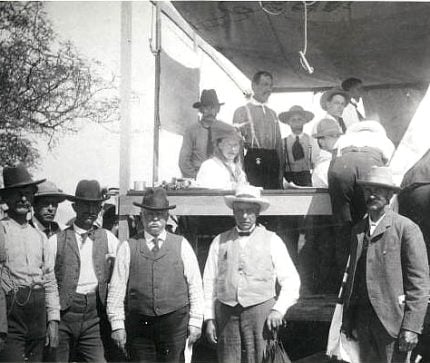
Clark purchased nearly 2,000 acres from Helen Stewart, owner of a ranch on the site of the Old Mormon Fort, to establish the Las Vegas Townsite. He also secured from her its crucial water rights.
Just one month after the first train arrived in April 1905, 1,200 lots — covering only 110 acres of Clark’s holdings — were auctioned off to the entrepreneurs who launched Las Vegas’ first businesses.
Absentee Founding Father?
The myth that Clark never set foot in Nevada is rooted in his reputation as a detached industrialist who delegated his operations to proxies. In Las Vegas, his younger brother, J. Ross Clark, oversaw both the railroad’s construction and the May 15-16, 1905 land auction.
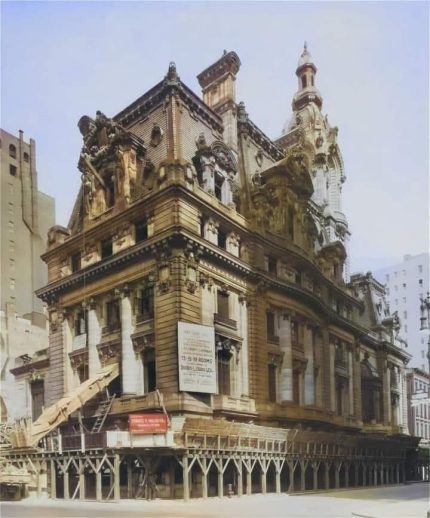
Clark’s home was in Montana, the state he loved, for which he served two terms as a US senator and amassed the bulk of his $200 million fortune ($6.9 billion today) through copper mining.
When he left the Treasure State on March 3, 1907 at age 68, Clark spent his remaining years in New York City — overseeing his growing national business interests, immersing himself in high society, and living in a 121-room mansion six blocks down “Millionaire’s Row” from oil magnate John D. Rockefeller Jr.
Clark declined even to attend the July 1, 1909 ceremony dedicating a new Nevada county, named in his honor, carved out of the southern tip of Lincoln County.
According to the 2009 Clark County publication “Centennial: A Century of Service,” Clark was “seldom in Las Vegas,” but proof of any visits, if there were indeed any, is difficult to find in the historical record.
Did we ever mention how much we love a challenge?
Smoking Gun
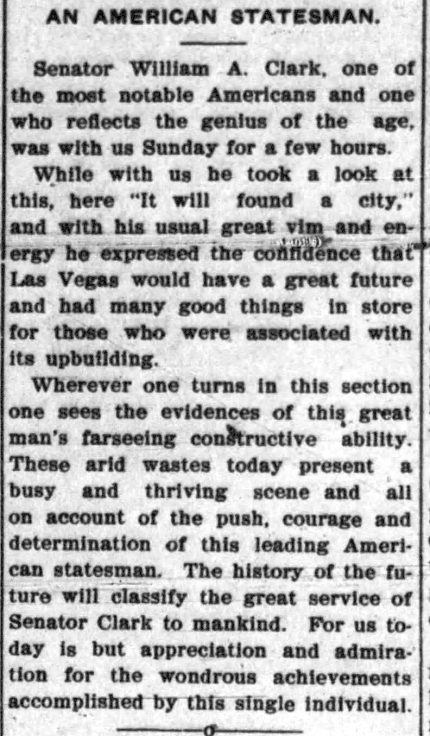
A 151-word item published in the Las Vegas Times on November 25, 1905 conclusively establishes at least one visit from Clark to the county bearing his name today.
“Senator William A. Clark, one of the most notable Americans and one who reflects the genius of the age, was with us Sunday for a few hours,” it reads, referring to November 19, 1905. “While with us he took a look at this, here ‘It will found a city,’ and with his usual great vim and energy he expressed the confidence that Las Vegas would have a great future and had many good things in store for those who were associated with its upbuilding.”
When Clark died of pneumonia on March 2, 1925 in his Manhattan mansion at 86 years old, among the many achievements he could have claimed was being one of Las Vegas’ first tourists.
Look for “Vegas Myths Busted” every Monday on Casino.org. To read previously busted Vegas myths, visit VegasMythsBusted.com. Got a suggestion for a Vegas myth that needs busting? Email corey@casino.org.
Last Comments ( 1 )
We have a photo of Senator Clark in Nevada, from the UNLV library. Bill Dedman, co-author, Empty Mansions