
Nearly Half of All Filipinos Gamble Online, Losing Billions of Dollars
Posted on: February 26, 2026, 12:12h.
Last updated on: February 26, 2026, 03:39h.

- Filipinos are gambling online at an alarming rate
- Philippines online gambling has grown exponentially in recent years
- A leading newspaper is calling for consumer safeguards through a public awareness campaign
Nearly half of the adult population in the Philippines, or about 32 million people, are reportedly gambling online.
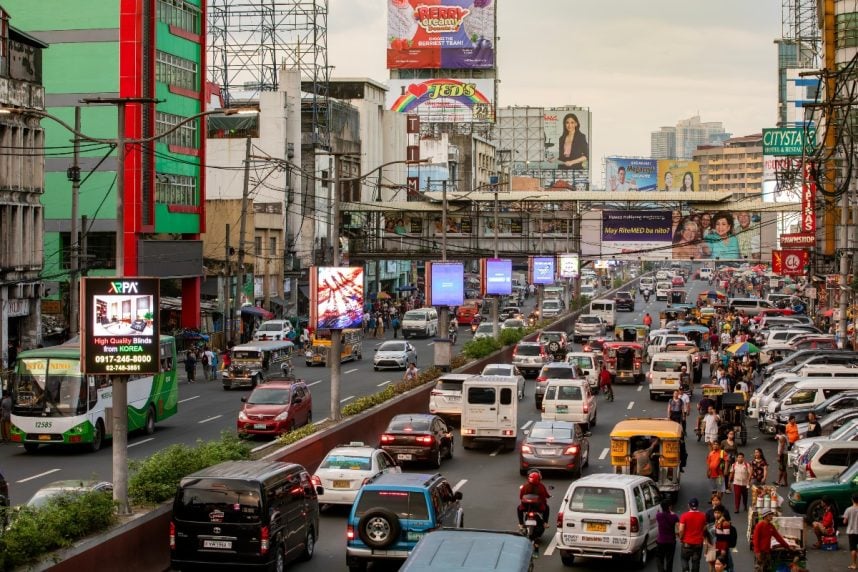
With internet betting continually increasing since the COVID-19 pandemic, and the Philippine government seemingly intent on procuring as much money from gambling as possible, a leading media outlet is calling for regulatory reform.
The Manila Bulletin is the most-read and most-circulated English-language newspaper in the Philippines. Founded in 1900, it’s the second-oldest English newspaper in the Far East.
The Reuters Institute for the Study of Journalism has frequently ranked the Manila Bulletin among the most trusted news organizations in Southeast Asia, as the privately-owned media company has managed to stay clear of government interference. That’s why its editorial page is routinely cited by lawmakers and advocates seeking change on a variety of issues.
The latest op-ed addresses the continued proliferation of online casino gambling.
Fast-Growing Industry, Fast-Growing Harm
Online gambling websites and apps in the Philippines are regulated by the Philippine Amusement and Gaming Corporation (PAGCOR). According to the government agency, more than 80 licensed iGaming platforms are offering 24/7 casino games to people located inside the country.
In the third quarter of 2025, those online gaming properties generated gross gaming revenue of PHP41.94 billion, or more than $729.6 million. Internet casino revenue was upwards of $1 billion in Q2 2025 and was nearly $821.7 million in Q1.
The online casino growth has been extraordinary.
In 2021, online casinos generated GGR of just $116.6 million. Revenue climbed to $176 million in 2022, to $576.9 million in 2023, and to more than $2.3 billion in 2024. Through three quarters of 2025, iGaming win is upwards of $2.5 billion.
“The social costs are profound. Families see savings meant for food, rent, or tuition vanish. Workplaces suffer as employees borrow money or struggle with mounting obligations. Mental health deteriorates under the weight of shame and financial stress,” wrote the Manila Bulletin Editorial Board.
“For low-income households, the illusion of a life-changing win can entrench cycles of poverty rather than break them. Filipinos must understand that online gambling apps are not harmless games. They are designed to maximize engagement and spending. Responsible gaming slogans are not enough in an environment engineered for impulse,” the piece continued.
The op-ed concluded by calling for a “stronger,” more “sustained” public awareness campaign.
“Digital literacy must now include gambling literacy. The stakes are no longer confined to gaming tables. They are embedded in everyday life,” the piece ended.
Philippines Earnings
The average household income in the Philippines, as of 2023, was approximately PHP353,230 (US$6,144). However, income disparity is significant, with wealthier high-income earners in the National Capital Region averaging more than $8,900.
Then there are the oligarchs, the small group of wealthy, influential families that have close ties to the government and its state-run entities.
Among the richest magnates in the Philippines are those with considerable gaming and casino stakes. They include Enrique Razon Jr., whose Bloomberry Resorts owns the two Solaire casinos, and Andrew Tan, whose Travellers International Hotel owns Newport World Resorts.
Last Comments ( 1 )
Shocker I tell ya!!!!