
NCAA President Charlie Baker Underestimated Sports Betting Boom
Posted on: December 14, 2025, 10:49h.
Last updated on: December 14, 2025, 10:49h.

- NCAA President Charlie Baker says he didn’t realize how ubiquitous sports betting would become
- Baker signed Massachusetts’ sports betting law in April 2022
NCAA President Charlie Baker was the governor of Massachusetts when the commonwealth legalized sports betting in 2022. Three years later and in a new role overseeing college athletics, the moderate Republican concedes he underestimated sports betting’s immersion into Americana and the college experience.
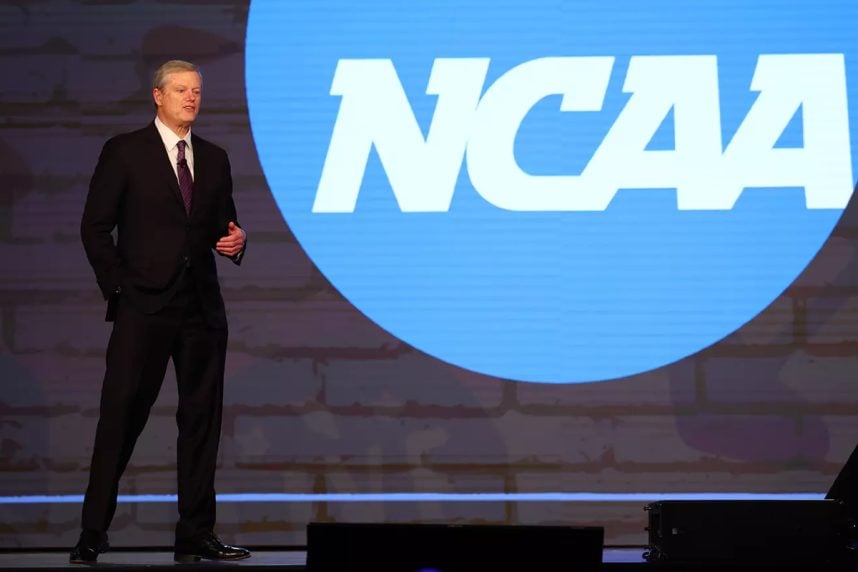
Baker, a popular two-term governor, was appointed president of the NCAA in March 2023. Among his first tasks was investigating how the liberalization of sports gambling impacted college athletes and students.
“After my appointment, I went out and visited about 1,000 student athletes on campuses. So much of those conversations were about sports betting, and especially the abuse and harassment that came with it,” Baker said in an interview with Yahoo! Sports.
Baker said he discovered that betting on sports, both professional and collegiate, was widespread. He concluded that the legalization led to the embrace.
“I do believe that when something is illegal, people think twice about it,” Baker said. “So, you can’t underestimate the impact all these commercials have had in making sports betting socially acceptable.”
Buyer’s Remorse
Baker signed Massachusetts’ sports betting law in April 2022. At the time, Baker said he was “glad to be able to sign this bill into law.”
Massachusetts’ sports betting bill levies a 15% state tax on in-person revenue and 20% on online bets. The commonwealth has received more than $300 million in state taxes from sports gambling. Baker isn’t sure it was worth it.
With companies like DraftKings and FanDuel inundating television commercial breaks and in-game odds being discussed by ESPN and the like, Baker says sports betting “is everywhere.”
I don’t think anybody was anticipating that it would be as ubiquitous as it became when DraftKings and FanDuel, in particular, created phone-based opportunities for people to bet on pretty much anything,” Baker said.
The NCAA president has long opposed props involving college athletes, bets that depend singularly on a player’s performance. Baker says prop bets heighten the odds of a player being harassed, whether it be on the field or court by a nearby fan or online via social media posts and messages.
“It’s definitely where most of the really aggressive harassment directed at kids is coming from. And the second thing is the pressure that the underperforming prop bets put on young people. I don’t think that’s something that’s fully understood,” Baker said.
Sports Betting Landscape
Since the US Supreme Court said states have the right to determine if sports betting is allowed, 39 and Washington, DC, have authorized and regulated some sort of sports gambling. The rapid expansion, however, has slowed in recent years, as the holdout states take a more cautious approach.
Notable states where sports betting remains banned include California, Georgia, South Carolina, and Texas.
No comments yet