
March is Problem Gambling Awareness Month, National Agency Seeks to Implement Healthcare Treatment
Posted on: March 6, 2026, 02:12h.
Last updated on: March 6, 2026, 02:12h.

March is Problem Gambling Awareness Month, an annual campaign put on by the National Council on Problem Gambling (NCPG) in Washington, DC.
The NCPG says Problem Gambling Awareness Month is a nationwide grassroots campaign that seeks to increase the public’s awareness of gambling problems and to promote associated prevention, treatment, and recovery services.
The theme for 2026 is “Caring Communities, Stronger Futures.” The initiative emphasizes the importance of a community-driven approach to problem gambling awareness and support.
When a community comes together — friends, families, educators, healthcare providers, local partners, and policymakers — silence is replaced with support, and isolation is replaced with connection,” the campaign website states.
The NCPG is calling on all gaming stakeholders, from state gaming regulatory bodies to gaming operators, to promote Problem Gambling Awareness Month. The nation’s only national nonprofit dedicated to mitigating gambling-related harms has various materials, from press release templates to social media images, that can be accessed on its website.
Healthcare Implementation
Gambling is more accessible and widespread than ever before. All but three states, Alaska, Hawaii, and Utah, have some form of legal gambling, whether it be casinos, iGaming, sports betting, parimutuel wagering, or a lottery.
With Americans participating in some form of gambling at record levels, the NCPG believes it’s time that primary care doctors regularly check in with their patients about their gambling activity. A 2026 goal of Problem Gambling Awareness Month is to encourage healthcare providers to screen patients for potential gambling disorders.
“The majority of Americans recognize gambling addiction as a legitimate behavioral health issue,” said Heather Maurer, the executive director of the NCPG. “The next step is ensuring our public health systems, policies, and prevention strategies reflect that understanding.”
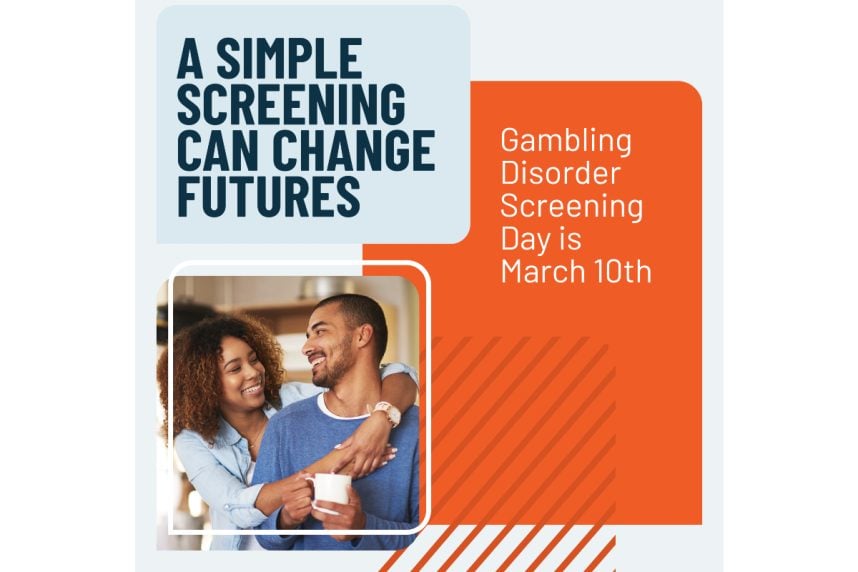
On Tuesday, March 10, the NCPG will host Gambling Disorder Screening Day. Through a partnership with the Cambridge Health Alliance Division on Addiction, free online screenings will be offered on this website. People can self-assess or meet with a practitioner over the internet.
“Gambling disorder leads to financial, emotional, social, occupational, and physical harms, yet many cases go undetected due to limited assessment for this problem. Screening Day addresses the imperative to detect gambling-related problems as early as possible, and the Division encourages all organizations and providers to participate in this annual event,” the Cambridge Health Alliance Division on Addiction commented.
Record Losses, Problem Gambling Increases
Gamblers in the US lost a record $78.7 billion last year to commercial operators. The gaming revenue is from commercial (non-tribal) casinos, racinos, sports betting, and iGaming. The tally does not include lottery revenue.
Researchers at the University of California, San Diego, Qualcomm Institute School of Medicine wrote last year that the rapid growth of legal sports betting has caused a surge in gambling problems. The study concluded that internet searches for help with gambling addiction increased 23% between 2018 and 2024.
No comments yet