
Macau’s Casino Fortuna to Close on December 9 Amid Wave of Satellite Shutdowns
Posted on: December 3, 2025, 12:10h.
Last updated on: December 3, 2025, 12:39h.

- Macau accelerates shutdown of satellite casinos under new gaming rules
- SJM absorbs Casino Fortuna staff with guaranteed employment protections
- Closures mark shift toward diversified, tourism-focused economic development
Macau casino operator SJM Holdings has announced that Casino Fortuna will close for good on December 9.
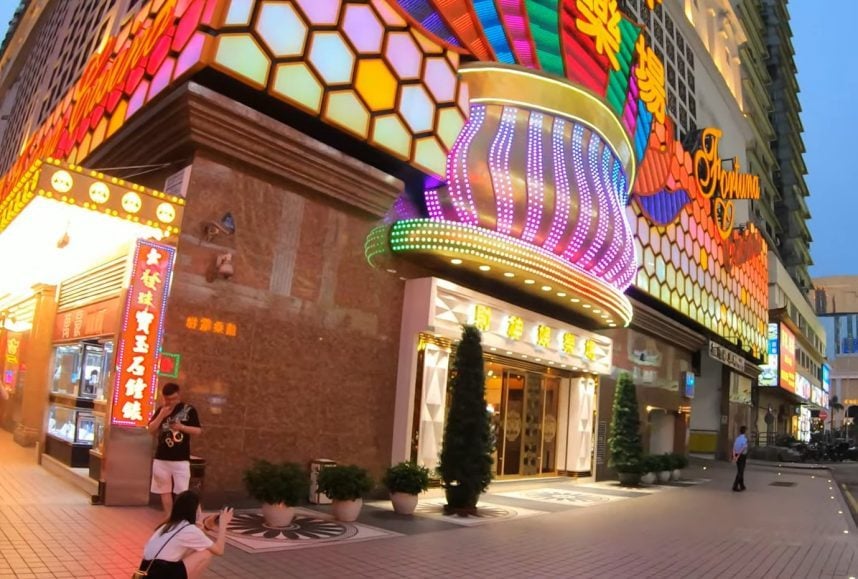
The casino, which opened in 2005 on the western end of Avenida da Amizade (Amizade Strip), is known as a budget option for gamblers and travelers seeking an uncomplicated, low-stakes alternative to the city’s larger resort complexes.
SJM has committed to absorbing Casino Fortuna’s 553 workers into its other casino holdings in Macau.
Gaming regulator, DICJ, said in a statement it was working with the city’s Labor Affairs Bureau to “ensure compliance with the commitments made by SJM with regard to the relocation of all the respective workers, as well as guarantees regarding their remuneration, benefits and working conditions, providing them with opportunities for job changes, with a view to continuing their employment”.
No Frills
The closure is the latest in a wave of shutdowns of so-called satellite casinos in the gambling hub – smaller, no-frills venues, most of which operated under SJM’s gaming license. On December 1, the Casino Kam Pek Paradise ceased operations, two days after the Ponte 16 Casino.
In all, 10 of Macau’s 11 sublicensed satellite casinos will close by the end of this year. The other, L’Arc Macau, has been acquired by SJM and will continue to operate.
The closures follow a three-year grace period that began with the implementation of Macau’s new Gaming Law, which reformed the sublicensing regime and required satellite casinos to either shut down or be acquired by main license holders (concessionaires).
The satellites are typically more gaming-focused than the sprawling mega-resorts that come complete with nongaming, family-oriented amenities. Under the sublicensing system, they share a portion of their revenue with their licensee.
New Direction
This structure emerged as a workaround after 2002, when Macau opened its gaming market but capped the number of licenses at six. Allowing third-party operators to run casinos under those licenses created room for expansion without technically increasing the number of permit holders.
When the first 20-year licensing cycle ended in 2022, the renewal process gave Macau a chance to tighten regulatory controls – including closing loopholes and ensuring that only license-holders were directly responsible for casino operations.
That direction reflects Beijing’s broader expectations for the territory. Mainland authorities want Macau to diversify its economy and build a “world-class tourism destination,” rather than rely overwhelmingly on gaming revenue.
This sits uneasily with the continued presence of satellite casinos, which represent the older, gaming-heavy model Macau aims to move beyond.
No comments yet