
Nevada Federal Court Ruling Suggests States Have Prediction Market Powers
Posted on: March 3, 2026, 08:11h.
Last updated on: March 3, 2026, 08:12h.

- A recent ruling by a federal judge suggests states have certain prediction market powers
- Gaming attorneys believe the controversy could reach the US Supreme Court
With the federal regulatory environment surrounding prediction markets in flux, some states are seeking to solidify that certain trading markets are banned in their jurisdictions.
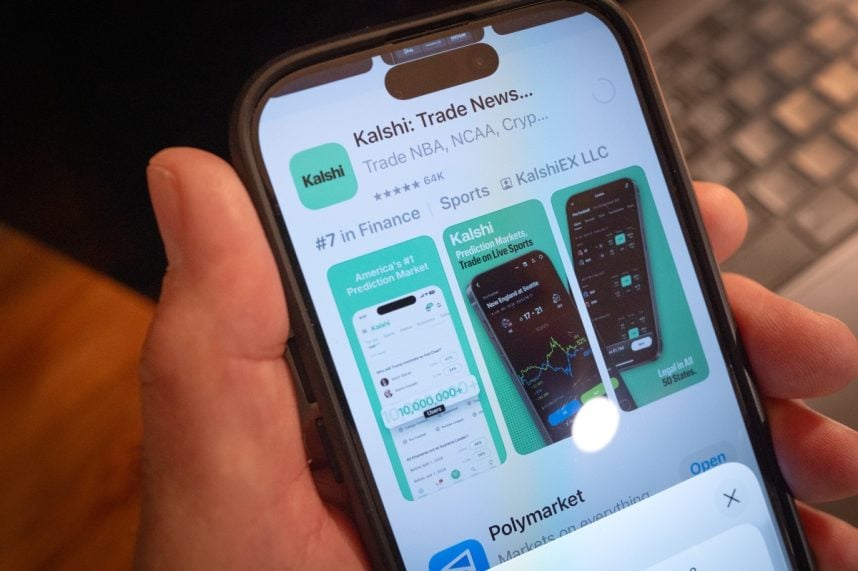
Prediction markets are regulated by the US Commodity Futures Trading Commission (CFTC) under the Commodity Exchange Act. As such, the operators behind the platforms contend that their trading contracts are not subject to state gaming laws.
CFTC Regulation 40.11 states that the speculative platforms where traders buy and sell shares of the outcomes of future events cannot involve “terrorism, assassination, war, gaming, or an activity that is unlawful under any State or Federal law.”
Under the President Donald Trump administration and Chair Michael Selig, however, the CFTC seems intent on allowing its prediction markets to offer swaps involving sports outcomes, though states argue that constitutes sports betting.
State Powers in Prediction Markets
Regulation 40.11’s language stating that states reserve certain powers under the federal regulation has led to several jurisdictions seeking to pass laws banning sports event contracts without an appropriate state-issued sports betting license.
In October, the Nevada Gaming Control Board issued a notice to licensees that only its nonrestricted gaming licensees possessing sports pool approvals can facilitate the trading of sports event contracts. The state gaming regulatory, the gold standard of gaming regulation, said sports event contracts constitute sports gambling.
“Wagering occurs whether the contract is listed on an exchange regulated by the CFTC or elsewhere,” the Board said.
Kalshi, a leading prediction market, sued on claims that Nevada lacked the authority to ban its prediction market sports contracts. A state court upheld the NGCB’s decision.
A federal judge in Nevada’s district court this week denied Kalshi’s appeal to have the matter tried in federal court, remanding the Nevada Gaming Control Board’s lawsuit against the prediction market that seeks a permanent injunction back to state court.
Because the Court finds that the NGCB’s claims arise under state law, the Commodity Exchange Act does not completely preempt the Board’s claims,” wrote Judge Miranda Du.
Prominent gaming attorney Daniel Wallach says the decision is a blow to Kalshi and the like, as it suggests that the Commodity Exchange Act provides states the right to prohibit certain trading events.
“The ruling could ’embolden other states’ to sue Kalshi in state court and seek injunctions to block event contracts, a strategy that has so far succeeded in every case brought. States may soon begin to pursue this strategy with greater frequency,” Wallach said.
State Sports Event Contract Bans
Numerous states, including Hawaii, Illinois, Iowa, Massachusetts, New Jersey, Vermont, and Utah, are considering legislation to outlaw event contract trading involving sports.
The legislation varies from state to state, with some seeking to mandate that prediction markets obtain a sports betting license to continue operating. Other bills, like the one in Illinois, would not only ban sports trading but also shares on the outcomes of political events.
Ultimately, the scale and complexity of this litigation, combined with the circuit splits now emerging, suggests that Supreme Court review may be necessary to resolve the jurisdictional boundary between federal derivatives regulation and state gambling laws,” said Johnny ElHachem, a litigation and regulatory attorney specializing in gaming matters at Holland & Knight.
“Until then, the prediction market industry will continue to navigate a patchwork of conflicting legal obligations, though the growing weight of judicial authority supporting the platforms’ textual arguments suggests that the federal preemption question remains very much alive,” ElHachem concluded.
No comments yet