
Federal Appeals Court Sides with Kalshi in New Jersey Battle
Posted on: April 6, 2026, 01:29h.
Last updated on: April 6, 2026, 01:29h.

- Federal appeals court backs CFTC authority over Kalshi event contracts
- New Jersey challenge highlights clash between state gambling and federal law
- Conflicting rulings raise likelihood of Supreme Court intervention
Dealing a blow to New Jersey gambling regulators, a federal appeals court determined Monday that the U.S. Commodity Futures Trading Commission (CFTC) has sole jurisdiction over Kalshi, and state regulators cannot stop the prediction platform from offering bets on sports events.
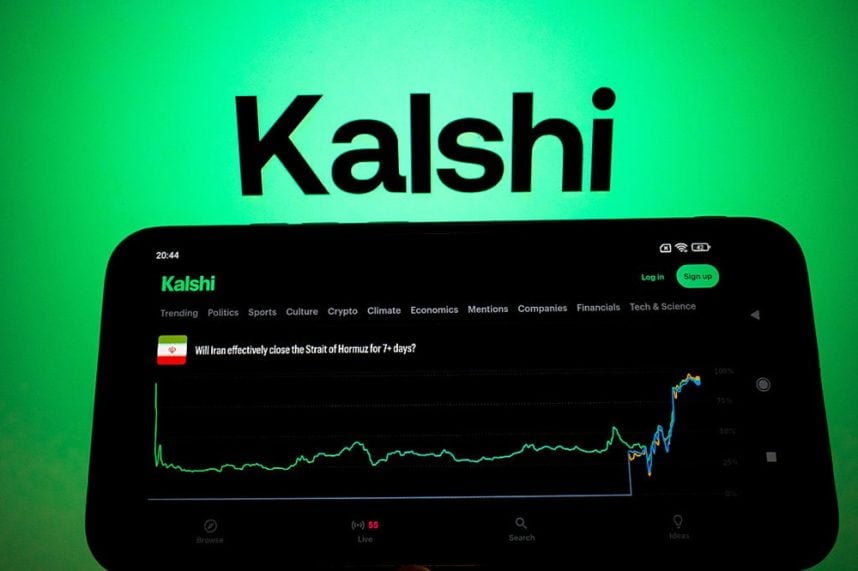
The three-judge panel upheld by a 2-1 vote an April 2025 lower court ruling which found that Kalshi’s event contracts are federally regulated financial instruments, rather than sports bets subject to state oversight.
New Jersey, and many states across the nation, disagree with that characterization, as did U.S. Circuit Judge Jane Richards Roth, the lone dissenter on the appellate panel Monday. She wrote that event contracts were “virtually indistinguishable from the betting products available on online sportsbooks, such as DraftKings and FanDuel.”
Cease-and-Desist Clash
New Jersey regulators sent Kalshi a cease-and-desist letter in March 2025, giving the company 24 hours to stop offering bets to state residents. The regulators claimed the company was violating state gambling laws, offering prohibited types of betting (such as on college sports), and operating in the state without a license.
Instead of complying, Kalshi sued, asking the court to block New Jersey from enforcing its gambling laws and to declare that its event contracts are governed by federal law.
The company argued the state’s threat of enforcement infringed on the exclusive jurisdiction of the CFTC and that state law is preempted where it conflicts with federal law.
U.S. Circuit Judge David Porter broadly agreed. “Kalshi’s sports-related event contracts are swaps traded on a CFTC-licensed DCM, so the CFTC has exclusive jurisdiction,” he wrote Monday.
Too Predictable?
The ruling was foretold by rival prediction platform Polymarket, whose users gave it a 94% chance of occurring, but it’s far from the final word on the issue.
Similar disputes are playing out across the country, with courts reaching differing conclusions about whether prediction markets fall under federal derivatives law or state gambling regimes.
Judges in Nevada and Massachusetts have moved to block Kalshi’s offerings under state law, while a separate federal appeals court on the West Coast is set to weigh in on the question.
The Commodity Futures Trading Commission has also entered the fray, filing lawsuits against multiple states to assert its authority over such markets.
With conflicting rulings, the issue of whether federal law preempts state gambling regulations could ultimately be resolved by the US Supreme Court.
No comments yet