
Caesars, DraftKings Seen as Winners as Maine Approves iGaming
Posted on: January 10, 2026, 07:00h.
Last updated on: January 10, 2026, 07:00h.

- The state surprisingly becomes the eighth to allow internet casinos.
- Caesars and DraftKings are seen as potential beneficiaries because they’re the two sports betting license holders there.
- iGaming in Maine will be run through tribes, but they can partner with commercial operators.
In an early 2026 surprise, Maine this week became the eighth state to approve iGaming when Gov. Janet Mills (D) said she’ll sign a previously passed bill into law.
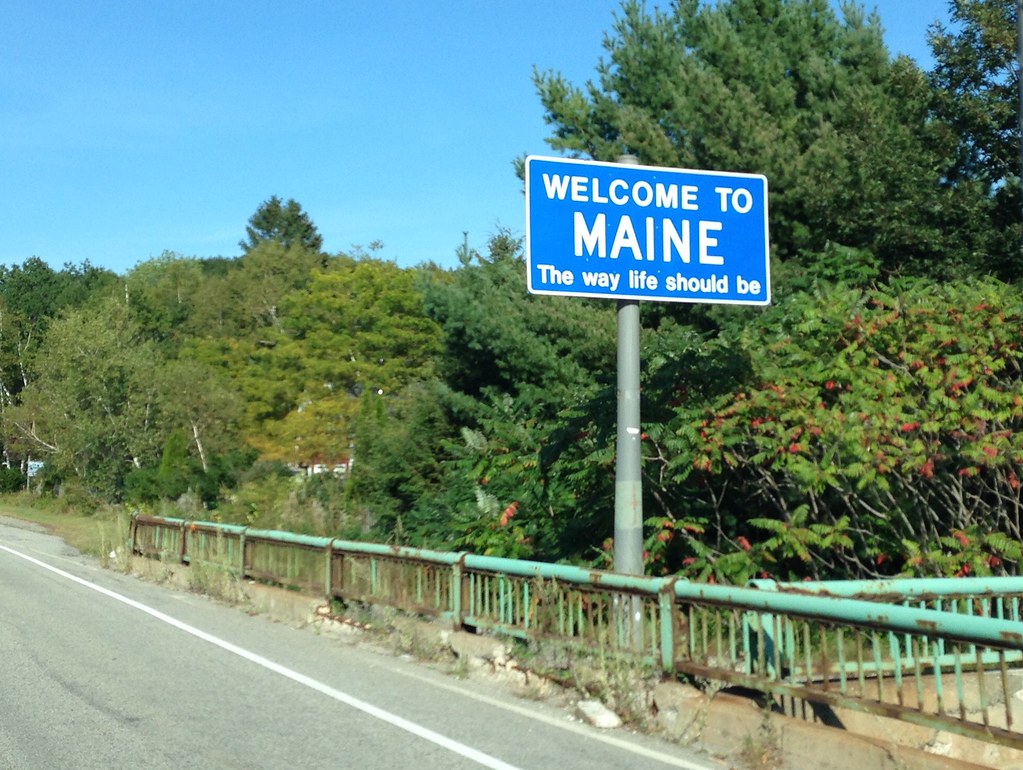
Road Travel America via Creative Commons)
The legislation grants Native American tribes exclusivity over that form of wagering in the New England state, allowing them to partner with commercial operators. Some market observers believe Caesars Entertainment (NASDAQ: CZR) and DraftKings (NASDAQ: DKNG) stand to benefit from iGaming coming to Maine.
Several of the notable gaming operators were opposed to the bill but will now be competing for the final two licenses, with our assumption that DraftKings and Caesars will secure two spots; we believe DKNG and CZR will have a clear advantage with their existing databases,” wrote Citizens Equity Research analyst Jordan Bender in a Friday note to clients.
He points out DraftKings and Caesars control what amounts to a Maine sports betting duopoly, commanding market share of 85% and 15%, respectively.
How Maine iGaming Market Could Shake Out
Working on Bender’s assumption that Caesars and DraftKings are near “locks” to land two of Maine’s four iGaming permits, a fairly intense competition could emerge for the other two permits.
It’ll be interesting to see if the state’s commercial land-based casino operators, which opposed the internet casino bill, change their outlooks. Those companies are Churchill Down (NASDAQ: CHDN) and Penn Entertainment (NASDAQ: PENN), the latter of which has a fast-growing iGaming unit.
Bender envisions a scenario where three of the Maine iGaming license holders are Caesars, DraftKings, and FanDuel with the fourth permit being awarded to one of the following: BetMGM, Fanatics, Penn, or an unidentified contender. What is clear is that Maine, despite a small population, is likely to be an attractive market for perspective iGaming operators due to accommodative taxes.
“Remarkably, the tax rate is only 18% on gaming revenue, fairly low in a time when gaming tax rates across the industry continue to increase,” observes Bender. “We expect DraftKings to generate the most earnings before interest, taxes, depreciation, and amortization (EBITDA) and be the most impactful for forward-looking EBITDA estimates.”
Maine Delivers iGaming Surprise
The Mills decision to allow the aforementioned bill to become law is stunning on at least two fronts. First, the consensus in the gaming industry was that no new states would legalize iGaming or sports betting this year. Second, polls confirmed a substantial majority of voters in the state oppose legalization of online casinos.
On the other hand, while Maine provided a pleasant surprise to the gaming industry, that doesn’t mean other states will rapidly follow suit this year.
“We are not in the camp that believes one state legalizing iGaming will act as a domino effect into other states given complex state-by-state politics,” concludes Bender. “That said, bills now being introduced (e.g., Virginia) also show opposition to iGaming bills, but Maine has shown that state politics can override popular opinion. Said another way, Maine should be viewed as a positive data point for states looking to legalize iGaming in the coming years.”
No comments yet