
Austrian Supreme Court Rules Loot Boxes Don’t Constitute Gambling
Posted on: February 2, 2026, 10:08h.
Last updated on: February 2, 2026, 10:31h.

- Loot boxes in video games secured another critical legal ruling, this time in Austria
- The Austrian Supreme Court says the in-game purchases do not constitute gambling
The Supreme Court in Austria has determined that loot boxes do not constitute gambling as defined by the Austrian Gambling Act.
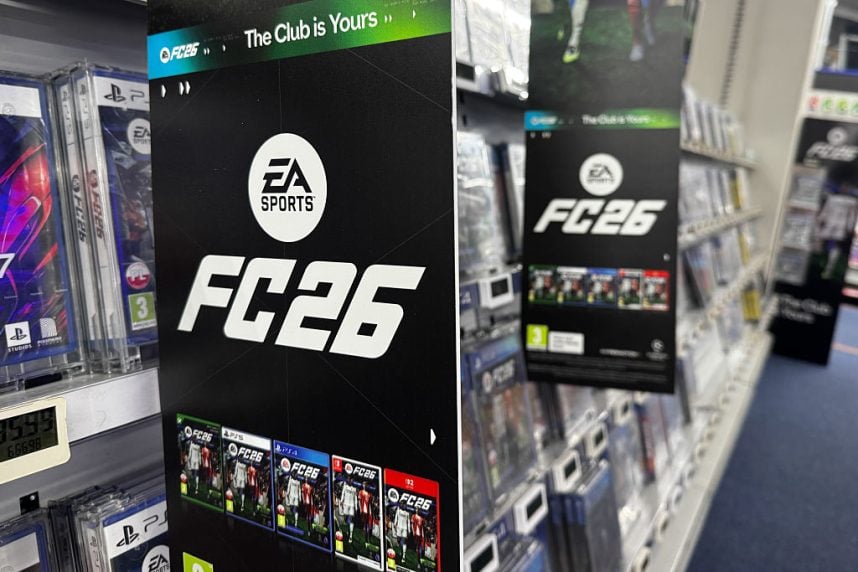
The Austrian Supreme Court fielded a case last year from a class of plaintiffs who alleged that video game giant Electronic Arts had engaged in unlawful gambling by including loot boxes in its soccer game, FIFA Ultimate Team. The class argued that the game’s selling of loot boxes, which are randomized digital packs available for purchase that come with a small chance of acquiring legendary footballers to strengthen one’s team, equated to gambling.
The high court in the Central European nation disagreed.
A game of chance is a game in which the outcome depends solely or predominantly on chance. Despite the random allocation of individual digital items from loot boxes in the video game in question, the player can, through their own skills, namely, their chosen tactics and strategy, as well as their dexterity in operating the controller, control the course of the game,” the court ruled.
“Therefore, the plaintiffs have failed to prove that the game in question is one in which the outcome … depends exclusively or predominantly on chance,” the ruling explained.
Loot Boxes
Video gamers, and many of their parents, have argued in recent years that loot boxes shouldn’t be in products that are heavily marketed towards teens and those not old enough to legally gamble. Buying a loot box on the hopes of winning an item that’s prized by the video game player has been associated with the same mental euphoria a slot machine player experiences.
Critics of loot boxes say such in-game purchases exploit psychological vulnerabilities, encourage addictive spending, and create a seemingly pay-to-win environment.
However, courts in many countries, along with Austria, have ruled that the digital packages do not constitute gambling, including in the United States and the United Kingdom.
Big Revenue
In 2024, Electronic Arts reported generating $4.4 billion in “extra content” live services, a significant portion of which arises from loot boxes. That represented almost 60% of the company’s $7.56 billion in net revenue.
Persistence Market Research estimates that the global loot box market generated $22.7 billion in revenue last year. The market research and consultancy projects that loot box earnings will top $36 billion by 2032.
“The rapid expansion of high-speed internet, declining smartphone costs, and enhanced mobile capabilities have democratized access to in-game gambling globally. As of April 2025, 5G has surpassed 2.25 billion connections, with adoption growing four times faster than 4G, and 5G users consuming 1.9X more data, enabling graphically rich multiplayer games with integrated loot boxes. This widespread mobile adoption is directly driving higher engagement, in-game spending, and expansion of the in-game gambling and loot boxes market,” the Persistence study explained.
Along with EA, companies that generate considerable loot box revenue include Activision Blizzard, Tencent Holdings, Sony Interactive, Microsoft, Nintendo, Konami, and Riot Games.
No comments yet