

Las Vegas Review-Journal Shares Circulation Numbers and It’s Absolutely Brutal

Every paid subscriber of the Las Vegas Review-Journal could fit inside Allegiant Stadium, with nearly 15,000 seats left empty.
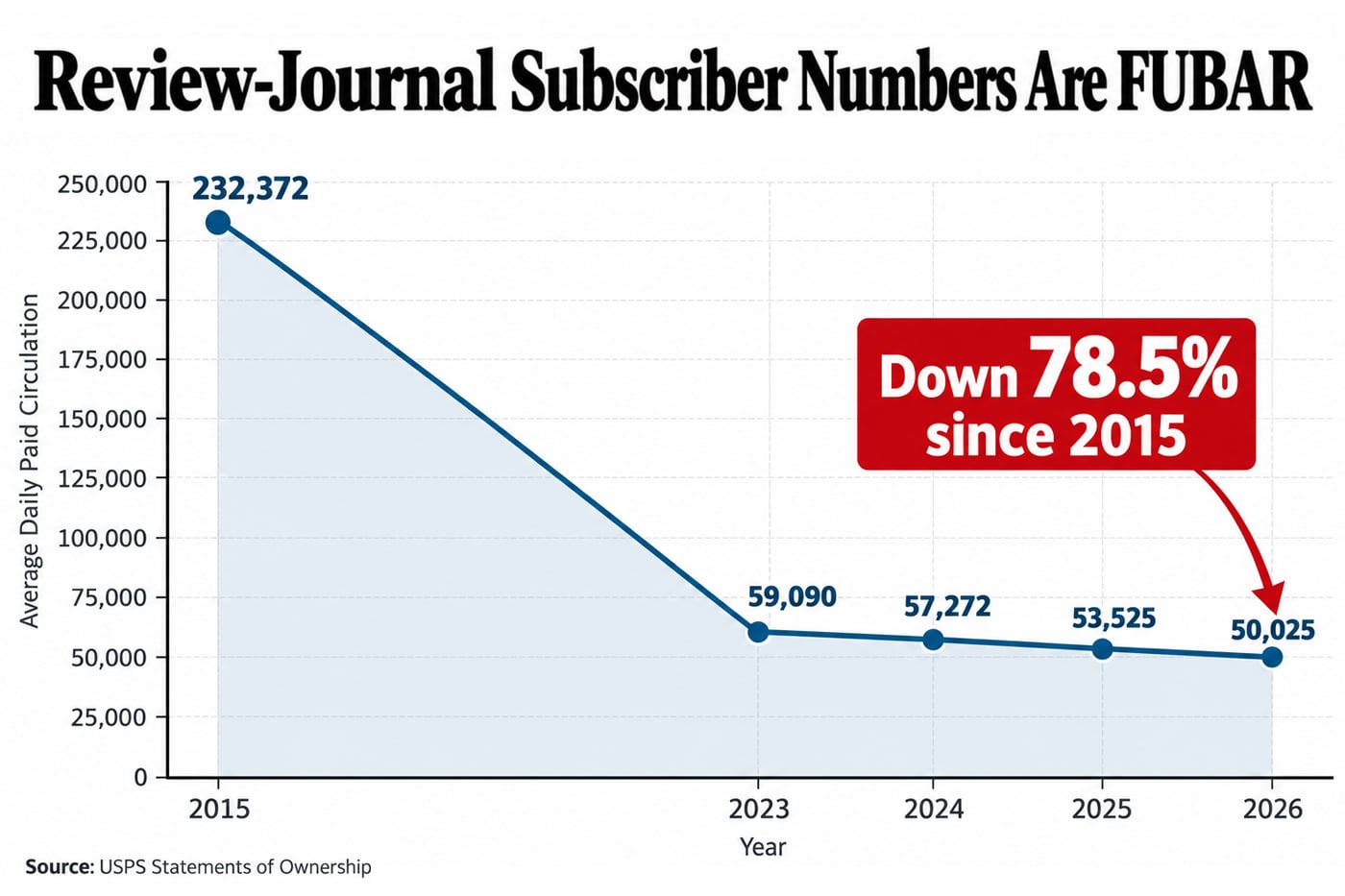
Allegiant Stadium has a capacity of 65,000. The Review-Journal’s average daily paid circulation (print and digital) is 50,025. In the past decade, the paper’s circulation has fallen nearly 80%.
These numbers come from the Las Vegas Review-Journal itself, although they’ve tried to keep them quiet. When advertisers and casino PRs find out how irrelevant you are, you’re toast. Let’s schadenfreude further, shan’t we?
All due props for the unearthing of the Review-Journal’s circulation stats go to William P. Barrett at New to Las Vegas.
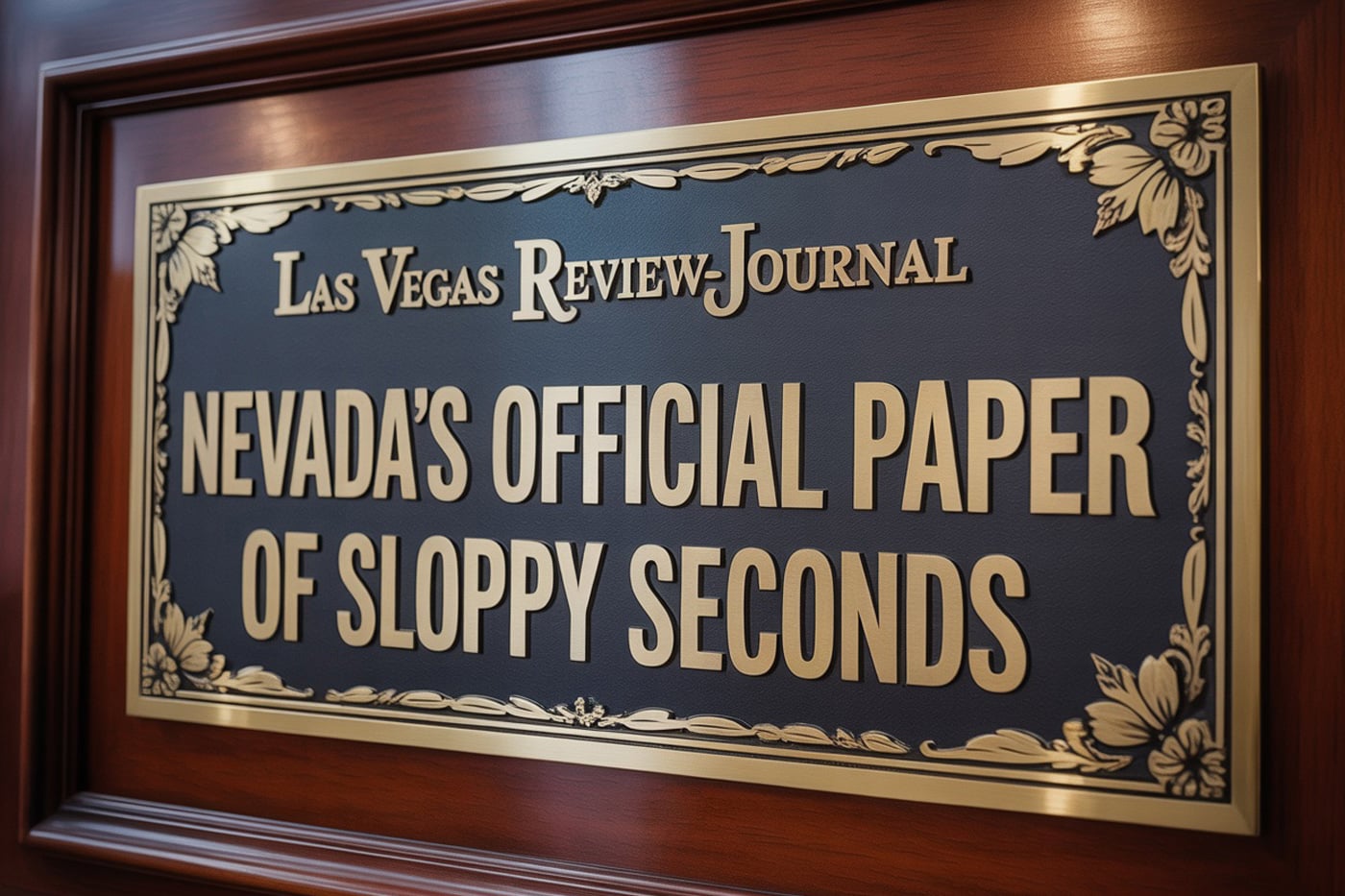
It’s useful to note that we gave credit to the source of this story, commonly called “attribution” in journalism circles. Attribution for original reporting is part of the foundation of ethical journalism, and the Review-Journal never got the memo. They’ve stolen scores of our stories over the years, unapologetically lifting our intellectual property with no credit given, a term known in media circles as “unrepentant assholery.”
Such unethical behavior is one of the reasons we’re writing this story, aside from the fact it’s a slow news day.
The Las Vegas Review-Journal shared its circulation numbers in its Oct. 4, 2026, edition. They didn’t want to share these numbers, they had to. Newspapers are required to disclose their circulation figures annually to qualify for discounted mailing rates through the U.S. Postal Service.
The Review-Journal buried its circulation numbers deeper than a mobster buries a body in the desert. We dug them up, though.
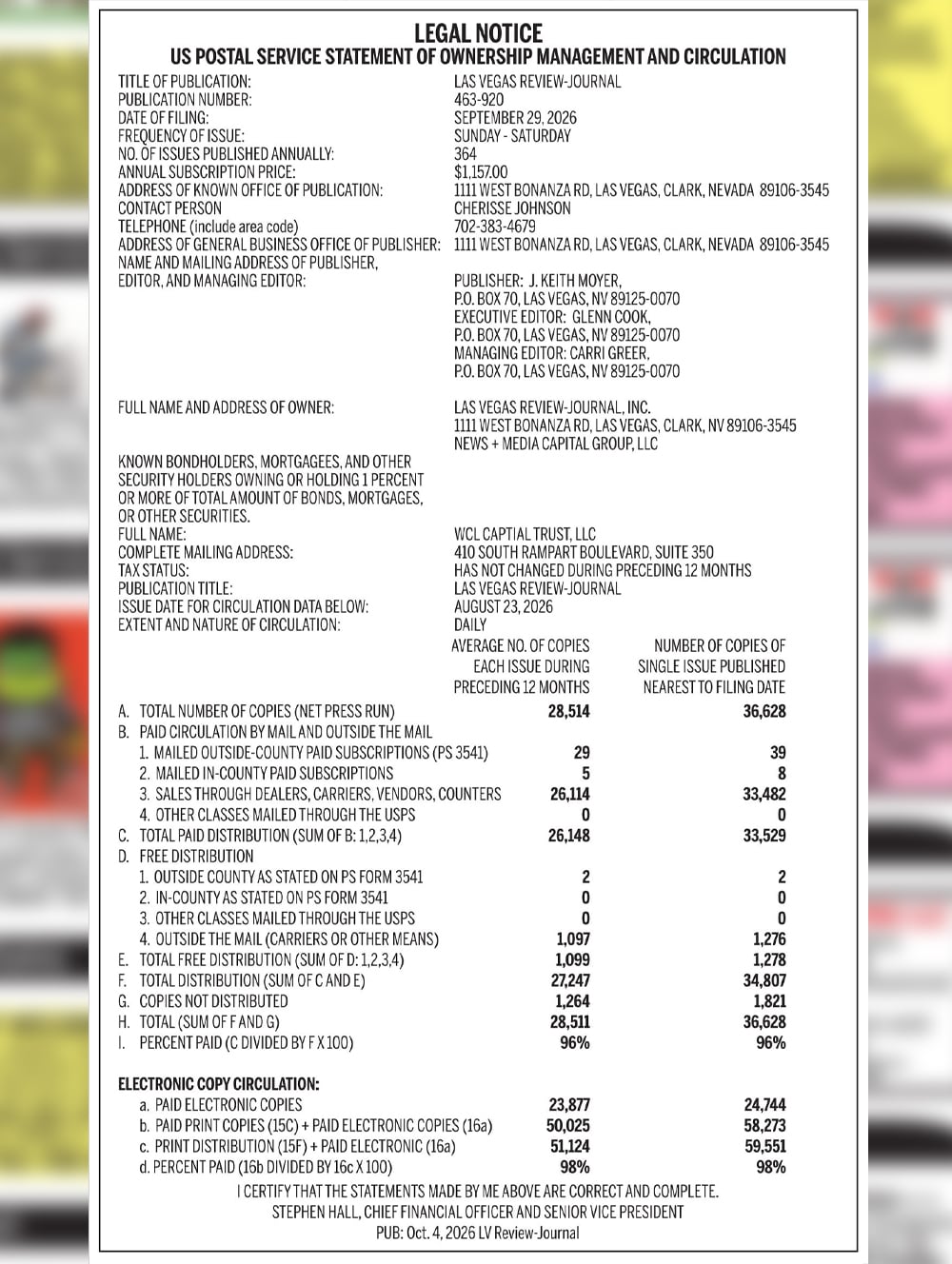
This information would’ve flown completely under the radar if Barrett hadn’t spotted it. The numbers were published deep into the paper’s classified ad section (page 4, section F). You know what classified ads are. They’re those things that used to pay for journalism. Irony alert.

Anyway, the RJ’s average daily paid circulation is 50,025 and that’s down from 53,525 the previous year, a decline of about 6.5%. In one year. Oof.
The Review-Journal’s paid circulation was 232,372 in 2015. That was the year bajillionaire Sheldon Adelson purchased the RJ for $140 million.
It’s not all bad news, though! The RJ’s digital subscriptions increased by 624 from a year ago, from 23,253 to 23,877.
The irony alert remains turned on because the Review-Journal had no trouble finding prominent space to celebrate itself just a week prior to the release of its circulation numbers.
As Barrett notes in his story, the newspaper devoted splashy coverage to its Nevada Press Association awards on Sept. 27, 2026, complete with photographs of staffers receiving accolades. The Nevada Press Association awards have a lot in common with a circle jerk, except if you share photos of a circle jerk you don’t get invited back.
So, why and how has the Review-Journal managed to become so irrelevant?
The phenomenon isn’t unique to the RJ. (There’s actually nothing unique about the RJ.) Newspapers across the country have experienced bigass declines in circulation in recent years. The Internet decimated the aforementioned classified advertising revenue, and social media disrupted news distribution. “Citizen journalists” continue to run circles around traditional media.
In Las Vegas, there are additional layers. The RJ has lost trust. Beyond the political leanings of its ownership (the Adelson family is said to be very involved in editorial decisions, despite the paper claiming otherwise), the paper has lost trust.
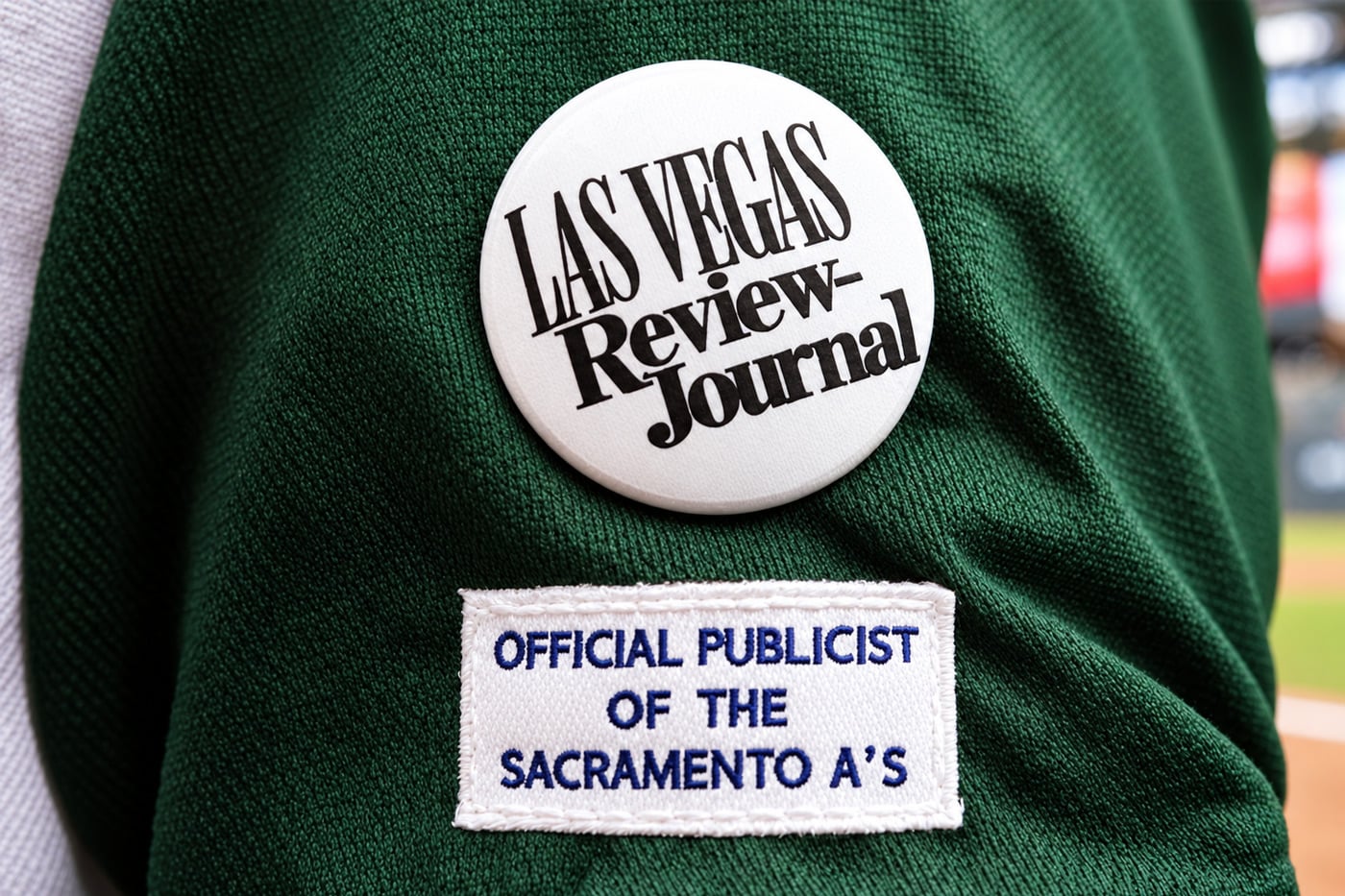
That’s because the RJ often acts as a publicist rather than a news organization. Reporters regurgitate news releases because they fear losing access if they say anything PRs don’t like.
We’ve had a number of incidents where casino nitwits have gone after media outlets because they’ve had us on as a guest.
We once said on Channel 8 that a show at Sahara was rumored to be closing. A PR asshat called the producer of our weekly segment and threatened to cut off access to the resort, along with its executives, chefs and others. We suggested Channel 8 dump our segment, which they did. The show closed. Because of course it did.
Sahara even sued us for sharing a rumor the resort could close based upon an anonymous source. (The source was a liquidator who had been asked for an estimate to liquidate all the casino’s physical assets.) We endured legal bullying, prevailed in the frivolous lawsuit, protected our source and Sahara paid all our legal fees, but no wonder Las Vegas news outlets are jumpy.
In another case, we said something on KNPR (our local public radio station) about a show struggling at Caesars. One of the hosts informed us later the previous owners of Caesars Entertainment threatened to pull $250,000 in funding from the station if we were allowed on again. We’ve never been invited back.
But back to teasing the RJ!
Another fun fact about the RJ’s decline: According to Barrett, the paper’s household penetration in Clark County has fallen from more than 80% historically to less than 7%.
Yet casino PRs, public relations agencies and executives continue to act like the RJ is a going concern, bending over backward to provide access and perks and exclusives.
We honestly are in need of more faces and palms.
Remember, the RJ isn’t some scrappy startup trying to carve out a niche in a crowded marketplace. It’s a 117-year-old newspaper with a recognizable brand and the financial backing of one of the wealthiest families in America.
Money can’t buy you relevance, however.
The Las Vegas Review-Journal loses about $10 million a year, by the way.
The fact is, communities need good journalism. It is vital to keeping powerful people and institutions in check.
But the truth is the Review-Journal is poorly managed and steadfastly refuses to modernize its operations, its priorities or financial model.
The RJ is not legally required to share its subscriber demographics, but we can assure you the demo is what experts would call “old AF.”
When we worked at LasVegas.com, we had a meeting with the RJ team to talk about collaboration opportunities. In that meeting, we met Al Gibes, a very nice guy who wrote the paper’s “The Online Guy” column. He wrote fascinating tech pieces like “What are these mouse things and how do they work?” and “How to find the asterisk on your keyboard.” The paper was decades behind the curve and that’s still the case.
Traditional newspapers have a fundamental problem: They’re trying to replace a business model that once generated enormous profits but which essentially evaporated.
The RJ is so stuck in its old-timey way of doing things that they aren’t taking advantage of opportunities that abound today.
The first thing that springs to mind is affiliate marketing. Advertising and subscriptions aren’t paying the bills, so why not exploit technology and revenue streams that are proven to work?
Newspaper reporters write about restaurants, hotels, products, attractions, entertainment and services every day. They should be getting paid when those recommendations generate purchases. It’s not advertorial. The site just links to products and places it mentions, then gets a cut of any bookings or sales.
Our Caesars Entertainment blog, Pulse of Vegas, did this years ago. We never “sold” anything. We provided value and entertainment. But we linked to room offerings and those bookings generated millions of dollars every year.
Affiliate marketing is closely related to search engine optimization, another thing the RJ has always been terrible at doing. Along with its resistance to providing attribution, when it does include it, the site doesn’t link out to what’s being referenced. That actually hurts their search results because search engines like to see authority sites interacting with other authority sites. Search results generate traffic. Traffic can generate revenue. The RJ is doing business like it’s 1975.
A big missed opportunity: Events.
Newspapers traditionally cover events. Why not produce them? Restaurant festivals, business conferences, neighborhood tours, entertainment showcases and industry networking events can generate revenue from sponsorships, ticket sales and exhibitors.
Vegas runs on events. The RJ should be the go-to for such events. Why? Because insanity is doing the same thing over and over, expecting a different result.
The RJ might also try leaning into memberships rather than simple subscriptions. Most newspapers still sell access to articles. That’s a tough sell when readers can get a lot for free. Instead of charging $15 a month to read stories, offer access to exclusive events, special newsletters, member discussions, early announcements and other benefits.
The difference is psychological. Subscriptions sell content. Memberships sell belonging, access and identity. People love the feeling of exclusivity. Just ask the casinos about their members-only venues like Poodle Room at Fontainebleau and Zero Bond at Wynn.
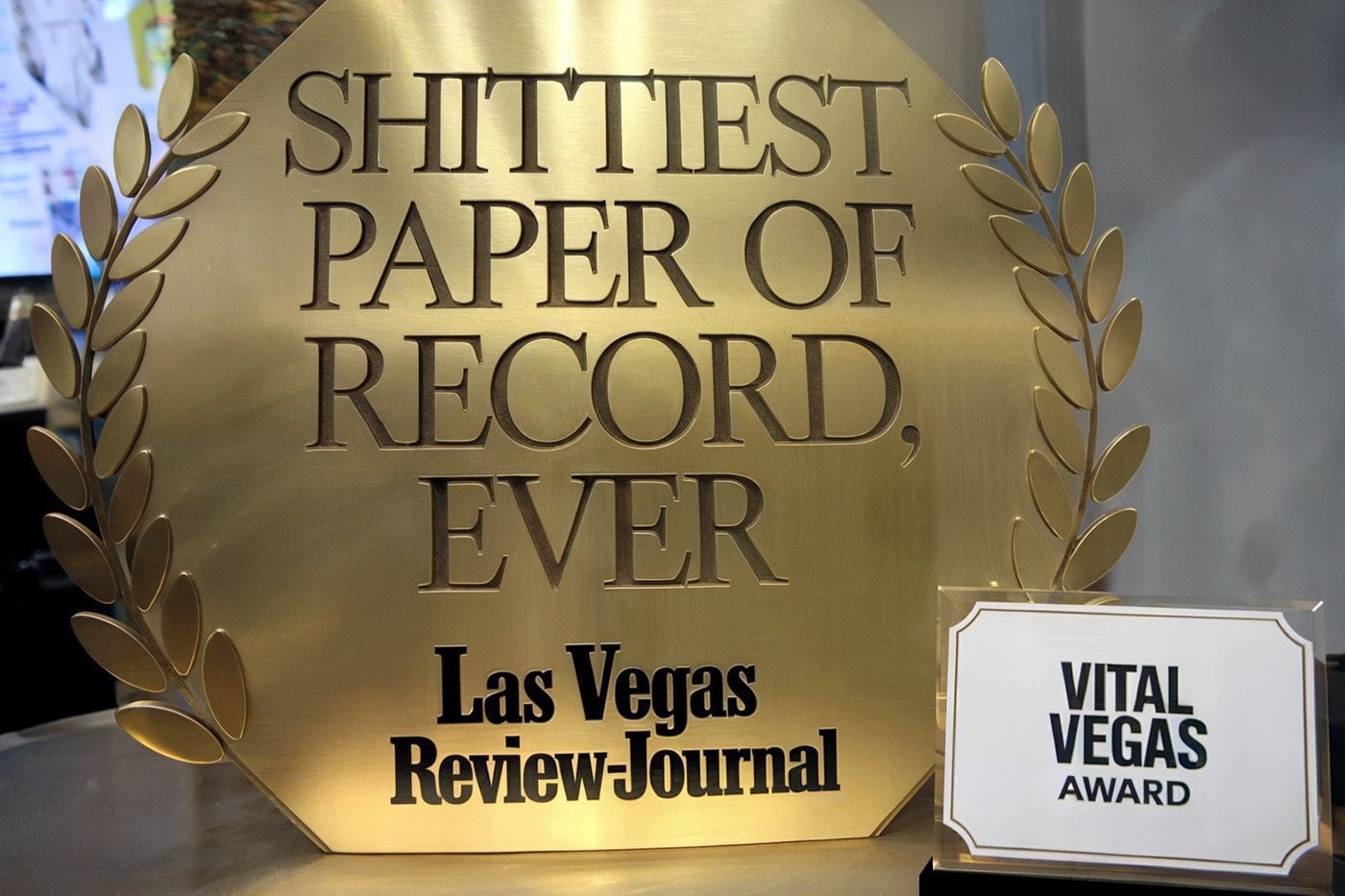
The RJ really needs to get better at video and personality-driven content.
Newspapers are still attached to the written word, but that’s not how people consume information now.
Content creators have built massive followings and revenue streams with video, podcasts and social media. You know who they are. They have recognizable personalities. Yes, the RJ has tried, but their content is white noise. There has to be quality control. The RJ needs to pay for talent, knowing the ROI will be there.
If they had one, an RJ restaurant critic could host a sponsored dining series. If they had one, a respected investigative reporter could host a premium podcast. If they had one, a knowledgeable casino columnist could build a YouTube channel supported by sponsorships and advertising.
The RJ needs leadership, including publishers and editors, with the ability to recognize brands worth developing.
Other opportunities the RJ is missing: lead generation (getting paid for connecting potential customers with businesses) and e-mail newsletters (you don’t need a vast audience, you need an engaged one that values exclusive information, ticket partnerships and premium subscriptions), marketing services for local businesses (they could offer local businesses a broader menu of services: social media management, video production, email marketing, search advertising, content creation and digital campaign management), licensing archives and intellectual property (the RJ has decades of photography, reporting and other intellectual property; they should be exploiting it) and so many others we aren’t including because we need to get paid for our consulting services.
Anyway, we started out just wanting to shame the RJ into giving content creators credit when it’s deserved, but now we realize we don’t want the RJ to continue to flounder or fail, we just want it to be better.
Former Mayor Oscar Goodman just referred to the Las Vegas Review-Journal as “the Satan newspaper.” Satan, through a spokesperson, confirmed. @PlazaLasVegas
— Vital Vegas (@VitalVegas) July 18, 2024
Yes, newspapers lost their advertising monopoly, but they have to reinvent themselves. They can’t post and ghost. That’s not how things work now.
Fire the asshats who think it’s cool to steal stories from social media. Fire the people who believe things are fine. They aren’t.
That dopey annual money grab called the “Best of Las Vegas Awards” isn’t going to pay the bills.
Paywalls aren’t the answer.
Innovation is the answer. Integrity and humility are the answer.
Nobody wants to read a repurposed news release (unless it includes 69 jokes).
Why would somebody pay to read a story in a newspaper when we shared the story weeks ago on a free blog? With snark, the currency of the Internet.
Yes, all the subscribers to the Las Vegas Review-Journal could fit inside one of the smaller sportsball amphitheaters (Allegiant is tied for 22nd-largest among the NFL’s 30 stadiums), but its demise isn’t a foregone conclusion.
At least not as long as they have us as a free news feed.




Leave your thoughts on “Las Vegas Review-Journal Shares Circulation Numbers and It’s Absolutely Brutal”
5 Comments