
VEGAS MYTHS BUSTED: Hoover Dam’s Beloved Mascot Had No Name
Posted on: January 26, 2026, 07:21h.
Last updated on: January 26, 2026, 02:26h.

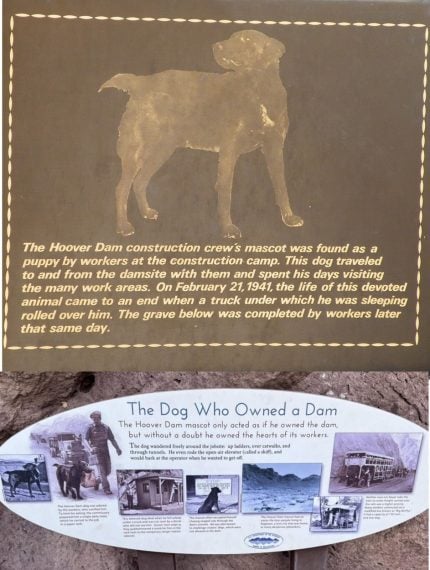
Some visitors to Hoover Dam notice a grave in an alcove not far from the entrance, the only burial on the entire site. It’s for a dog identified by a plaque as the “Hoover Dam construction crew’s mascot.” What it doesn’t say is the one thing everyone wants to know — his name.
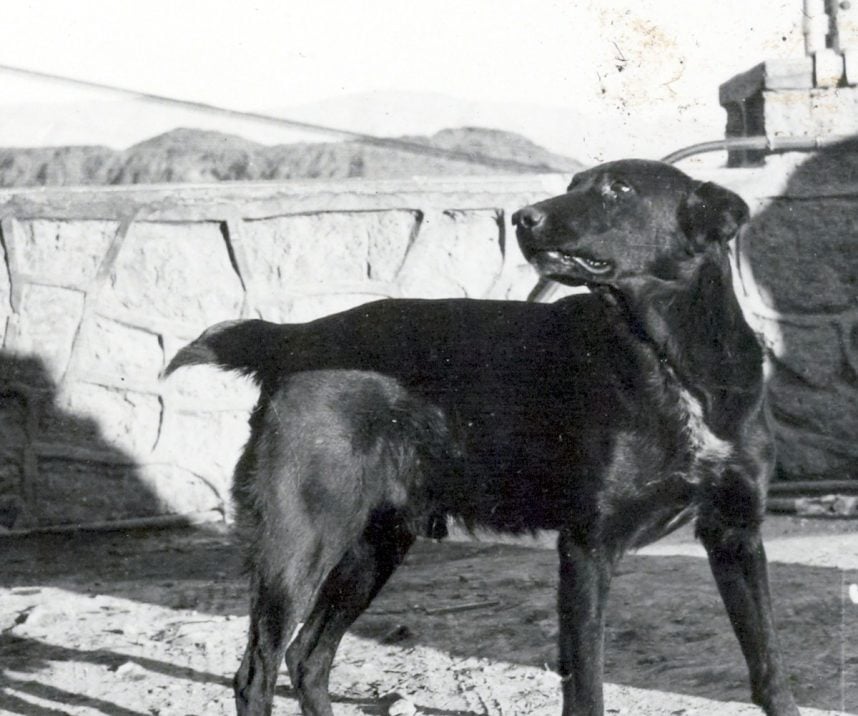
Have you ever heard of a beloved dog without a name? Neither have we. And that’s because he did have a name — only no one wants you to know what it was.
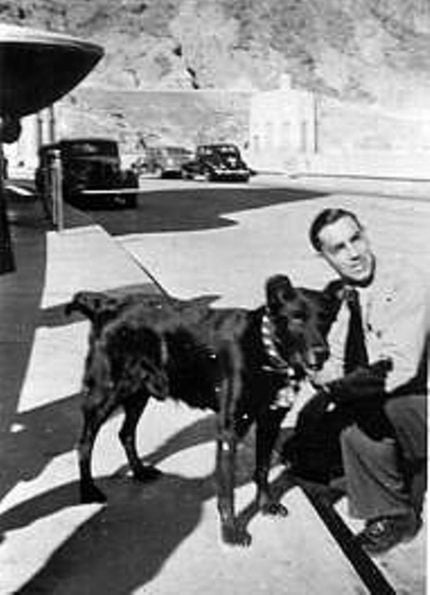
The black Labrador mix was born in 1932 beneath the No. 4 barracks in Boulder City, Nev., where Six Companies — the contractor overseeing the dam’s construction — housed its laborers.
The men adopted the pup immediately, feeding him scraps, letting him sleep in their quarters, and eventually taking him along on the daily transport truck ride to the dam site. He became a welcome distraction from the back-breaking labor — riding the open-air elevator with them into the canyon, trotting through inspection tunnels, and chasing the ring‑tailed cats that infested the works.
At lunchtime, workers shared whatever they had. Unfortunately, like many dogs, the items he loved the most made him the sickest. This led the dormitory’s mess hall to prepare a daily dog lunch for him to eat alongside his buddies. He carried the container in his mouth to the site.
The canine’s unhealthy sweet tooth also led the town doctor who treated him to place an ad in a local newspaper (likely the Boulder City Journal, though no copy survives). It reportedly read:
I love candy but it makes me sick
It is also bad for my coat
Please don’t feed me any more.
Your friend, Nig.
Yes, That Was His Name
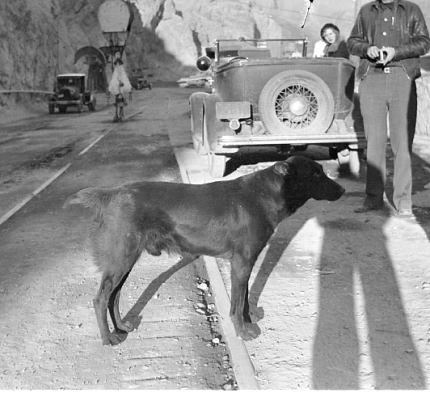
It was conferred with affectionate intent, and it was shockingly common for black dogs in the 1930s.
After the dam’s completion, new crews arrived to install the hydroelectric turbines. The sweet pooch stayed on, making his rounds with the electricians and mechanics who replaced his original friends.
On the unseasonably hot afternoon of Feb. 21, 1941, everyone’s favorite dog curled up in the nearest spot of shade. The driver of the truck he crawled beneath didn’t notice him until he he started it up and ran him over.
Death came instantly.
Boulder City was devastated. One newspaper article reported that “rough, tough rock‑hard men wept openly and unashamed.” The workers pooled their money to bury him in a concrete crypt overlooking the dam — a place where he could keep watch forever.
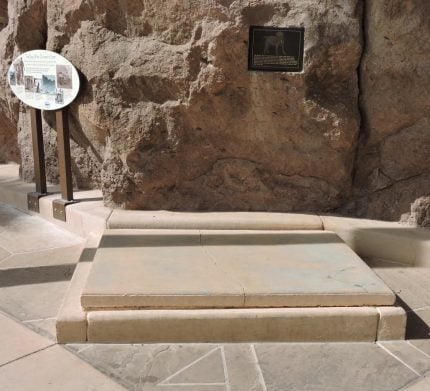
The bronze plaque they also paid for lasted until 1979. That’s when a Wisconsin college professor complained to a Bureau of Reclamation supervisor about its racial slur. Though his complaint was initially brushed off, the professor contacted his Congressional representatives, and the issue hit the national press.
On March 21, 1979, the Bureau removed the plaque. After surviving workers protested, a replacement bronze plaque was installed. A sign was also added later. Titled “The Dog Who Owned a Dam,” it featured seven photos and more than 200 words of praise.
Both markers denied the dog a name.
On Whitewashing
Instead of seizing a teachable moment to explain why it was no longer acceptable to announce the Hoover Dam mascot’s name above his grave, the Bureau chose to pretend he never had one.
Twice.
The instinct to sanitize history for modern sensibilities might feel protective, but erasing the ugliness of the past only prevents people from learning from it. Whenever we remove offensive language, censor art, or pretend that certain attitudes didn’t exist, we create a false narrative that disconnects us from the lived reality of the people who had to suffer through it.
In the 1930s, America was still racist as fuck. In fact, black men seeking work at Hoover Dam were universally rejected by Six Companies. Fewer than 50 of the 21K men who worked on the dam between 1931 and 1935 were of color.
Even that required federal pressure. And none of the 50 were permitted to live in Boulder City with their co-workers.
Honest history isn’t an endorsement of past wrongdoings. It’s a commitment to clarity, to accountability, and to learning from them.
To this day, park rangers are instructed never to reveal the real name of the Hoover Dam construction crew’s mascot — even when asked.
Look for “Vegas Myths Busted” every Monday at Casino.org. Visit VegasMythsBusted.com to read previously busted Vegas myths. Got a suggestion for a Vegas myth that needs busting? Email corey@casino.org.
Last Comments ( 1 )
I remember reading a story in the Review Journal when I was a kid about that black lab, and for some reason, that little factoid of his name has stuck with me, when I can barely remember all the apartments I lived in during the 80s and 90s. I also heard about how black workers at Hoover Dam were assigned all the menial (and low-paid) jobs even when they could get them. No high-scaler $4/day jobs for them. Yeah, America, and Southern Nevada, were FAR MORE racist than they are now, even in my lifetime. That's a good thing that we're better now.