
Rep. Hamadeh Says CNN/Kalshi Deal Threatens ‘Market Integrity, National Security’
Posted on: December 18, 2025, 10:44h.
Last updated on: December 18, 2025, 11:35h.

- CNN and Kalshi announced a partnership earlier this month
- Arizona congressman presses CFTC for answers on the deal
- Says CNN has a history of “partisan manipulation”
Earlier this month, CNN and Kalshi announced that they’re teaming up, marking the first major media deal for the prediction market operator. Rep. Abe Hamadeh (R-AZ) said the partnership raises serious questions and, potentially, national security concerns.
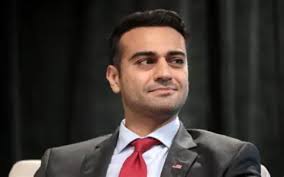
In a recent letter to acting Commodities Futures Trading Commission (CFTC) Chairwoman Caroline Pham, the congressman said the CNN/Kalshi partnership “poses direct and foreseeable threats to market integrity, democratic stability, and American national security.” He adds that some of his constituents are concerned about a prominent prediction market intersecting with a media outlet that’s widely perceived as left-leaning.
CNN would be uniquely positioned to shape public perception and news cycles around the very events Kalshi lists as tradable markets,” wrote Hamadeh to Pham. “These events would involve elections, war, foreign policy crises, and domestic instability. No other major media outlet has attempted such a partnership, and for good reason: it creates a built-in structural conflict of interest that allows an influential news organization or foreign adversaries to shape outcomes for financial or competitive advantage.”
Soon after the CNN agreement was announced, Kalshi revealed a similar accord with CNBC, though some may argue that’s more germane to the event contracts exchange given its efforts to push further into economic and financial markets derivatives.
Hamadeh Says CNN/Kalshi Partnership Violates CFTC Statute
CNN isn’t paying Kalshi to use its data, but the prediction market’s data, imagery, and name will be featured prominently across various broadcasts on the cable news outlet. There’s also an exclusivity clause dictating the network can’t strike a similar agreement with a Kalshi rival.
On the surface, the relationship appears comparable to those established between sports networks and sports wagering companies several years ago, but Hamadeh says the CNN/Kalshi deal violates Section 5c(c)(5)(C) of the Commodity Exchange Act (CEA). That statute prohibits the offering of contracts tied to war and those that run counter to the public interest.
“The Kalshi–CNN partnership appears to violate the aforementioned ruling,” observes the politician. “In fact, one media outlet reports that ‘one recent Kalshi betting market allowed people to bet on whether Palestinians in Gaza would suffer mass starvation,’ and ‘when Israel will bomb Gaza, bomb the West Bank, or annex either?’”
He called the situation “chilling” while asking Pham if the CFTC is examining CNN’s relationship with Kalshi “to see if it is creating vulnerabilities for foreign or domestic actors to influence US politics, economics, or national security outcomes for financial profit.”
CNN a ‘Propaganda Actor’
The Arizona Republican’s letter to Pham was sent at a time when there are increasing concerns about insider trading on prediction markets — a pertinent point because he says the combination of editorial influence and event contracts could run counter to the public interest.
The CFTC’s mission is to safeguard the integrity of US markets, and allowing CNN, a network already viewed by many Americans as a propagandistic actor, to operate inside a live prediction market creates unacceptable national-security and governance vulnerabilities,” said Hamadeh to Pham in the letter.
Pham has 30 days to respond.
No comments yet